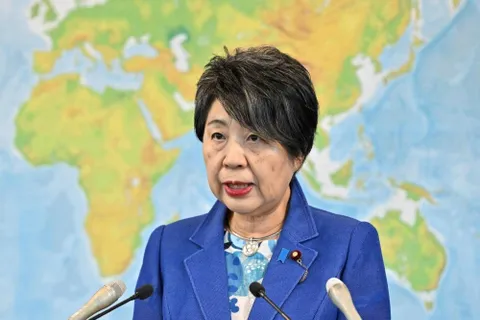
Japanese Foreign Minister Kamikawa Yoko asserts that Thailand's OECD membership will attract private investment and drive domestic reforms to overcome the middle-income trap.
She highlights the OECD's valuable datasets and analysts as crucial resources for Thailand's necessary domestic reforms.
Thailand officially applied to join the OECD in February, receiving strong initial support, and hopes to achieve membership within five years.
Japan, a leading Asian member, actively spearheads efforts to encourage more ASEAN countries to join the OECD, aiming to expand the organization's diversity and engagement with the Indo-Pacific.
Thailand's Education Ministry is implementing a four-pronged strategy to address its students' below-average performance in PISA 2025 and tackle significant educational inequality.
The plan prioritizes closing performance gaps by increasing funding for small and low-income schools, overhauling the curriculum to foster critical thinking, and adopting a data-driven management system to reduce teacher workload.
Key initiatives include enhancing school safety, combating cyberbullying, and expanding mental health support through peer-to-peer networks, recognizing the severe impact of distress on academic performance.
An education expert advises verifying if PISA improvements stem from structural changes, advocating for a revived STEM curriculum with practical 'learn by doing' methods, and urging bureaucratic reform to link teacher evaluations to student development.