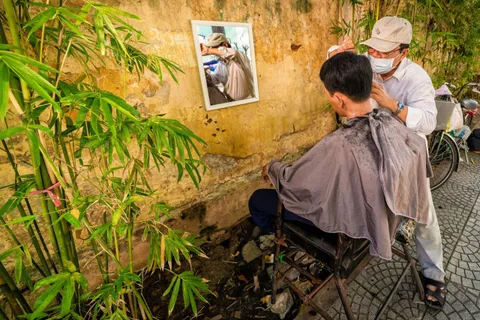
Roadside barbershops in Vietnam embody a cherished old-world charm, offering affordable grooming, lively social interactions, and a strong sense of community that has become a long-standing tradition.
These traditional street-side businesses are dwindling due to urban clearing campaigns aimed at modernizing city streets and evolving beauty standards that favor more upscale salons.
A similar trend is observed in Thailand, where street clearing initiatives in Bangkok are displacing beloved street vendors and food stalls, impacting the vibrant street culture that attracts tourists and locals alike.
Despite facing significant challenges from modernity and urban development, these unique street-side enterprises across Southeast Asia continue to contribute a distinctive charm and cultural identity that many believe should be preserved and appreciated.
Thailand's Education Ministry is implementing a four-pronged strategy to address its students' below-average performance in PISA 2025 and tackle significant educational inequality.
The plan prioritizes closing performance gaps by increasing funding for small and low-income schools, overhauling the curriculum to foster critical thinking, and adopting a data-driven management system to reduce teacher workload.
Key initiatives include enhancing school safety, combating cyberbullying, and expanding mental health support through peer-to-peer networks, recognizing the severe impact of distress on academic performance.
An education expert advises verifying if PISA improvements stem from structural changes, advocating for a revived STEM curriculum with practical 'learn by doing' methods, and urging bureaucratic reform to link teacher evaluations to student development.