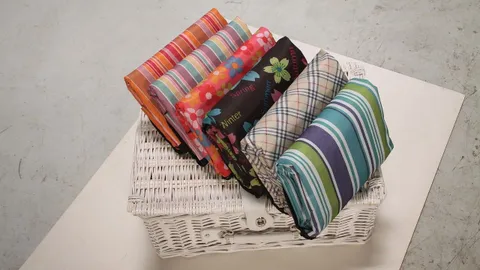
Traditional floor mat sleeping, deeply rooted in Southeast Asian culture and history, is declining due to modern Western influences and urban lifestyles.
Mat-weaving is an ancient craft in the region, with countries like Vietnam and the Philippines producing unique, colorful hand-woven mats from natural materials.
Thailand's Chanthaboon mats, originating from Chanthaburi Province, are celebrated for their exquisite quality, intricate patterns, and vibrant colors, crafted by highly skilled local weavers.
The Chanthaboon mat-weaving tradition was introduced by Vietnamese Catholic nuns and later popularized and supported by Queen Rambai Barni in 1949, significantly boosting the local industry.
Despite its rich heritage, the hand-woven mat industry faces the threat of becoming a 'dying trade' due to a shortage of young artisans and dwindling raw material supplies.
Thailand's Education Ministry is implementing a four-pronged strategy to address its students' below-average performance in PISA 2025 and tackle significant educational inequality.
The plan prioritizes closing performance gaps by increasing funding for small and low-income schools, overhauling the curriculum to foster critical thinking, and adopting a data-driven management system to reduce teacher workload.
Key initiatives include enhancing school safety, combating cyberbullying, and expanding mental health support through peer-to-peer networks, recognizing the severe impact of distress on academic performance.
An education expert advises verifying if PISA improvements stem from structural changes, advocating for a revived STEM curriculum with practical 'learn by doing' methods, and urging bureaucratic reform to link teacher evaluations to student development.