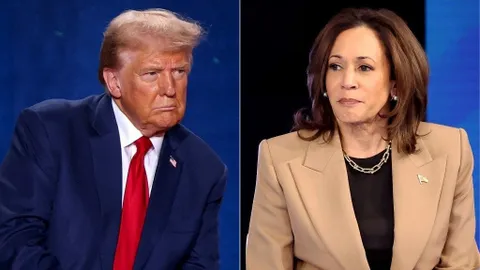
Thailand, a long-standing US treaty ally, is prepared to maintain its strategic partnership with the United States regardless of whether Kamala Harris or Donald Trump wins the upcoming presidential election.
A Harris presidency would likely continue current US foreign policy, emphasizing alliances and the Indo-Pacific Economic Framework, while a Trump victory would build on the stable relations and trade growth seen during his previous term.
Both US administrations are expected to maintain a firm stance on China, but Thailand, like other ASEAN nations, will avoid full alignment with either superpower, prioritizing diversified relationships and a balanced approach.
Despite potential shifts in the depth and character of the US-Thai relationship based on leadership styles, military cooperation, such as the Cobra Gold exercises, will continue, though its scope may evolve as global power dynamics shift towards multipolarity.
Thailand's Education Ministry is implementing a four-pronged strategy to address its students' below-average performance in PISA 2025 and tackle significant educational inequality.
The plan prioritizes closing performance gaps by increasing funding for small and low-income schools, overhauling the curriculum to foster critical thinking, and adopting a data-driven management system to reduce teacher workload.
Key initiatives include enhancing school safety, combating cyberbullying, and expanding mental health support through peer-to-peer networks, recognizing the severe impact of distress on academic performance.
An education expert advises verifying if PISA improvements stem from structural changes, advocating for a revived STEM curriculum with practical 'learn by doing' methods, and urging bureaucratic reform to link teacher evaluations to student development.