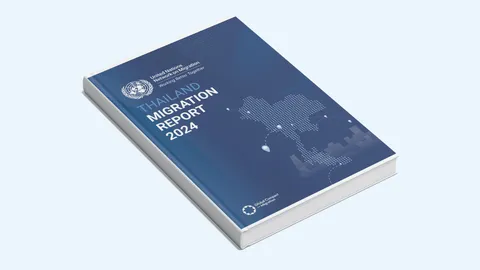
Thailand is a major migration hub in Southeast Asia, hosting over 5.3 million non-Thai nationals and serving as a destination, transit point, and source country for migrants.
Despite migrants' vital contributions to Thailand's economy, many face low pay, poor working conditions, and limited social protection, a challenge amplified by the increasing influx of displaced people from Myanmar.
The report urges Thailand to implement comprehensive policies, strengthen legal and social protections, and create accessible pathways for all migrants to register, access services, and work under decent conditions to achieve sustainable development.
Thailand's Education Ministry is implementing a four-pronged strategy to address its students' below-average performance in PISA 2025 and tackle significant educational inequality.
The plan prioritizes closing performance gaps by increasing funding for small and low-income schools, overhauling the curriculum to foster critical thinking, and adopting a data-driven management system to reduce teacher workload.
Key initiatives include enhancing school safety, combating cyberbullying, and expanding mental health support through peer-to-peer networks, recognizing the severe impact of distress on academic performance.
An education expert advises verifying if PISA improvements stem from structural changes, advocating for a revived STEM curriculum with practical 'learn by doing' methods, and urging bureaucratic reform to link teacher evaluations to student development.