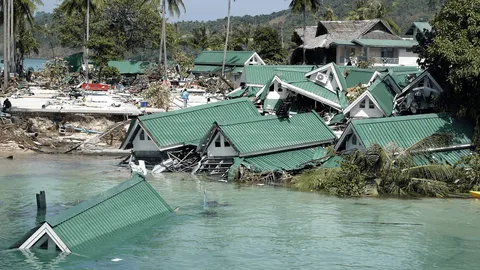
The 2004 Indian Ocean tsunami caused immense devastation, killing nearly 300,000 across 14 countries, with Thailand suffering over 5,300 casualties and extensive damage to six southern provinces.
The disaster profoundly altered Thailand's national psyche, leading to significant advancements in disaster management, including the adoption of tsunami awareness, improved warning systems, and comprehensive preparedness campaigns.
Despite initial challenges in managing the unprecedented scale of the disaster, Thailand has established robust legal frameworks, local response plans, and ongoing training drills, though vigilance remains crucial against future natural events.
The immense challenge of victim identification after the tsunami continues, with forensic efforts still ongoing and approximately 350 bodies remaining unidentified at Bangmaruan Cemetery after two decades.
Thailand's Education Ministry is implementing a four-pronged strategy to address its students' below-average performance in PISA 2025 and tackle significant educational inequality.
The plan prioritizes closing performance gaps by increasing funding for small and low-income schools, overhauling the curriculum to foster critical thinking, and adopting a data-driven management system to reduce teacher workload.
Key initiatives include enhancing school safety, combating cyberbullying, and expanding mental health support through peer-to-peer networks, recognizing the severe impact of distress on academic performance.
An education expert advises verifying if PISA improvements stem from structural changes, advocating for a revived STEM curriculum with practical 'learn by doing' methods, and urging bureaucratic reform to link teacher evaluations to student development.