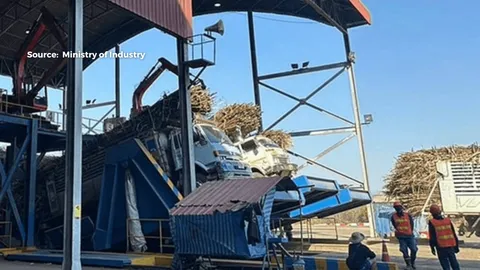
The Ministry of Industry ordered the immediate closure of an Udon Thani sugar mill for exceeding the 25% maximum quota, having processed 43.11% burned sugarcane.
The mill's power plant was also shut down due to safety standard violations, leaving over 1,200 trucks of sugarcane unloaded.
Industry Minister Akanat Promphan stated that 400,000 tonnes of burned sugarcane caused environmental damage equivalent to burning 6,400 hectares of forest.
Sugarcane farmers' associations criticized the 25% limit as unfair, leading to unsold burned cane, and proposed higher prices for fresh cane to incentivize farmers.
While 4 mills exceeded the limit, the majority (54 out of 58) of the country's sugar mills complied with or stayed below the 25% burned sugarcane quota.
Thailand's Education Ministry is implementing a four-pronged strategy to address its students' below-average performance in PISA 2025 and tackle significant educational inequality.
The plan prioritizes closing performance gaps by increasing funding for small and low-income schools, overhauling the curriculum to foster critical thinking, and adopting a data-driven management system to reduce teacher workload.
Key initiatives include enhancing school safety, combating cyberbullying, and expanding mental health support through peer-to-peer networks, recognizing the severe impact of distress on academic performance.
An education expert advises verifying if PISA improvements stem from structural changes, advocating for a revived STEM curriculum with practical 'learn by doing' methods, and urging bureaucratic reform to link teacher evaluations to student development.