Nationwide crackdown launched on illegal nominee shareholders and land holdings
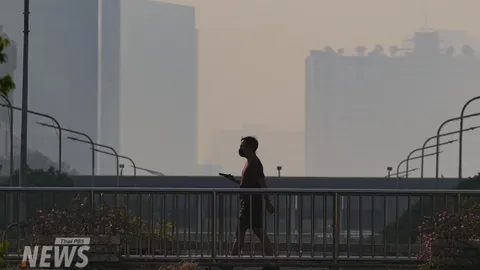
144,000 people treated for pollution-related diseases so far this year
AI In-Brief
Thailand News in Brief
Thai PBS World
Thailand and the world, every day
AI can make mistakes. Please double-check.
144,000 people treated for pollution-related diseases so far this year
13 Sept 14:58Key points summarised by AI
Approximately 144,000 individuals sought treatment for pollution-related ailments like asthma and skin diseases during the first three weeks of January, as PM2.5 dust levels exceeded safe limits.
PM2.5 pollution reached 'unhealthy' levels in 45 provinces, with Bangkok and several others experiencing 'Red' (unhealthy) air quality.
The Public Health Ministry established guidelines empowering provincial governors to declare pollution-related disease control zones when PM2.5 levels surpass 75µg/m³.
The Education Ministry canceled a major parade in Bangkok, involving 5,000 participants, due to severe air pollution concerns.
Nationwide crackdown launched on illegal nominee shareholders and land holdings
Yesterday 15:20Key points summarised by AI
Thailand's Prime Minister Anutin Charnvirakul initiated a nationwide crackdown on illegal Thai nominee shareholders in foreign-run businesses and land holdings to safeguard national interests.
The government will integrate efforts across all relevant agencies to target illicit foreign operations, forced sales of illegally acquired property, and high-risk land ownership schemes.
Key strategies include auditing suspect land and building holdings, establishing a long-term monitoring system, and cross-referencing data from various authorities to trace ultimate beneficial owners.
Prime Minister Anutin emphasized that no influential figures or corrupt officials are above the law, promising straightforward prosecution, asset seizures, and protection for enforcing officers.
Beyond land ownership, the integrated crackdown will also extend to tackle transnational crimes, including drug and human trafficking.