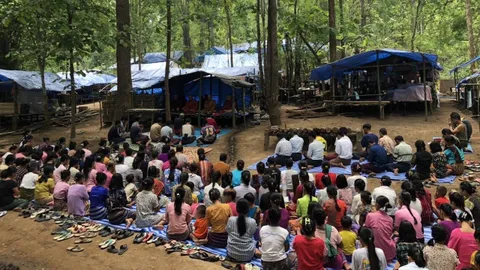
How US aid cut is reshaping displaced persons' healthcare on Thailand’s border
AI In-Brief
Thailand News in Brief
Thai PBS World
Thailand and the world, every day
AI can make mistakes. Please double-check.
How US aid cut is reshaping displaced persons' healthcare on Thailand’s border
11 Sept 20:35Key points summarised by AI
The US government's 90-day aid freeze to the International Rescue Committee (IRC) has severed healthcare access for nearly 100,000 displaced persons in Thailand's four border provinces.
Thai state hospitals have stepped in to provide essential care, but this offers only a short-term solution, highlighting the critical absence of a sustainable long-term plan for Myanmar's displaced population.
Thailand's Public Health Minister is actively seeking $3 million from the World Health Organization (WHO) and proposing a tripartite international initiative to strengthen medical services in border areas.
Frontline clinics and border hospitals are overwhelmed by funding cuts and increased patient loads, straining resources and exacerbating an already critical doctor-patient ratio, prompting calls for national-level management and funding.
Experts assert that healthcare for displaced persons is a basic human right, advocating for integrated medical services within camps and urging new international funders, including Asian countries, to provide structural solutions.
Thailand's Education Ministry is implementing a four-pronged strategy to address its students' below-average performance in PISA 2025 and tackle significant educational inequality.
The plan prioritizes closing performance gaps by increasing funding for small and low-income schools, overhauling the curriculum to foster critical thinking, and adopting a data-driven management system to reduce teacher workload.
Key initiatives include enhancing school safety, combating cyberbullying, and expanding mental health support through peer-to-peer networks, recognizing the severe impact of distress on academic performance.
An education expert advises verifying if PISA improvements stem from structural changes, advocating for a revived STEM curriculum with practical 'learn by doing' methods, and urging bureaucratic reform to link teacher evaluations to student development.