A contentious White House meeting between Trump and Zelensky highlighted Trump's 'America First' stance, signaling a potential U.S. foreign policy shift that undermines its global leadership and belittles allies.
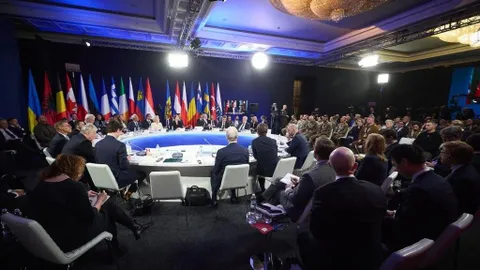
The U.S.'s increasing unpredictability under a potential Trump administration compels European nations to recognize their urgent, shared responsibility for Ukraine's security, a burden previously largely shouldered by the Biden administration.
Europe faces significant internal political turmoil, with weak governments and rising extremist groups, complicating its ability to unite and effectively take on greater defense responsibilities despite the recognized need for action.
Trump's isolationist tendencies and unpredictable policies are pushing developing nations and Europe to forge stronger alliances and pursue a multipolar global order to safeguard against instability caused by a less reliable U.S.
Thailand's Education Ministry is implementing a four-pronged strategy to address its students' below-average performance in PISA 2025 and tackle significant educational inequality.
The plan prioritizes closing performance gaps by increasing funding for small and low-income schools, overhauling the curriculum to foster critical thinking, and adopting a data-driven management system to reduce teacher workload.
Key initiatives include enhancing school safety, combating cyberbullying, and expanding mental health support through peer-to-peer networks, recognizing the severe impact of distress on academic performance.
An education expert advises verifying if PISA improvements stem from structural changes, advocating for a revived STEM curriculum with practical 'learn by doing' methods, and urging bureaucratic reform to link teacher evaluations to student development.