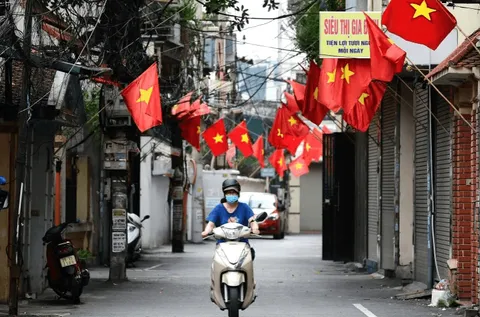
Vietnam actively reshapes its diplomatic approach to achieve middle power status and become a high-income developed economy by 2045, emphasizing strategic partnerships and economic growth.
Positioned to lead ASEAN after 30 years of integration, Vietnam strengthens regional ties with countries like Malaysia, Indonesia, and Singapore, while advocating for stability in areas such as the South China Sea.
Employing a flexible 'bamboo diplomacy,' Vietnam strategically balances engagement with major global powers, including the US, China, and Europe, to diversify trade and secure its strategic interests.
Leveraging a network of bilateral and multilateral trade agreements and significant investments in digital infrastructure and AI, Vietnam aims to sustain long-term economic growth and transition to a knowledge-based economy.
Thailand's Education Ministry is implementing a four-pronged strategy to address its students' below-average performance in PISA 2025 and tackle significant educational inequality.
The plan prioritizes closing performance gaps by increasing funding for small and low-income schools, overhauling the curriculum to foster critical thinking, and adopting a data-driven management system to reduce teacher workload.
Key initiatives include enhancing school safety, combating cyberbullying, and expanding mental health support through peer-to-peer networks, recognizing the severe impact of distress on academic performance.
An education expert advises verifying if PISA improvements stem from structural changes, advocating for a revived STEM curriculum with practical 'learn by doing' methods, and urging bureaucratic reform to link teacher evaluations to student development.