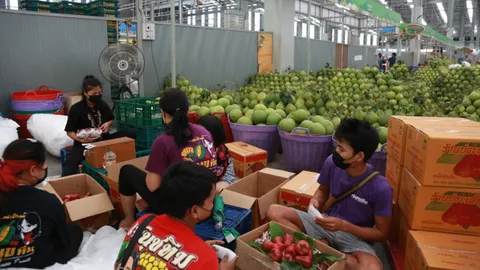
Thailand's Commerce Ministry designates 2025 as the "golden year" for Thai fruits, launching a comprehensive framework with seven measures and 25 plans to significantly boost exports and domestic sales.
The initiative projects a 15% increase in overall fruit supply to over 6.7 million tons in 2025, with durian supply alone surging 37% to 1.7 million tons, aiming to stabilize prices and achieve 950,000 tons in sales and exports.
Export-focused strategies include 32 activities like business matching and promotional campaigns across various platforms, expected to generate at least 10 billion baht in revenue.
A "Chanthaburi Model" mechanism is established to rigorously screen durian exporters, ensuring compliance with international standards, specifically China's requirements for no carcinogenic residues.
Thailand's Education Ministry is implementing a four-pronged strategy to address its students' below-average performance in PISA 2025 and tackle significant educational inequality.
The plan prioritizes closing performance gaps by increasing funding for small and low-income schools, overhauling the curriculum to foster critical thinking, and adopting a data-driven management system to reduce teacher workload.
Key initiatives include enhancing school safety, combating cyberbullying, and expanding mental health support through peer-to-peer networks, recognizing the severe impact of distress on academic performance.
An education expert advises verifying if PISA improvements stem from structural changes, advocating for a revived STEM curriculum with practical 'learn by doing' methods, and urging bureaucratic reform to link teacher evaluations to student development.