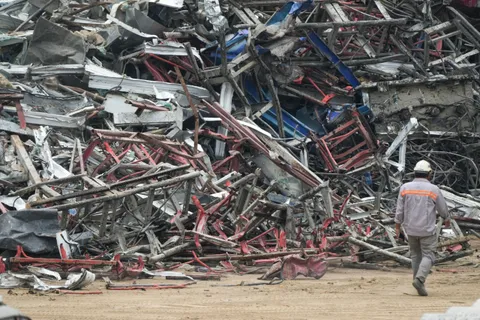
A powerful earthquake in Myanmar on March 28 sent significant tremors through Bangkok, marking the strongest felt since 1930 and a first-time experience for many residents.
Personal accounts reveal widespread chaos and unpreparedness; hospital staff improvised patient evacuations, while office workers faced disrupted transit and panic.
The incident underscored critical gaps in public safety, with citizens relying on personal judgment and social media for information due to a lack of official SMS alerts.
Witnesses observed significant challenges for people with disabilities during the chaos and called for improved government preparedness and communication systems for future events.
Thailand's Education Ministry is implementing a four-pronged strategy to address its students' below-average performance in PISA 2025 and tackle significant educational inequality.
The plan prioritizes closing performance gaps by increasing funding for small and low-income schools, overhauling the curriculum to foster critical thinking, and adopting a data-driven management system to reduce teacher workload.
Key initiatives include enhancing school safety, combating cyberbullying, and expanding mental health support through peer-to-peer networks, recognizing the severe impact of distress on academic performance.
An education expert advises verifying if PISA improvements stem from structural changes, advocating for a revived STEM curriculum with practical 'learn by doing' methods, and urging bureaucratic reform to link teacher evaluations to student development.