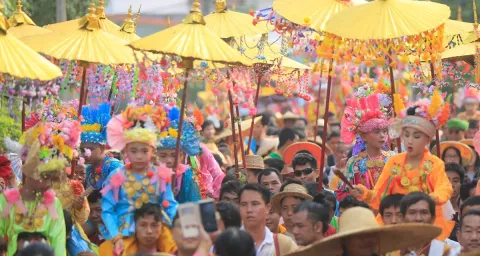
The Poi Sang Long Festival in Mae Hong Son, Thailand, is a vibrant, centuries-old Tai Yai (Shan) Buddhist ordination ritual for young boys.
During the multi-day event, boys known as Sang Long temporarily enter monastic life to learn Buddhism and earn merit, treated as 'princes' with elaborate adornments and ceremonial parades.
The festival features distinct ceremonies, including head shaving and purification, a visually stunning Khua Lu Procession through the town, and culminates in their official ordination into simple saffron robes.
Beyond its religious significance, Poi Sang Long is a powerful celebration of Tai Yai identity, offering a rare glimpse into an ancient, untainted cultural tradition.
Thailand's Education Ministry is implementing a four-pronged strategy to address its students' below-average performance in PISA 2025 and tackle significant educational inequality.
The plan prioritizes closing performance gaps by increasing funding for small and low-income schools, overhauling the curriculum to foster critical thinking, and adopting a data-driven management system to reduce teacher workload.
Key initiatives include enhancing school safety, combating cyberbullying, and expanding mental health support through peer-to-peer networks, recognizing the severe impact of distress on academic performance.
An education expert advises verifying if PISA improvements stem from structural changes, advocating for a revived STEM curriculum with practical 'learn by doing' methods, and urging bureaucratic reform to link teacher evaluations to student development.