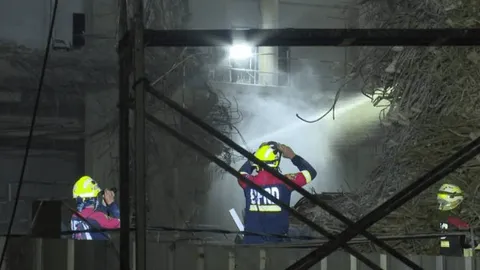
One quake, many fault lines: Bangkok building collapse exposes gaps in disaster response
AI In-Brief
Thailand News in Brief
Thai PBS World
Thailand and the world, every day
AI can make mistakes. Please double-check.
One quake, many fault lines: Bangkok building collapse exposes gaps in disaster response
13 Sept 12:52Key points summarised by AI
A 30-storey building under construction in Bangkok collapsed during a 7.7-magnitude Myanmar earthquake, killing 16 workers and trapping many more, leading to profound grief and trauma among survivors and families.
The disaster exposed critical deficiencies in Thailand's disaster response systems, including delayed official information, non-functional warning towers, and bureaucratic disputes hindering the implementation of a new cellphone alert system.
Vulnerable migrant workers, many lacking documentation or formal employment contracts, face significant obstacles in claiming compensation, highlighting a dire need for government intervention and relaxed rules to ensure support for all affected.
An ongoing investigation into the collapse, complicated by extensive sub-contracting practices and denials of wrongdoing by the State Audit Office and its contractor, aims to determine accountability amidst calls for swift answers.
Thailand's Education Ministry is implementing a four-pronged strategy to address its students' below-average performance in PISA 2025 and tackle significant educational inequality.
The plan prioritizes closing performance gaps by increasing funding for small and low-income schools, overhauling the curriculum to foster critical thinking, and adopting a data-driven management system to reduce teacher workload.
Key initiatives include enhancing school safety, combating cyberbullying, and expanding mental health support through peer-to-peer networks, recognizing the severe impact of distress on academic performance.
An education expert advises verifying if PISA improvements stem from structural changes, advocating for a revived STEM curriculum with practical 'learn by doing' methods, and urging bureaucratic reform to link teacher evaluations to student development.