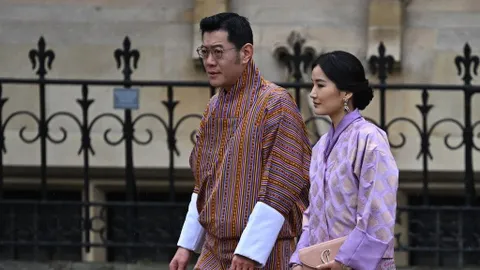
Thailand's King and Queen will make a historic four-day royal visit to Bhutan (April 25-28), marking the first overseas trip for the reigning Thai monarch, to strengthen bilateral ties and cooperation.
Both nations share deep, warm relations, a common Buddhist heritage, and complementary development philosophies like Thailand's Sufficiency Economy and Bhutan's Gross National Happiness.
Recent agreements include a new free trade agreement (Bhutan's first outside South Asia), collaboration on the BIMSTEC FTA, and Thailand's expressed interest in investing in Bhutan's Gelephu Mindfulness City project.
The countries aim to boost tourism through the 'Two Kingdoms, One Destination' policy, alongside existing Thai investments in Bhutan's hospitality sector and future collaboration in hydropower and renewable energy.
Thailand's Education Ministry is implementing a four-pronged strategy to address its students' below-average performance in PISA 2025 and tackle significant educational inequality.
The plan prioritizes closing performance gaps by increasing funding for small and low-income schools, overhauling the curriculum to foster critical thinking, and adopting a data-driven management system to reduce teacher workload.
Key initiatives include enhancing school safety, combating cyberbullying, and expanding mental health support through peer-to-peer networks, recognizing the severe impact of distress on academic performance.
An education expert advises verifying if PISA improvements stem from structural changes, advocating for a revived STEM curriculum with practical 'learn by doing' methods, and urging bureaucratic reform to link teacher evaluations to student development.