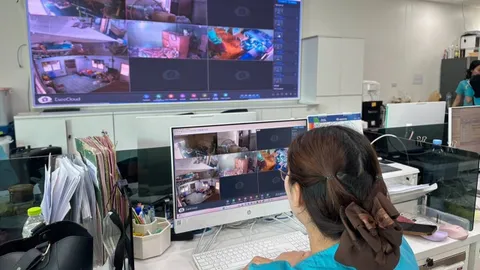
How technology is improving senior care and healthcare access
AI In-Brief
Thailand News in Brief
Thai PBS World
Thailand and the world, every day
AI can make mistakes. Please double-check.
How technology is improving senior care and healthcare access
13 Sept 13:42Key points summarised by AI
Hospitals are deploying free remote monitoring systems, like CCTV connected to smartphones and hospital centers, to ensure the safety of older adults at home and enable rapid intervention during emergencies, as exemplified by Somchai's mother's early stroke detection.
These technological solutions significantly alleviate stress for family caregivers, especially in low-income households, by allowing them to monitor elderly relatives remotely, promoting independence while ensuring prompt care and preventing serious health escalations.
Healthcare access is expanding through various digital initiatives, including non-emergency transport services, mobile clinics offering virtual doctor visits, and official communication channels like Line Official Accounts for consultations, appointments, and medication delivery.
The integrated use of technology fosters proactive health management, enabling quick responses to health issues, reducing emergency room visits and hospital stays, and ultimately enhancing patient outcomes and healthcare efficiency.
Thailand's Education Ministry is implementing a four-pronged strategy to address its students' below-average performance in PISA 2025 and tackle significant educational inequality.
The plan prioritizes closing performance gaps by increasing funding for small and low-income schools, overhauling the curriculum to foster critical thinking, and adopting a data-driven management system to reduce teacher workload.
Key initiatives include enhancing school safety, combating cyberbullying, and expanding mental health support through peer-to-peer networks, recognizing the severe impact of distress on academic performance.
An education expert advises verifying if PISA improvements stem from structural changes, advocating for a revived STEM curriculum with practical 'learn by doing' methods, and urging bureaucratic reform to link teacher evaluations to student development.