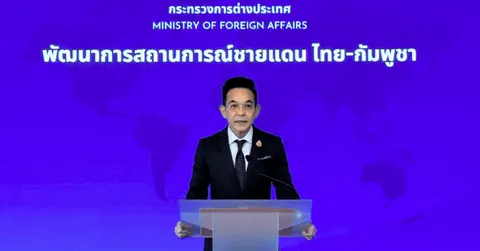
Thailand continues to reject ICJ route to solving border dispute
AI In-Brief
Thailand News in Brief
Thai PBS World
Thailand and the world, every day
AI can make mistakes. Please double-check.
Thailand continues to reject ICJ route to solving border dispute
21 Sept 04:50Key points summarised by AI
Thailand firmly rejects involving the International Court of Justice (ICJ) in its border dispute with Cambodia, preferring to resolve tensions exclusively through bilateral mechanisms.
Following a recent clash, both Thai and Cambodian army commanders agreed to utilize established bilateral frameworks, including the Joint Border Commission (JBC) and General Border Committee (GBC).
Thailand reiterates its long-standing non-recognition of the ICJ's compulsory jurisdiction since 1960 and highlights the tangible progress achieved through bilateral cooperation over the past 26 years.
The Thai government expresses readiness to resume the JBC process on June 14, urging Cambodia to demonstrate similar willingness for a peaceful and cooperative resolution.
Thailand's Education Ministry is implementing a four-pronged strategy to address its students' below-average performance in PISA 2025 and tackle significant educational inequality.
The plan prioritizes closing performance gaps by increasing funding for small and low-income schools, overhauling the curriculum to foster critical thinking, and adopting a data-driven management system to reduce teacher workload.
Key initiatives include enhancing school safety, combating cyberbullying, and expanding mental health support through peer-to-peer networks, recognizing the severe impact of distress on academic performance.
An education expert advises verifying if PISA improvements stem from structural changes, advocating for a revived STEM curriculum with practical 'learn by doing' methods, and urging bureaucratic reform to link teacher evaluations to student development.