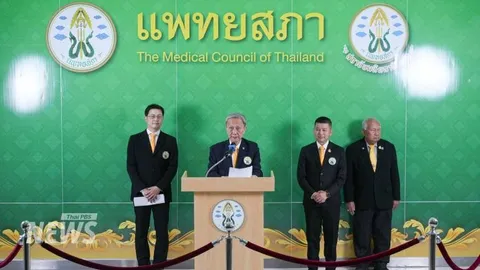
The Medical Council re-affirmed its conclusion that former PM Thaksin Shinawatra received VIP treatment at the Police Hospital, overriding the Public Health Minister's veto and signaling doctors' independence from political influence.
This decision directly challenges the widely perceived political façade surrounding Thaksin's hospital stay, which many viewed as an improper maneuver rather than a genuine medical necessity.
The council's action is hailed as doctors' declaration of freedom from political interference, echoing past instances where the medical community resisted controversial political decisions.
This move carries significant political ramifications for Thailand, impacting Thaksin's legal status, the Pheu Thai Party's alliances, and the political future of key figures, potentially leading to broader political instability.
Thailand's Education Ministry is implementing a four-pronged strategy to address its students' below-average performance in PISA 2025 and tackle significant educational inequality.
The plan prioritizes closing performance gaps by increasing funding for small and low-income schools, overhauling the curriculum to foster critical thinking, and adopting a data-driven management system to reduce teacher workload.
Key initiatives include enhancing school safety, combating cyberbullying, and expanding mental health support through peer-to-peer networks, recognizing the severe impact of distress on academic performance.
An education expert advises verifying if PISA improvements stem from structural changes, advocating for a revived STEM curriculum with practical 'learn by doing' methods, and urging bureaucratic reform to link teacher evaluations to student development.