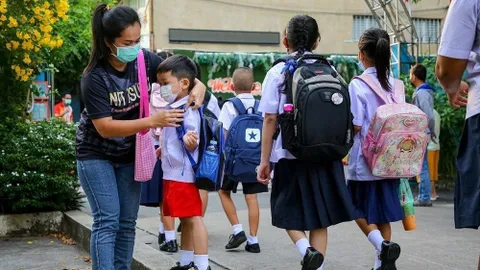
Carrying overly heavy school bags poses significant health risks to children, leading to immediate pain, discomfort, poor posture, and potential long-term musculoskeletal disorders like chronic back pain and scoliosis.
Experts recommend a child's backpack should weigh no more than 10% of their body weight, yet many students, particularly in early primary grades, carry bags substantially exceeding this limit due to numerous books and supplies.
Solutions proposed include using bags on wheels (with caution), teachers providing clear instructions on necessary books, schools offering lockers for storage, and parents helping children pack efficiently and distribute weight evenly.
Parents express deep concern over the health impacts, actively managing bag contents and utilizing alternatives like trolley bags, while advocating for school policies that reduce the daily burden on their children.
Thailand's Education Ministry is implementing a four-pronged strategy to address its students' below-average performance in PISA 2025 and tackle significant educational inequality.
The plan prioritizes closing performance gaps by increasing funding for small and low-income schools, overhauling the curriculum to foster critical thinking, and adopting a data-driven management system to reduce teacher workload.
Key initiatives include enhancing school safety, combating cyberbullying, and expanding mental health support through peer-to-peer networks, recognizing the severe impact of distress on academic performance.
An education expert advises verifying if PISA improvements stem from structural changes, advocating for a revived STEM curriculum with practical 'learn by doing' methods, and urging bureaucratic reform to link teacher evaluations to student development.