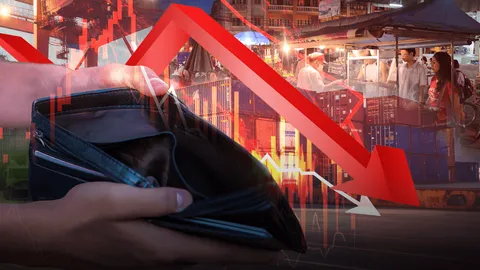
Current political crisis has an economic cost for Thailand
AI In-Brief
Thailand News in Brief
Thai PBS World
Thailand and the world, every day
AI can make mistakes. Please double-check.
Current political crisis has an economic cost for Thailand
10 Sept 16:40Key points summarised by AI
Thailand's economy faces significant headwinds due to the political crisis, including Prime Minister Paetongtarn Shinawatra's suspension, leading to cautious investors and weakened confidence.
The ongoing instability threatens to stall private sector investments, delay crucial government budget disbursements for 2026, and reduce the effectiveness of economic stimulus measures.
International trade negotiations, especially with the United States regarding tariffs, are at risk, as the US may leverage Thailand's political turmoil as a bargaining chip.
External economic pressures, such as potential new US tariffs on countries with trade surpluses like Thailand, further darken the economic outlook, with some banks forecasting lower GDP growth.
Despite calls for political resolution like dissolving Parliament, the crisis is likely to persist due to entrenched political dynamics and judicial interventions, further complicated by regional trade disputes with Cambodia.
Thailand's Education Ministry is implementing a four-pronged strategy to address its students' below-average performance in PISA 2025 and tackle significant educational inequality.
The plan prioritizes closing performance gaps by increasing funding for small and low-income schools, overhauling the curriculum to foster critical thinking, and adopting a data-driven management system to reduce teacher workload.
Key initiatives include enhancing school safety, combating cyberbullying, and expanding mental health support through peer-to-peer networks, recognizing the severe impact of distress on academic performance.
An education expert advises verifying if PISA improvements stem from structural changes, advocating for a revived STEM curriculum with practical 'learn by doing' methods, and urging bureaucratic reform to link teacher evaluations to student development.