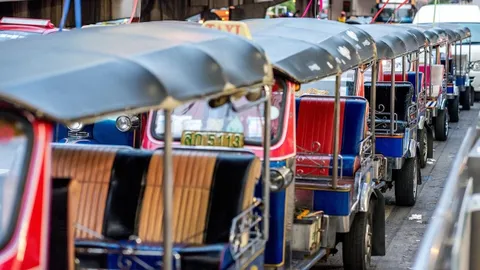
Going Places: Rarely seen traditional means of transport
AI In-Brief
Thailand News in Brief
Thai PBS World
Thailand and the world, every day
AI can make mistakes. Please double-check.
Going Places: Rarely seen traditional means of transport
10 Sept 21:01Key points summarised by AI
Traditional modes of transport, such as riding animals (water buffalo, elephants), diverse boats, and unique road vehicles (tuk-tuks, becaks, calesas), were once common across Southeast Asia but have largely been supplanted by modern systems.
Animal-back travel is now a rare sight, mostly confined to remote rural areas, while traditional boats, like long-tail boats, once crucial for daily life and trade on extensive waterways, often now serve as tourist attractions.
Iconic road vehicles like Thailand's tuk-tuk continue to operate, albeit with some urban restrictions, whereas others such as Indonesia's becak and the Philippines' calesa have largely faded from daily use, becoming heritage symbols or tourist draws.
These increasingly rare traditional transports endure as significant cultural and heritage symbols, offering a tangible connection to simpler times and the rich history of Southeast Asia.
Thailand's Education Ministry is implementing a four-pronged strategy to address its students' below-average performance in PISA 2025 and tackle significant educational inequality.
The plan prioritizes closing performance gaps by increasing funding for small and low-income schools, overhauling the curriculum to foster critical thinking, and adopting a data-driven management system to reduce teacher workload.
Key initiatives include enhancing school safety, combating cyberbullying, and expanding mental health support through peer-to-peer networks, recognizing the severe impact of distress on academic performance.
An education expert advises verifying if PISA improvements stem from structural changes, advocating for a revived STEM curriculum with practical 'learn by doing' methods, and urging bureaucratic reform to link teacher evaluations to student development.