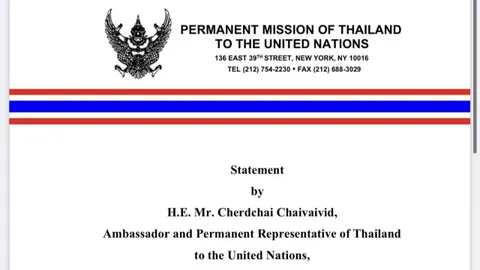
‘Don’t look away’ from Cambodia’s attacks on Thai civilians - Thai envoy tells UNSC
AI In-Brief
Thailand News in Brief
Thai PBS World
Thailand and the world, every day
AI can make mistakes. Please double-check.
‘Don’t look away’ from Cambodia’s attacks on Thai civilians - Thai envoy tells UNSC
11 Sept 03:58Key points summarised by AI
Thailand's Ambassador to the UN urged the Security Council "not to look away" from Cambodia's "unprovoked and indiscriminate attacks" on Thai territory, condemning them as grave violations of international law.
Cambodian forces' actions since July 24 have caused 14 deaths, including four children, displaced over 130,000 people, and damaged civilian infrastructure like hospitals and schools.
Thailand accused Cambodia of breaching the UN Charter and Geneva Convention through attacks on civilian areas, medical facilities, and the deployment of newly laid landmines in cleared Thai territory.
Thailand affirmed it has acted strictly in self-defense under the UN Charter, exercising restraint with military operations that are limited, proportionate, and targeted solely at legitimate military threats.
Thailand called on Cambodia to cease all hostile actions, return to diplomacy, and uphold international obligations, while rejecting Cambodia's claims and accusing it of avoiding meaningful dialogue for political gain.
Thailand's Education Ministry is implementing a four-pronged strategy to address its students' below-average performance in PISA 2025 and tackle significant educational inequality.
The plan prioritizes closing performance gaps by increasing funding for small and low-income schools, overhauling the curriculum to foster critical thinking, and adopting a data-driven management system to reduce teacher workload.
Key initiatives include enhancing school safety, combating cyberbullying, and expanding mental health support through peer-to-peer networks, recognizing the severe impact of distress on academic performance.
An education expert advises verifying if PISA improvements stem from structural changes, advocating for a revived STEM curriculum with practical 'learn by doing' methods, and urging bureaucratic reform to link teacher evaluations to student development.