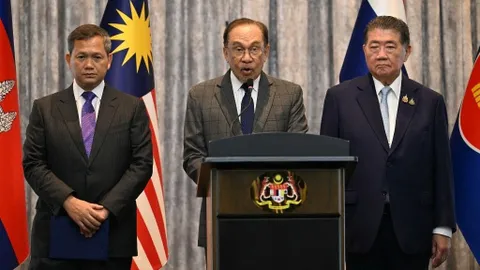
Stirrings of discontent in Thailand over ASEAN-brokered ceasefire with Cambodia
AI In-Brief
Thailand News in Brief
Thai PBS World
Thailand and the world, every day
AI can make mistakes. Please double-check.
Stirrings of discontent in Thailand over ASEAN-brokered ceasefire with Cambodia
14 Sept 04:05Key points summarised by AI
ASEAN, with US President Trump's backing, brokered an unconditional ceasefire between Thailand and Cambodia, effective July 28, to halt escalating border clashes that resulted in casualties and evacuations on both sides.
The truce immediately sparked widespread discontent among the Thai military and right-wing nationalists, who criticize the government for accepting an unconditional agreement, viewing it as a capitulation rather than a compromise, especially after reports of Cambodian ceasefire violations.
US President Trump's intervention, linking future trade deals to the cessation of hostilities, pressured both nations into the agreement, though the Thai government faces internal backlash for seemingly bowing to external influence.
Thai nationalist groups are vehemently calling for the government to scrap the 2000 Memorandum of Understanding and challenge Cambodia's petition to the International Court of Justice (ICJ) over disputed border areas, advocating for a more assertive stance on national sovereignty.
Thailand's Education Ministry is implementing a four-pronged strategy to address its students' below-average performance in PISA 2025 and tackle significant educational inequality.
The plan prioritizes closing performance gaps by increasing funding for small and low-income schools, overhauling the curriculum to foster critical thinking, and adopting a data-driven management system to reduce teacher workload.
Key initiatives include enhancing school safety, combating cyberbullying, and expanding mental health support through peer-to-peer networks, recognizing the severe impact of distress on academic performance.
An education expert advises verifying if PISA improvements stem from structural changes, advocating for a revived STEM curriculum with practical 'learn by doing' methods, and urging bureaucratic reform to link teacher evaluations to student development.