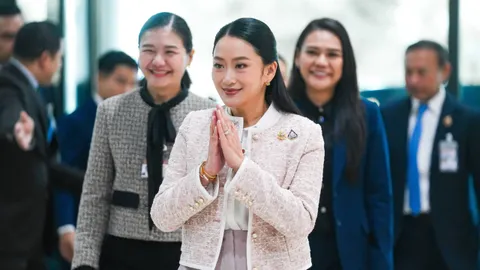
Thai politics faces a highly treacherous period with critical court rulings scheduled for August and September, directly impacting Thaksin Shinawatra and his prime minister daughter, Paetongtarn Shinawatra.
Paetongtarn's leadership is particularly precarious as the Constitutional Court's verdict on her controversial phone call with Hun Sen could shatter the fragile political equilibrium, especially given her criticized defense strategy.
Should Paetongtarn be disqualified, various complex scenarios for a new prime minister emerge, including the rise of Anutin Charnvirakul or a potential return of Prayut Chan-o-cha, necessitating intricate and often unlikely political alliances.
The article suggests that typical political solutions like a House dissolution or a coup would likely bring Thailand back to square one, emphasizing the deep-seated challenges and the absence of straightforward positive outcomes for the current crisis.
Thailand's Education Ministry is implementing a four-pronged strategy to address its students' below-average performance in PISA 2025 and tackle significant educational inequality.
The plan prioritizes closing performance gaps by increasing funding for small and low-income schools, overhauling the curriculum to foster critical thinking, and adopting a data-driven management system to reduce teacher workload.
Key initiatives include enhancing school safety, combating cyberbullying, and expanding mental health support through peer-to-peer networks, recognizing the severe impact of distress on academic performance.
An education expert advises verifying if PISA improvements stem from structural changes, advocating for a revived STEM curriculum with practical 'learn by doing' methods, and urging bureaucratic reform to link teacher evaluations to student development.