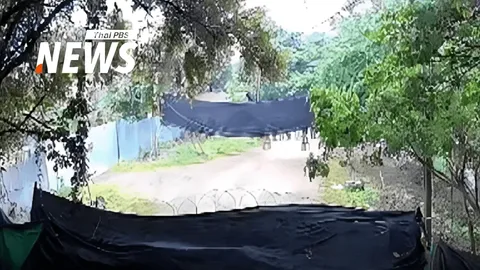
The Burapha Task Force declared martial law in Ban Nong Chan, Sa Kaeo, a Thai border village experiencing confrontations between Thai and Cambodian civilians and troops.
The declaration justifies the move by citing Cambodia's alleged incitement of unrest, necessitating military and civilian protection of Thai territory.
Under martial law, the Sriphen Road is designated as a peacekeeping line, with bans on carrying weapons, blockading routes, taking pictures of military operations, using loudspeakers without permission, quarreling, and alcohol consumption.
The village, historically a shelter for Cambodian refugees, has become a flashpoint due to Cambodia's recent claims and efforts to settle its people, escalating after a recent armed conflict and the erection of a border fence.
Thailand's Education Ministry is implementing a four-pronged strategy to address its students' below-average performance in PISA 2025 and tackle significant educational inequality.
The plan prioritizes closing performance gaps by increasing funding for small and low-income schools, overhauling the curriculum to foster critical thinking, and adopting a data-driven management system to reduce teacher workload.
Key initiatives include enhancing school safety, combating cyberbullying, and expanding mental health support through peer-to-peer networks, recognizing the severe impact of distress on academic performance.
An education expert advises verifying if PISA improvements stem from structural changes, advocating for a revived STEM curriculum with practical 'learn by doing' methods, and urging bureaucratic reform to link teacher evaluations to student development.