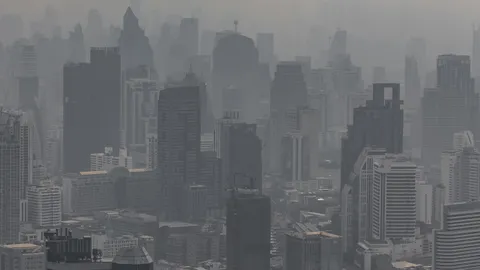
Smog of controversy descends on Thailand’s Clean Air Bill
AI In-Brief
Thailand News in Brief
Thai PBS World
Thailand and the world, every day
AI can make mistakes. Please double-check.
Smog of controversy descends on Thailand’s Clean Air Bill
11 Sept 02:30Key points summarised by AI
Experts warn Thailand's draft Clean Air Bill risks becoming ineffective if the crucial 'polluter pays' principle and its associated 'Clean Air Fund' are removed due to government pressure.
The Clean Air Fund is central to the bill, designed to finance economic instruments like pollution taxes and emission trading to incentivize polluters to clean up their operations.
The comprehensive bill establishes citizens' right to clean air, outlines emissions prevention and control, empowers local authorities to manage air quality, and includes severe penalties up to 50 million baht.
It specifically targets agricultural burning with a traceability system and includes trade provisions for cross-border pollution, while also creating a monitoring network for air quality standards.
Recent actions include designating Bangkok and other cities as pollution-control zones, with plans for stricter vehicle emission standards and enhanced factory monitoring systems to combat the crisis.
Thailand's Education Ministry is implementing a four-pronged strategy to address its students' below-average performance in PISA 2025 and tackle significant educational inequality.
The plan prioritizes closing performance gaps by increasing funding for small and low-income schools, overhauling the curriculum to foster critical thinking, and adopting a data-driven management system to reduce teacher workload.
Key initiatives include enhancing school safety, combating cyberbullying, and expanding mental health support through peer-to-peer networks, recognizing the severe impact of distress on academic performance.
An education expert advises verifying if PISA improvements stem from structural changes, advocating for a revived STEM curriculum with practical 'learn by doing' methods, and urging bureaucratic reform to link teacher evaluations to student development.