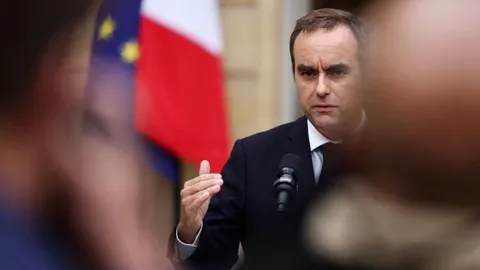
French politics is in severe turmoil, marked by Sébastien Lecornu's record-short tenure as Prime Minister, becoming the fifth in two years.
Lecornu resigned citing 'partisan appetites' and the inability of political factions to compromise, with each demanding full adoption of their programs.
This instability leaves President Macron with limited options, including a likely snap election that could result in another hung Parliament or potentially his own resignation.
The failure to find a unifying leader, even a 'last resort' like Lecornu, highlights France's deep political fractures and the challenge of effective governance amidst widespread partisan gridlock.
Thailand's Education Ministry is implementing a four-pronged strategy to address its students' below-average performance in PISA 2025 and tackle significant educational inequality.
The plan prioritizes closing performance gaps by increasing funding for small and low-income schools, overhauling the curriculum to foster critical thinking, and adopting a data-driven management system to reduce teacher workload.
Key initiatives include enhancing school safety, combating cyberbullying, and expanding mental health support through peer-to-peer networks, recognizing the severe impact of distress on academic performance.
An education expert advises verifying if PISA improvements stem from structural changes, advocating for a revived STEM curriculum with practical 'learn by doing' methods, and urging bureaucratic reform to link teacher evaluations to student development.