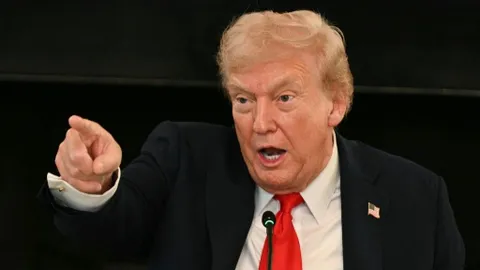
US President Trump made his attendance at the ASEAN Summit conditional on chairing and signing a 'peace agreement' between Thailand and Cambodia, aiming to enhance his global image and counter China's regional influence.
Trump's ego-driven diplomacy sparked controversy, particularly from Malaysia due to his support for Israel, and from ASEAN members who opposed his attempt to monopolize a regional peace initiative while deliberately excluding China.
ASEAN's diplomatic traditions, rooted in consensus, quiet negotiation, and mutual respect, fundamentally clash with Trump's 'brash, zero-sum, 'I-tell-you-to-do-so'' approach.
Thailand's Prime Minister outlined specific conditions for any peace negotiations with Cambodia, emphasizing the need for direct bilateral resolution and respect for Thai sovereignty, rejecting external imposition.
Critics argue that Trump's showmanship and insistence on being the central figure risk inflaming tensions and undermining ASEAN's carefully established regional diplomatic mechanisms.
Thailand's Education Ministry is implementing a four-pronged strategy to address its students' below-average performance in PISA 2025 and tackle significant educational inequality.
The plan prioritizes closing performance gaps by increasing funding for small and low-income schools, overhauling the curriculum to foster critical thinking, and adopting a data-driven management system to reduce teacher workload.
Key initiatives include enhancing school safety, combating cyberbullying, and expanding mental health support through peer-to-peer networks, recognizing the severe impact of distress on academic performance.
An education expert advises verifying if PISA improvements stem from structural changes, advocating for a revived STEM curriculum with practical 'learn by doing' methods, and urging bureaucratic reform to link teacher evaluations to student development.