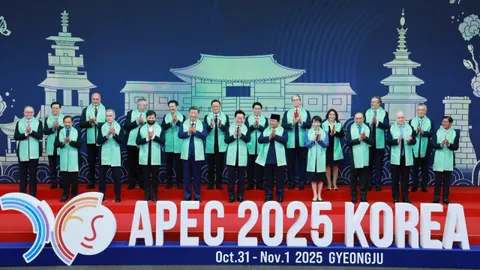
APEC leaders strengthen regional cooperation: They adopted the Gyeongju Declaration to navigate global economic uncertainty, technological shifts, and demographic changes, targeting an open, resilient Asia-Pacific by 2040.
Prioritize strategic initiatives: Commitments include bolstering trade and investment, launching an APEC AI Initiative for capacity building, and establishing a framework to address aging populations and declining birth rates.
Thailand proposes significant regional contributions: Prime Minister Anutin outlined Thailand's vision as a regional "bridge" with a landmark "land bridge" project and declared intent to join the OECD by 2030, aligning with APEC's connectivity and sustainability goals.
Declaration signals cautious recalibration: Amid trade tensions and supply chain disruptions, leaders are re-evaluating the "rules-based" free trade order, focusing on collective benefits and resilience rather than simply restoring past frameworks.
Thailand's Education Ministry is implementing a four-pronged strategy to address its students' below-average performance in PISA 2025 and tackle significant educational inequality.
The plan prioritizes closing performance gaps by increasing funding for small and low-income schools, overhauling the curriculum to foster critical thinking, and adopting a data-driven management system to reduce teacher workload.
Key initiatives include enhancing school safety, combating cyberbullying, and expanding mental health support through peer-to-peer networks, recognizing the severe impact of distress on academic performance.
An education expert advises verifying if PISA improvements stem from structural changes, advocating for a revived STEM curriculum with practical 'learn by doing' methods, and urging bureaucratic reform to link teacher evaluations to student development.