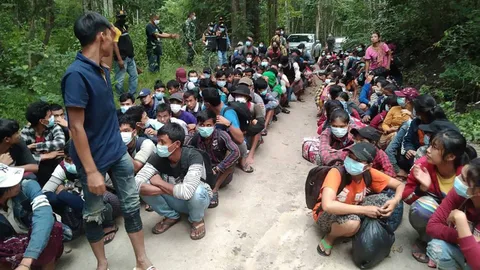
War, red tape and rising hostility: Inside Thailand’s rising migrant crisis
AI In-Brief
Thailand News in Brief
Thai PBS World
Thailand and the world, every day
AI can make mistakes. Please double-check.
War, red tape and rising hostility: Inside Thailand’s rising migrant crisis
16 Sept 07:41Key points summarised by AI
Millions of Myanmar migrants fleeing civil war face significant hurdles in Thailand, including exorbitant registration fees, age discrimination, and an inability to secure legal employment, often leading to undocumented status and exploitation.
Children born to migrant parents in Thailand frequently become stateless due to unregistered births, severely limiting their access to education, formal employment, and a stable future despite being raised in Thailand.
Complex and often corrupt registration procedures, exacerbated by Myanmar junta's demands and Thailand's political instability, push migrants towards predatory agencies and undocumented work, denying them essential social security and legal protections.
Rising hostility and tightening regulations, particularly impacting Cambodian workers amid border conflicts and nationalist sentiments, are eroding legal protections and worsening the precarious lives of all migrants in Thailand.
Thailand's Education Ministry is implementing a four-pronged strategy to address its students' below-average performance in PISA 2025 and tackle significant educational inequality.
The plan prioritizes closing performance gaps by increasing funding for small and low-income schools, overhauling the curriculum to foster critical thinking, and adopting a data-driven management system to reduce teacher workload.
Key initiatives include enhancing school safety, combating cyberbullying, and expanding mental health support through peer-to-peer networks, recognizing the severe impact of distress on academic performance.
An education expert advises verifying if PISA improvements stem from structural changes, advocating for a revived STEM curriculum with practical 'learn by doing' methods, and urging bureaucratic reform to link teacher evaluations to student development.