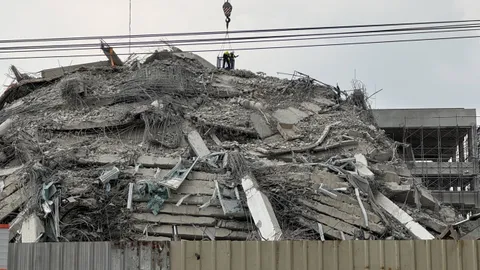
A powerful 7.7-magnitude earthquake exposed widespread construction graft and neglected safety standards, leading to the collapse of a State Audit Office building and damaging Thailand's tourism reputation.
The nation's moral and legal fabric unraveled with high-profile religious scandals involving senior monks in sex, extortion, and embezzlement, alongside a massive police bribery probe implicating over 200 officers, including the former National Police Chief.
Thailand faced severe challenges from the 'Great Southern Flood' in December, amplified by mismanagement, and an escalating border conflict with Cambodia that became the bloodiest standoff in decades, causing significant casualties and displacements.
Persistent political instability saw three Prime Ministers in two years, with two in 2025 alone, culminating in the dissolution of the lower house and a critical combined general election and constitutional referendum scheduled for early 2026.
Thailand's Education Ministry is implementing a four-pronged strategy to address its students' below-average performance in PISA 2025 and tackle significant educational inequality.
The plan prioritizes closing performance gaps by increasing funding for small and low-income schools, overhauling the curriculum to foster critical thinking, and adopting a data-driven management system to reduce teacher workload.
Key initiatives include enhancing school safety, combating cyberbullying, and expanding mental health support through peer-to-peer networks, recognizing the severe impact of distress on academic performance.
An education expert advises verifying if PISA improvements stem from structural changes, advocating for a revived STEM curriculum with practical 'learn by doing' methods, and urging bureaucratic reform to link teacher evaluations to student development.