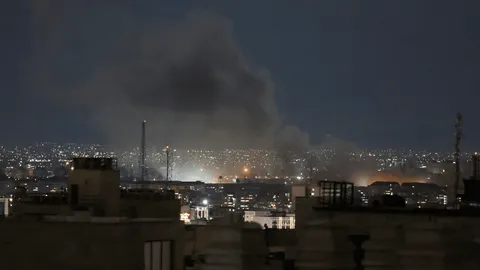
**Military Escalation and Preparations:** The Pentagon reportedly readies for ground operations in Iran, while Kuwait's military actively intercepts hostile missile and drone threats, and Israel claims strikes on an Iranian naval weapons complex.
**New Actors and Retaliatory Strikes:** Yemen's Houthi rebels officially enter the conflict with missile attacks on Israel, prompting an Iranian retaliatory strike on an Israeli village and threats against US universities in the Mideast.
**Widespread Instability and Diplomatic Efforts:** Attacks on Iraqi targets, including the Kurdistan leader's residence and police stations, are blamed on Iranian proxies or US/Israeli forces, as Pakistan hosts regional foreign ministers in an attempt to de-escalate tensions.
**Growing Anti-War Sentiment:** Anti-war protests in Israel are increasing, signaling growing domestic opposition to the ongoing conflict.
Thailand's Education Ministry is implementing a four-pronged strategy to address its students' below-average performance in PISA 2025 and tackle significant educational inequality.
The plan prioritizes closing performance gaps by increasing funding for small and low-income schools, overhauling the curriculum to foster critical thinking, and adopting a data-driven management system to reduce teacher workload.
Key initiatives include enhancing school safety, combating cyberbullying, and expanding mental health support through peer-to-peer networks, recognizing the severe impact of distress on academic performance.
An education expert advises verifying if PISA improvements stem from structural changes, advocating for a revived STEM curriculum with practical 'learn by doing' methods, and urging bureaucratic reform to link teacher evaluations to student development.