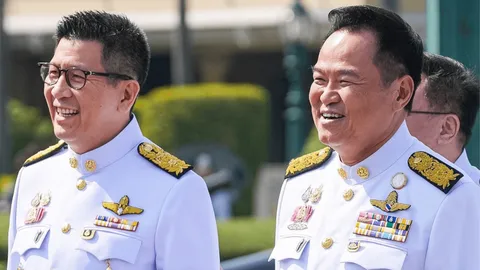
Prime Minister Anutin Charnvirakul warns that the energy crisis could worsen significantly if the Middle East conflict escalates, urging immediate and serious fuel conservation.
The government mandates energy-saving measures, instructing all agencies to strictly implement work-from-home arrangements and other previously announced guidelines.
PM Anutin calls for public and private sector cooperation in conserving energy, advocating for increased use of public transport, carpooling, and continued work-from-home practices.
Despite Thailand's oil reserves, proactive measures are essential to minimize public impact, with a special Cabinet meeting scheduled to discuss further energy-saving initiatives.
Thailand's Education Ministry is implementing a four-pronged strategy to address its students' below-average performance in PISA 2025 and tackle significant educational inequality.
The plan prioritizes closing performance gaps by increasing funding for small and low-income schools, overhauling the curriculum to foster critical thinking, and adopting a data-driven management system to reduce teacher workload.
Key initiatives include enhancing school safety, combating cyberbullying, and expanding mental health support through peer-to-peer networks, recognizing the severe impact of distress on academic performance.
An education expert advises verifying if PISA improvements stem from structural changes, advocating for a revived STEM curriculum with practical 'learn by doing' methods, and urging bureaucratic reform to link teacher evaluations to student development.