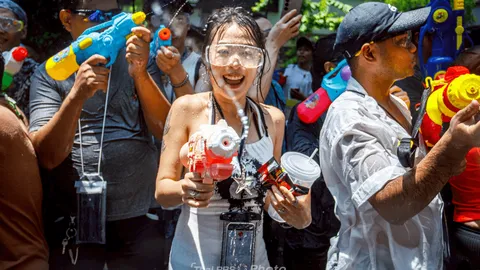
Bangkok's BMA introduces a recycling initiative for plastic water guns used during Songkran festivities to significantly reduce the festival's environmental footprint.
Collected water pistols will be transformed into naphtha and recycled plastic pellets, which will then be molded into new items such as chairs, containers, and clothing fibers, promoting a circular economy.
Dedicated disposal bins will be strategically placed at major Songkran celebration hubs, including Silom Road, Khao San Road, and Benjakitti Park, to facilitate public participation.
This marks the first time plastic water pistols are specifically targeted for recycling, addressing the staggering amount of waste generated during previous festivals and involving the public in waste reduction efforts.
Thailand's Education Ministry is implementing a four-pronged strategy to address its students' below-average performance in PISA 2025 and tackle significant educational inequality.
The plan prioritizes closing performance gaps by increasing funding for small and low-income schools, overhauling the curriculum to foster critical thinking, and adopting a data-driven management system to reduce teacher workload.
Key initiatives include enhancing school safety, combating cyberbullying, and expanding mental health support through peer-to-peer networks, recognizing the severe impact of distress on academic performance.
An education expert advises verifying if PISA improvements stem from structural changes, advocating for a revived STEM curriculum with practical 'learn by doing' methods, and urging bureaucratic reform to link teacher evaluations to student development.