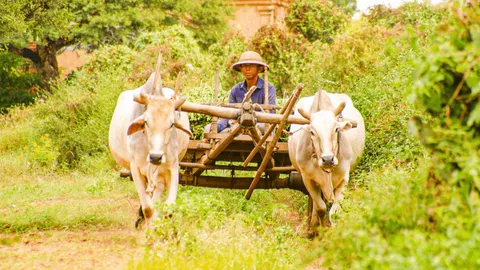
No Fuss Over Gas: the traditional lifestyle of early Southeast Asians
AI In-Brief
Thailand News in Brief
Thai PBS World
Thailand and the world, every day
AI can make mistakes. Please double-check.
No Fuss Over Gas: the traditional lifestyle of early Southeast Asians
14 Sept 11:27Key points summarised by AI
The ongoing global fuel crisis highlights modern society's profound dependence on fossil fuels, severely impacting Asian economies and daily life, prompting countries to impose energy conservation measures.
Early Southeast Asian communities thrived with self-sufficient practices, employing natural methods for cooking, food preservation, and water storage, demonstrating a lifestyle free from extensive fuel reliance.
Traditional transportation, including walking, animal-drawn carriages, and extensive use of interconnected waterways, facilitated movement and commerce without modern fuel consumption.
Current initiatives are reintroducing traditional methods, such as horse-drawn carriages, offering practical, fuel-saving alternatives and a return to sustainable cultural practices amidst rising energy costs.
Thailand's Education Ministry is implementing a four-pronged strategy to address its students' below-average performance in PISA 2025 and tackle significant educational inequality.
The plan prioritizes closing performance gaps by increasing funding for small and low-income schools, overhauling the curriculum to foster critical thinking, and adopting a data-driven management system to reduce teacher workload.
Key initiatives include enhancing school safety, combating cyberbullying, and expanding mental health support through peer-to-peer networks, recognizing the severe impact of distress on academic performance.
An education expert advises verifying if PISA improvements stem from structural changes, advocating for a revived STEM curriculum with practical 'learn by doing' methods, and urging bureaucratic reform to link teacher evaluations to student development.