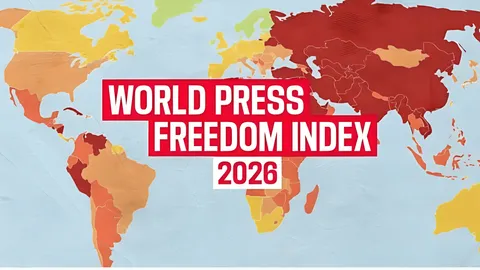
Thailand's press freedom status declined significantly, dropping seven places to 92nd in the 2026 World Press Freedom Index, now categorized as "difficult."
Across Southeast Asia, media freedom remains precarious, with nations like Malaysia, the Philippines, and Singapore facing frequent legal harassment and criminalization of journalists.
The global state of press freedom is in crisis, with over half of the 180 countries surveyed now having "difficult" or "very serious" environments for journalism, a substantial decline from 2002.
Within ASEAN, a sharp divide exists in press freedom, with Timor-Leste leading at 30th while countries like Myanmar and Vietnam rank among the lowest globally, indicating severe restrictions.
Thailand's Education Ministry is implementing a four-pronged strategy to address its students' below-average performance in PISA 2025 and tackle significant educational inequality.
The plan prioritizes closing performance gaps by increasing funding for small and low-income schools, overhauling the curriculum to foster critical thinking, and adopting a data-driven management system to reduce teacher workload.
Key initiatives include enhancing school safety, combating cyberbullying, and expanding mental health support through peer-to-peer networks, recognizing the severe impact of distress on academic performance.
An education expert advises verifying if PISA improvements stem from structural changes, advocating for a revived STEM curriculum with practical 'learn by doing' methods, and urging bureaucratic reform to link teacher evaluations to student development.