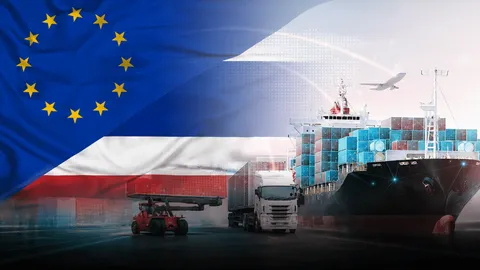
Thailand's Trade Policy and Strategy Office (TPSO) stresses the urgent need to finalize Free Trade Agreement (FTA) talks with the EU, warning that delays risk Thailand falling behind regional competitors like Vietnam and Singapore.
The EU's aggressive push for global trade deals and efforts to diversify economic risks present a strategic opportunity for Thailand to become a key manufacturing and export hub for high-potential sectors.
Despite these opportunities, Thailand faces fierce competition from regional peers with existing FTAs and must overcome challenges posed by stringent EU environmental regulations, particularly for SMEs.
The Ministry of Commerce aims to conclude the Thai-EU FTA negotiations by the end of this year, with significant progress already made on 11 out of 24 chapters, to enhance competitiveness, attract investment, and ensure long-term economic stability.
Thailand's Education Ministry is implementing a four-pronged strategy to address its students' below-average performance in PISA 2025 and tackle significant educational inequality.
The plan prioritizes closing performance gaps by increasing funding for small and low-income schools, overhauling the curriculum to foster critical thinking, and adopting a data-driven management system to reduce teacher workload.
Key initiatives include enhancing school safety, combating cyberbullying, and expanding mental health support through peer-to-peer networks, recognizing the severe impact of distress on academic performance.
An education expert advises verifying if PISA improvements stem from structural changes, advocating for a revived STEM curriculum with practical 'learn by doing' methods, and urging bureaucratic reform to link teacher evaluations to student development.