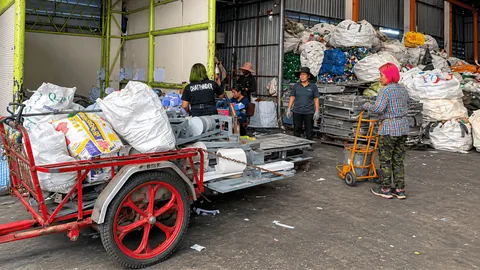
Informal waste pickers ("saleng") are vital to Thailand's urban waste management and recycling, collecting materials and preventing pollution, despite facing exclusion and social stigma.
A collaborative initiative by various organizations aims to empower "saleng" by ensuring their recognition and inclusion in the nation's transition to sustainable waste management and a circular economy.
Key support mechanisms include developing a national registration database, providing professional training, and integrating "saleng" into Thailand's Extended Producer Responsibility (EPR) system to achieve ambitious recycling targets.
The initiative seeks to improve public perception, enhance working conditions, and advocate for policies that provide financial incentives and formal recognition for this indispensable sector.
Thailand's Education Ministry is implementing a four-pronged strategy to address its students' below-average performance in PISA 2025 and tackle significant educational inequality.
The plan prioritizes closing performance gaps by increasing funding for small and low-income schools, overhauling the curriculum to foster critical thinking, and adopting a data-driven management system to reduce teacher workload.
Key initiatives include enhancing school safety, combating cyberbullying, and expanding mental health support through peer-to-peer networks, recognizing the severe impact of distress on academic performance.
An education expert advises verifying if PISA improvements stem from structural changes, advocating for a revived STEM curriculum with practical 'learn by doing' methods, and urging bureaucratic reform to link teacher evaluations to student development.