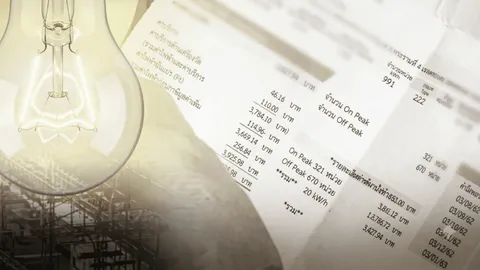
Hidden street lighting charge has been imposed for almost 40 years
AI In-Brief
Thailand News in Brief
Thai PBS World
Thailand and the world, every day
AI can make mistakes. Please double-check.
Hidden street lighting charge has been imposed for almost 40 years
13 Sept 12:48Key points summarised by AI
Unveils a hidden street lighting charge secretly embedded in household electricity bills for nearly 40 years, unbeknownst to the public and even past and current ministers.
Traces the charge's origin to a 1987 Cabinet resolution, which initially facilitated street lighting installation by allowing the Provincial Electricity Authority (PEA) free use of highway land.
Explains that as local administrative bodies developed, electricity authorities (MEA/PEA) began hiding the cost within the Fuel Tariff (FT) component of bills to avoid public backlash, amounting to 10-15 satang per unit or 20 billion baht annually.
Outlines the Energy Ministry's proposal for direct accountability, urging the Highways Department and local administrative organizations to fund separate street lighting meters and implement energy-saving measures like LED conversions and solar panels.
Thailand's Education Ministry is implementing a four-pronged strategy to address its students' below-average performance in PISA 2025 and tackle significant educational inequality.
The plan prioritizes closing performance gaps by increasing funding for small and low-income schools, overhauling the curriculum to foster critical thinking, and adopting a data-driven management system to reduce teacher workload.
Key initiatives include enhancing school safety, combating cyberbullying, and expanding mental health support through peer-to-peer networks, recognizing the severe impact of distress on academic performance.
An education expert advises verifying if PISA improvements stem from structural changes, advocating for a revived STEM curriculum with practical 'learn by doing' methods, and urging bureaucratic reform to link teacher evaluations to student development.