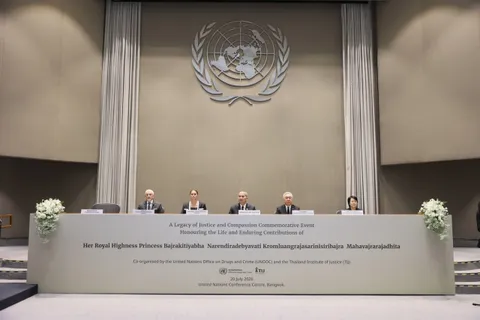
UN agencies and international representatives honored Her Royal Highness Princess Bajrakitiyabha for her unwavering commitment to justice system reform, particularly for female prisoners and their children.
The Princess was instrumental in the creation and adoption of the 'Bangkok Rules' in 2010, a set of UN guidelines that significantly improved the treatment of women prisoners and non-custodial measures for women offenders.
Described as a visionary leader, she championed the integration of human dignity, compassion, and opportunity into the justice system, advocating for the vulnerable and connecting local experiences with global principles.
Thailand's Education Ministry is implementing a four-pronged strategy to address its students' below-average performance in PISA 2025 and tackle significant educational inequality.
The plan prioritizes closing performance gaps by increasing funding for small and low-income schools, overhauling the curriculum to foster critical thinking, and adopting a data-driven management system to reduce teacher workload.
Key initiatives include enhancing school safety, combating cyberbullying, and expanding mental health support through peer-to-peer networks, recognizing the severe impact of distress on academic performance.
An education expert advises verifying if PISA improvements stem from structural changes, advocating for a revived STEM curriculum with practical 'learn by doing' methods, and urging bureaucratic reform to link teacher evaluations to student development.