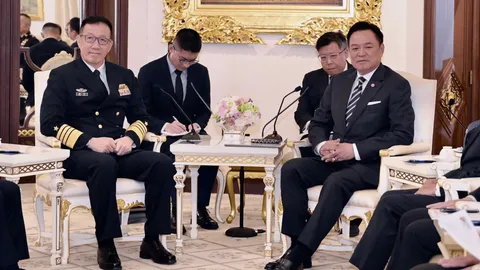
Thai Prime Minister Anutin Charnvirakul and Chinese Defence Minister Admiral Dong Jun met to significantly deepen bilateral security and defence ties, building on recent high-level engagements.
Thailand proposed a "2+2" ministerial consultation framework to align security policies, enhance intelligence sharing, expand defence industries, and combat transnational crime, particularly online scams.
Both nations welcomed a Joint Committee on Military Cooperation, Equipment and Technology, signaling a long-term commitment to defence collaboration, with Thailand inviting Chinese participation in its defence industry and reaffirming its dedication to peaceful regional dispute resolution.
Thailand's Education Ministry is implementing a four-pronged strategy to address its students' below-average performance in PISA 2025 and tackle significant educational inequality.
The plan prioritizes closing performance gaps by increasing funding for small and low-income schools, overhauling the curriculum to foster critical thinking, and adopting a data-driven management system to reduce teacher workload.
Key initiatives include enhancing school safety, combating cyberbullying, and expanding mental health support through peer-to-peer networks, recognizing the severe impact of distress on academic performance.
An education expert advises verifying if PISA improvements stem from structural changes, advocating for a revived STEM curriculum with practical 'learn by doing' methods, and urging bureaucratic reform to link teacher evaluations to student development.