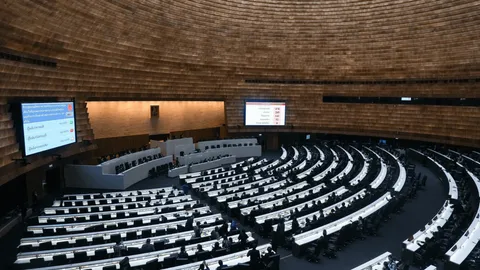
The House of Representatives approved a 400 billion baht borrowing decree by a vote of 285 to 141, with 52 abstentions.
Prime Minister Anutin Charnvirakul assured MPs that the cabinet would closely monitor the disbursement of the funds to ensure worthy and effective spending.
The Prime Minister clarified that the 400 billion baht loan is separate from the national budget and carries a 1.2% interest rate.
Opposition leader Abhisit Vejjajiva opposed the decree, citing concerns about its lack of urgency, potential to push public debt to 70% of GDP, and insufficient screening for funds allocated to clean energy transition.
Thailand's Education Ministry is implementing a four-pronged strategy to address its students' below-average performance in PISA 2025 and tackle significant educational inequality.
The plan prioritizes closing performance gaps by increasing funding for small and low-income schools, overhauling the curriculum to foster critical thinking, and adopting a data-driven management system to reduce teacher workload.
Key initiatives include enhancing school safety, combating cyberbullying, and expanding mental health support through peer-to-peer networks, recognizing the severe impact of distress on academic performance.
An education expert advises verifying if PISA improvements stem from structural changes, advocating for a revived STEM curriculum with practical 'learn by doing' methods, and urging bureaucratic reform to link teacher evaluations to student development.