German couple killed in hit-and-run on Pang Nga zebra crossing
Chiang Rai warns against using Sai River water, eating fish
Ayutthaya rivers may rise 10cm as northern runoff arrives
AI In-Brief
Thailand News in Brief
Thai PBS World
Thailand and the world, every day
AI can make mistakes. Please double-check.
Ayutthaya rivers may rise 10cm as northern runoff arrives
Today 16:20Key points summarised by AI
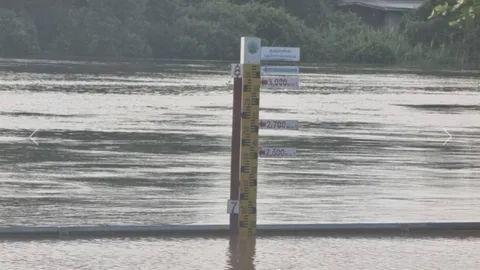
Rivers in Ayutthaya, including the Chao Phraya and Noi, are forecast to rise by 10cm today as northern runoff combines with managed dam discharges.
The Office of National Water Resources (ONWR) confirmed that the Chao Phraya Dam maintains a 2,500m³/s discharge, while the Rama 6 Dam is releasing 655m³/s, contributing to the expected rise.
This water mass will flow through Pathum Thani, Nonthaburi, and Bangkok, but is generally expected to remain below floodwall levels in these downstream provinces.
In the western region, the nearly full Srinagarindra Reservoir (99.55%) is causing the Mae Klong River to overflow, leading to flooding in parts of Ratchaburi and Samut Songkhram.
The ONWR also indicated that the Kaeng Krachan Dam in Phetchaburi may need to increase its discharge rate due to recent heavy rainfall in the area.
Chiang Rai warns against using Sai River water, eating fish
Today 12:56Key points summarised by AI
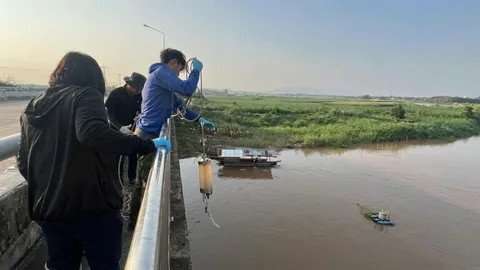
Chiang Rai's administration issued a warning against consuming Sai River water or fish due to severe arsenic and lead contamination, exceeding safety limits by 28 and 5 times, respectively.
Waterworks utilizing Sai River water are mandated to intensify treatment processes to ensure tap water safety before distribution.
Local villagers, observing murky, shallow water, have ceased using the river for consumption but continue for agriculture, pressing authorities to identify contamination sources and monitor water quality regularly.
As an interim measure, 24/7 automated water quality monitoring stations will be set up on the Kok, Sai, and Mekong rivers to provide early contamination alerts to the public.