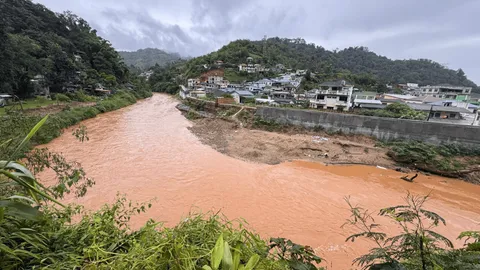
Agri ministry to monitor water and soil quality in Kok and Sai river basins proactively
Thai-Myanmar river pollution working group meeting could be moved to Chiang Rai
AI In-Brief
Thailand News in Brief
Thai PBS World
Thailand and the world, every day
AI can make mistakes. Please double-check.
AI In-briefToday 17:52
Thai-Myanmar river pollution working group meeting could be moved to Chiang Rai
A House subcommittee proposes relocating the upcoming Thai-Myanmar Joint Working Group (JWG) meeting to Mae Sai, Chiang Rai, to allow representatives to witness river contamination firsthand and engage with affected communities.
The subcommittee chairman alleges the Thai government has not seriously addressed the root cause of pollution, specifically mining activities in Myanmar, during recent high-level discussions with Myanmar and Chinese leaders.
Concerns are raised that the Thai side of the JWG is unprepared, lacking a defined agenda and coordination with local agencies, which could hinder fruitful outcomes and prevent discussions on crucial regulatory measures for mining.
Previous recommendations from the subcommittee included urging government departments to establish guidelines for border provinces to declare river pollution disaster zones, mirroring existing air pollution protocols.
AI In-briefToday 12:58
Agri ministry to monitor water and soil quality in Kok and Sai river basins proactively
The Ministry of Agriculture and Cooperatives (MOAC) is launching proactive water and soil quality testing in the Kok and Sai river basins from November 23-25, involving six key departments.
Officials will collect 333 diverse samples, including water, soil, fish, shrimp, and livestock, to analyze for heavy metals and overall quality.
Test results, expected within 1-2 weeks, will feed into a new GPS-based Agri-Map app, categorizing areas into green, yellow, and red severity levels for targeted intervention.
Interventions for critical 'red' zones include immediate tighter safety controls and certification for produce, medium-term financial support for water source development, and long-term guidance on crop diversification to suitable, safe alternatives.