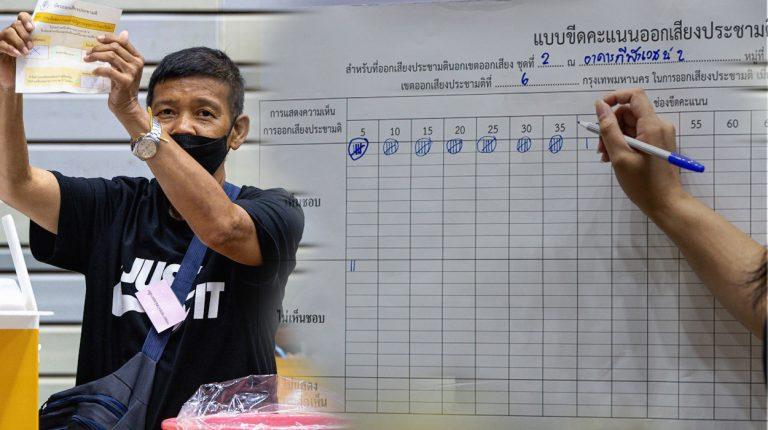
When facts are at risk in information warfare
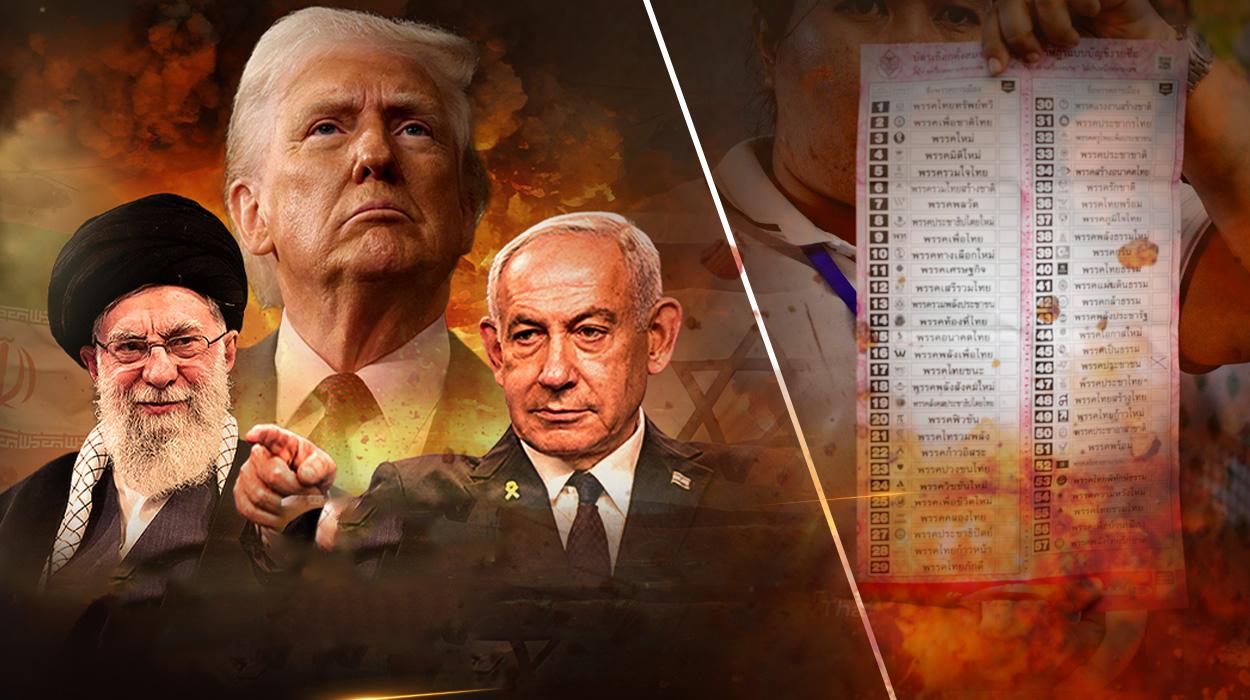
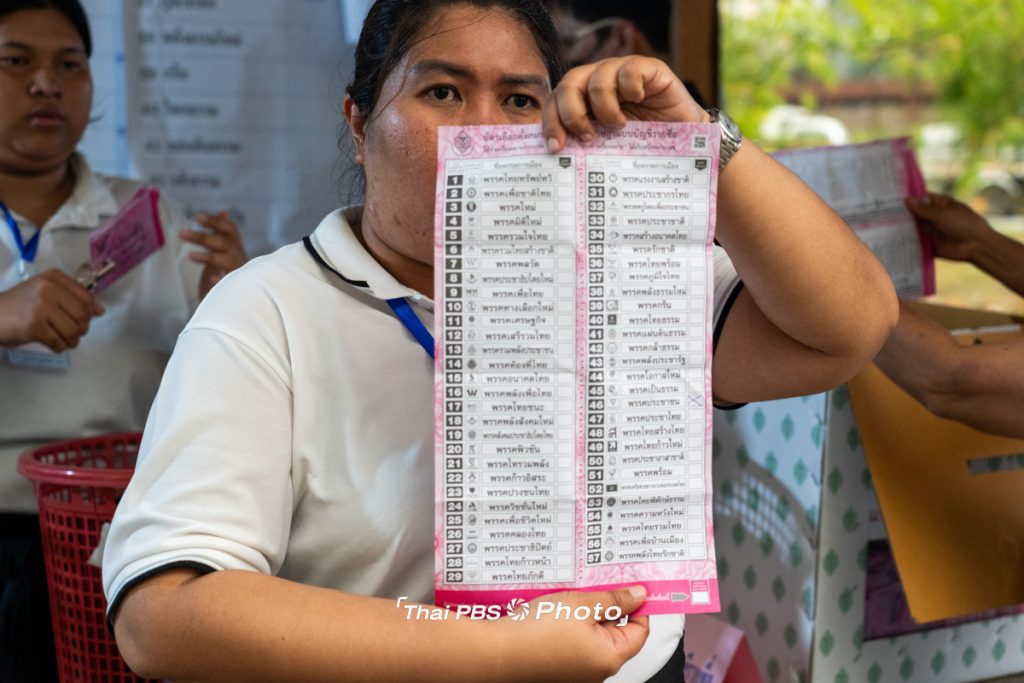
The issue of “barcodes–QR codes” on the 2026 election ballots is not merely a legal debate; it has escalated into a battlefield of information where facts clash fiercely with distortion. In an era when algorithms reward anger more than reason, sincere questions may be drowned out amid waves of incitement.
This mirrors conflict zones in the Middle East, where information is used as a weapon no less than rockets or artillery, and truth itself may become a casualty of the information warfare. The question is: Who will stand firm with the facts?
Political groups and civil society are moving forward with legal action against the Election Commission over the 2026 election ballots containing barcodes and QR codes. They suggest that this could violate the principle of a secret ballot and potentially render the election invalid. The issue has expanded far beyond the boundaries of law and the constitution, becoming a battlefield of “information warfare,” where facts and distortions collide intensely. It also reflects that in the digital age, the line between sincere questions and deliberate incitement may be more blurred than many think.
In a democratic society, questioning the electoral process is a legitimate right, and debate should be grounded in evidence and reason. However, in a digital media landscape where speed outpaces careful consideration, information operations have infiltrated and distorted the direction of public discussion. Legal questions are turned into fuel for suspicion, while fact-checking itself becomes a target of attack. When algorithms reward anger more than truth, reasoned debate often loses to emotionally charged rhetoric.
News is not countered with news, but with emotion
This phenomenon is not unique to Thai society; it clearly reflects a global trend, particularly amid tensions in the Middle East, where the battlefield is not limited to military confrontation but has expanded into an information warfare. Fake news, edited clips, old images presented as new, and language designed to legitimize one side while dehumanizing the other are widely used. In conflict zones, truth often becomes the “first casualty” of war, while people around the world who consume information through screens become an unwitting rear line influenced without realizing it.
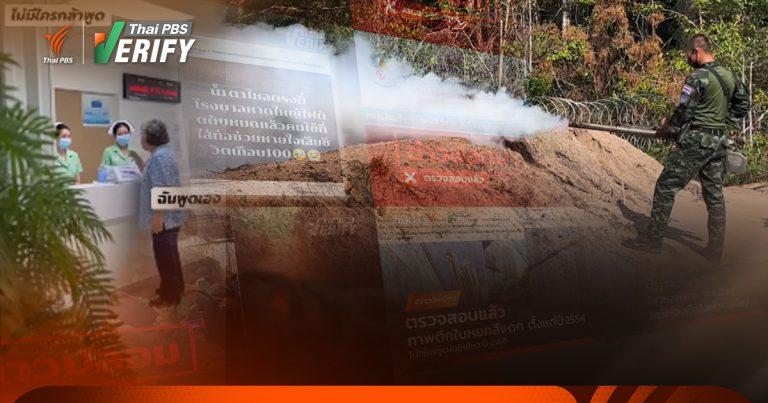
It is not much different on Thailand’s political battlefield. Media organizations that perform fact-checking do not face only ordinary criticism but must also contend with selective editing of information, distortion of meaning, and embellishment designed to inflame public emotion. Even images of youth learning activities can be taken out of context and turned into narratives of “indoctrination,” despite the facts being clearly reflected in the content and working process.
Efforts to strengthen critical thinking skills can easily be interpreted as having hidden agendas in an atmosphere dominated by distrust. These phenomena underscore an important truth of the information age: news is not always countered with news, but with emotion, suspicion, and the creation of imaginary enemies. This is similar to conflict zones around the world, where information is used as a weapon no less than rockets or artillery, and victory on the battlefield of ideas may be no less significant than victory on the battlefield itself.
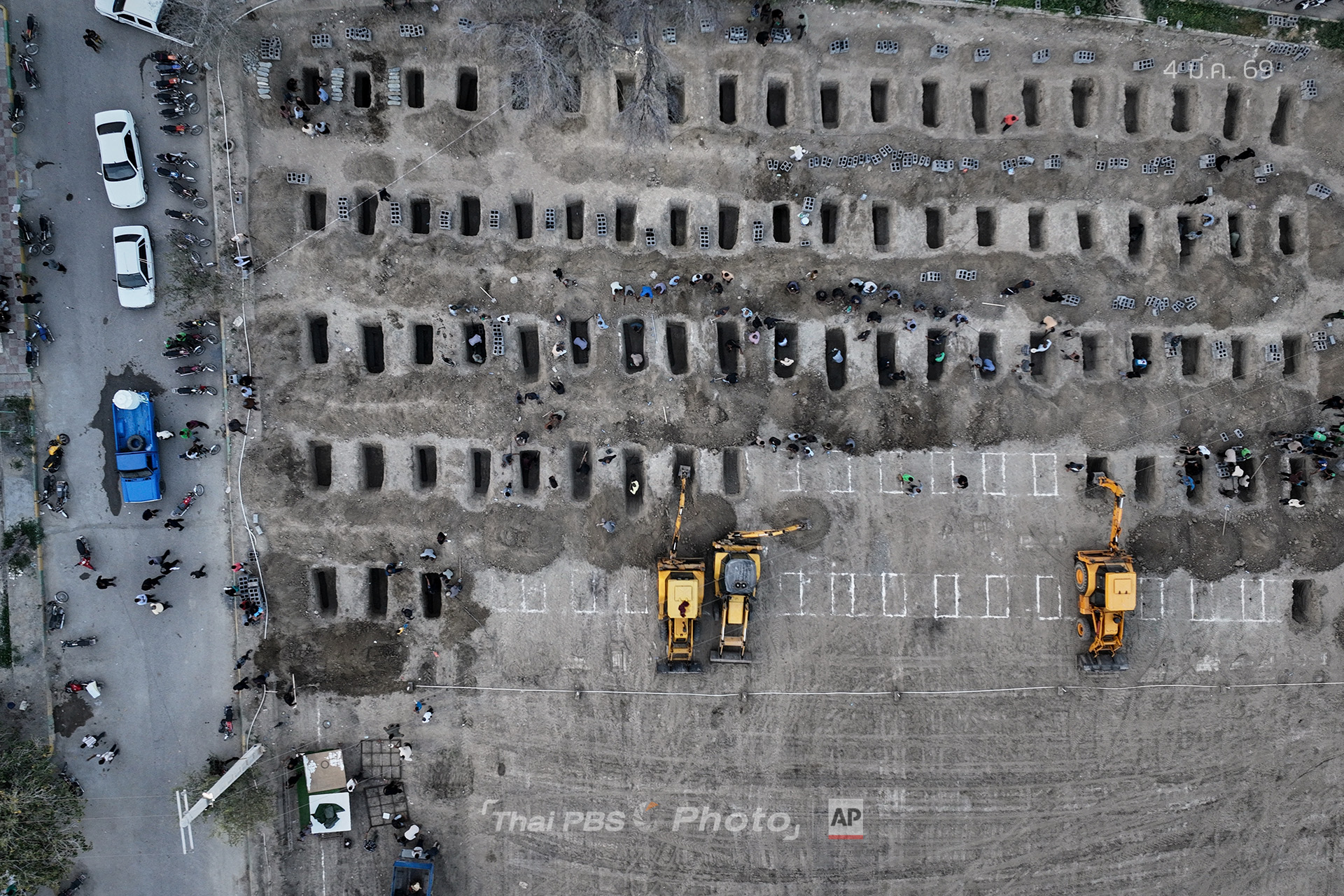
A photo of graves, prepared for Iranian victims during the recent Middle East crisis, taken on March 2, 2026 (credit: Iran’s Foreign Media Department via AP).
Fortress of truth
In this context, the role of Thai PBS Verify is not merely to “correct the news” on a case-by-case basis, but to build a fortress of truth through a working system that is transparent, traceable, and accountable to the public. This kind of work means standing amid conflict without taking sides.
In a world where information can be reproduced, modified and distributed within seconds, speed alone cannot be the answer. Public media must uphold accuracy as its core principle, even if it means moving more slowly, but with greater certainty.
Three pillars of credibility: Principles that cannot be compromised
The credibility of fact-checking must stand on three pillars:
- Consistency – Applying the same standards to all sides without discrimination, regardless of whether the information benefits or harms any party. Justice that takes sides is not justice.
- Transparency – Openly disclosing sources, verification methods, and limitations, so the public can examine those who conduct the verification.
- Accountability – Acknowledging and correcting mistakes openly when they occur, because errors that are honestly corrected build more trust than silence.
These three principles serve as the foundation that ensures fact-checking does not become anyone’s tool, but remains a shared asset of society.
Five-step process: A Shield in the age of information disorder
The five-step workflow—from issue screening, multi-layer verification, result classification, easy-to-understand content production, to public feedback listening—serves as a safeguard against errors in an era of information overload.
- Issue screening helps select topics that genuinely impact the public.
- Multi-layer verification reduces the risk of falling for false information.
- Result classification facilitates clear communication without overstating the facts.
- Digestible, but thorough content bridges the gap between information and the public.
- Public feedback hearing ensures the process continues to evolve.
The workflow of the Thai PBS Verify editorial team is not a limitation on thinking, but a shield for credibility. It is akin to the principles of humanity in wartime: while it cannot stop all violence, it is essential to stand firm to uphold the boundaries of what is right.
The cost of standing with the truth
The saying, “Every warrior bears wounds,” may aptly describe this situation. The wounds of the media in information warfare can take the form of accusations, misunderstandings, or becoming targets in the online world. Yet these wounds are proof that we have truly entered the field, not just watching from the sidelines.
Standing firm on principles inevitably comes with collisions—just as journalists in conflict zones must report amid the sound of explosions, fact-checking in a polarized society must be carried out amid accusations and distrust.
Amid a world where conflicts—both domestic and international—are intensifying and information is wielded as a weapon without hesitation, Thai PBS Verify affirms its stance beside the facts, not any particular side. Our mission is not to pass ideological judgment, but to verify sources, filter evidence, and explain complex issues so that society can understand them comprehensively.
Ultimately, truth may move more slowly than gunfire or viral trends, but when it stands firm, it travels farther and endures longer—in a society that still believes facts are the foundation of peace, both at home and on the global stage.