2012 footage from Syria distorted as Lebanon’s attack on Israeli tank
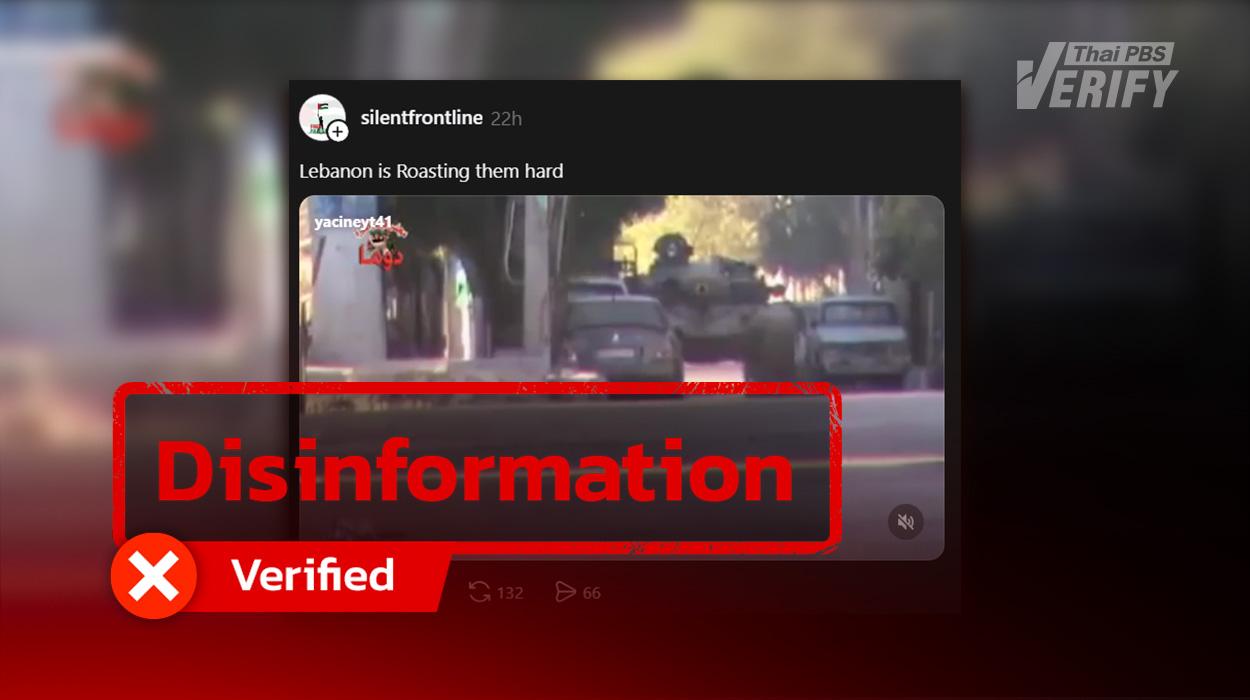
Thai PBS Verify found the piece of disinformation on: Threads
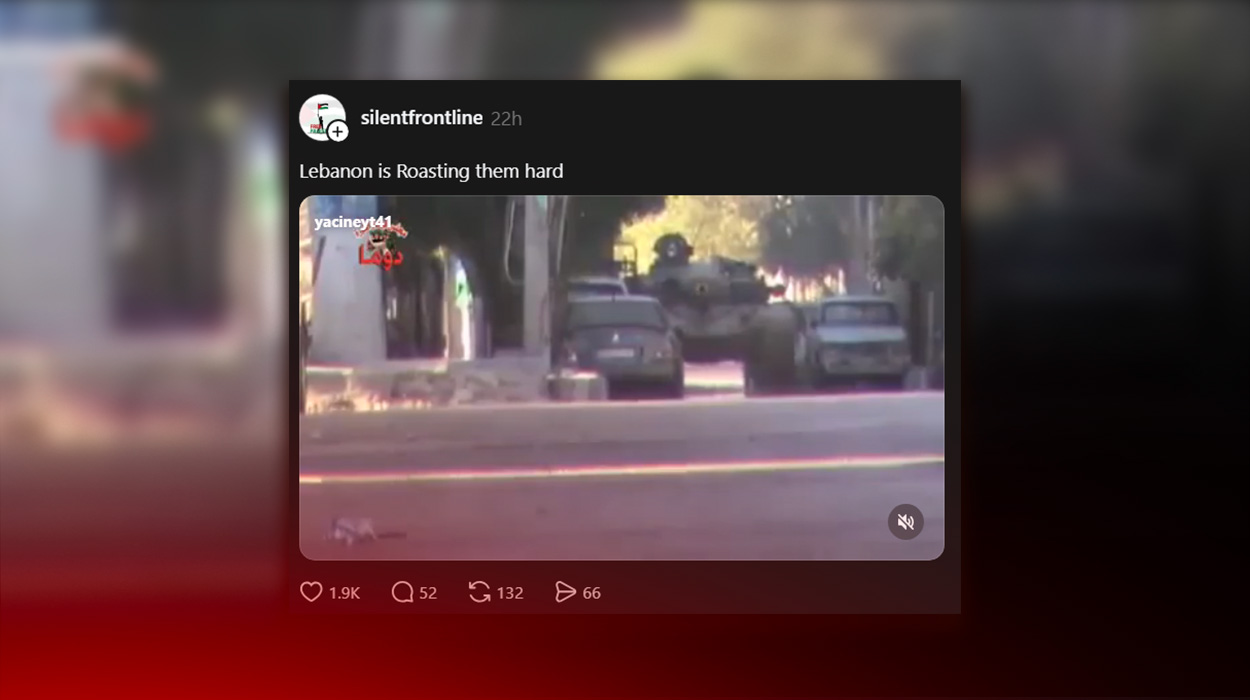
An original post from user ‘yacineyt41,’ shared by ‘silentfrontline’ on April 6, 2026.
Thai PBS Verify identified a video post on Threads, shared by user ‘silentfrontline’ from the original source, ‘yacineyt41,’ on April 6, 2026, accompanied by a caption stating that,
“Lebanon is Roasting them hard.”
The video gained 29,900 views, 1,900 likes and 53 comments. It was reposted 133 times, shared 70 times. Most commenters believed that the incident really involved an Israeli tank, while some argued with facts.
The Israeli tank was not attacked
Thai PBS Verify examined the video with Google Lens and discovered that the footage does not depict an attack on Israeli or U.S. forces during an invasion of Lebanon. Instead, it is a clip from an incident during the Syrian Civil War, which was originally published back in 2012.
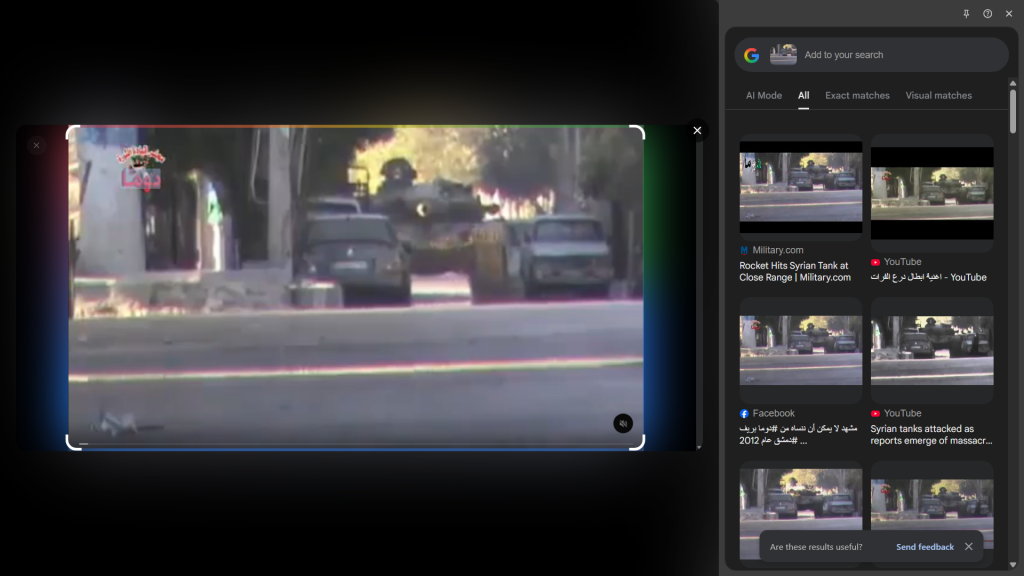
A screenshot shows Google Lens search results, confirming that the image matches an incident in Syria from 2012.
Furthermore, the team located the same video clip on the Military.com website, published on August 6, 2012. It features the following caption: “Rocket Hits Syrian Tank at Close Range.”
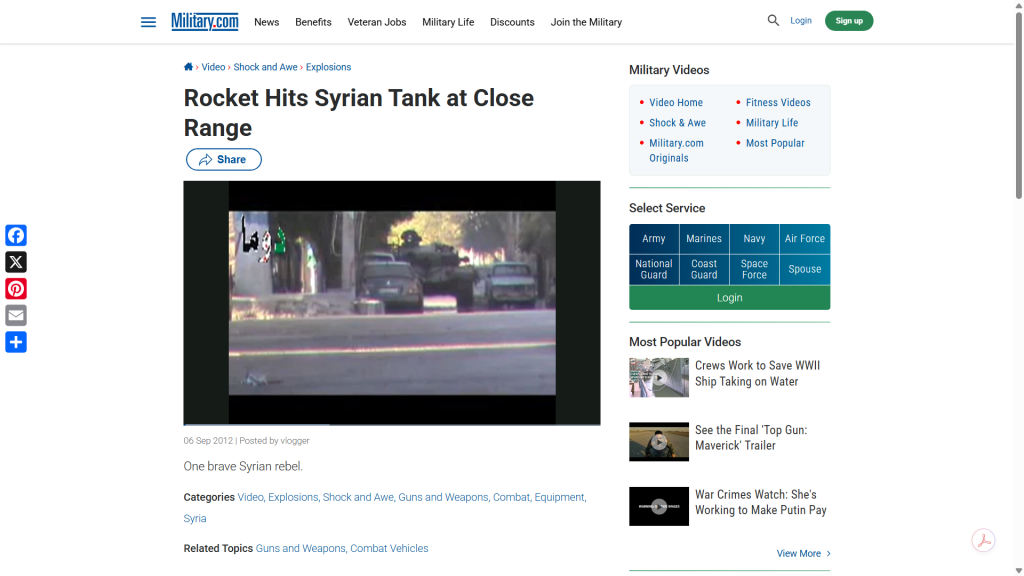
The original video in 2012 from the Military.com website captures a Syrian tank being attacked on September 6, 2012.
In addition, the same video was found on the On Demand News’s YouTube channel. The channel released this footage on August 26, 2012, with a report stating as below.
“Syria’s rebels are taking a pounding at the hand of the heavy equipment of president Bashar al-assad but they’re not giving up without a fight they maybe men against tank but they can increasingly pack a punch as this attack in Duma shows
“and outside Aleppo footage emerges showing a devastated convoy of Syrian government armour the battle is far from over though Syrian troops stormed the town of daria near Damascus over the weekend forcing out the hardcore of rebels holed up there against three days of military bombardment and amid the chaos reports of a massacre activists say forces loyal to President Assad are responsible for killing over 200 civilians in the town many young children the claims cannot be independently verified.”
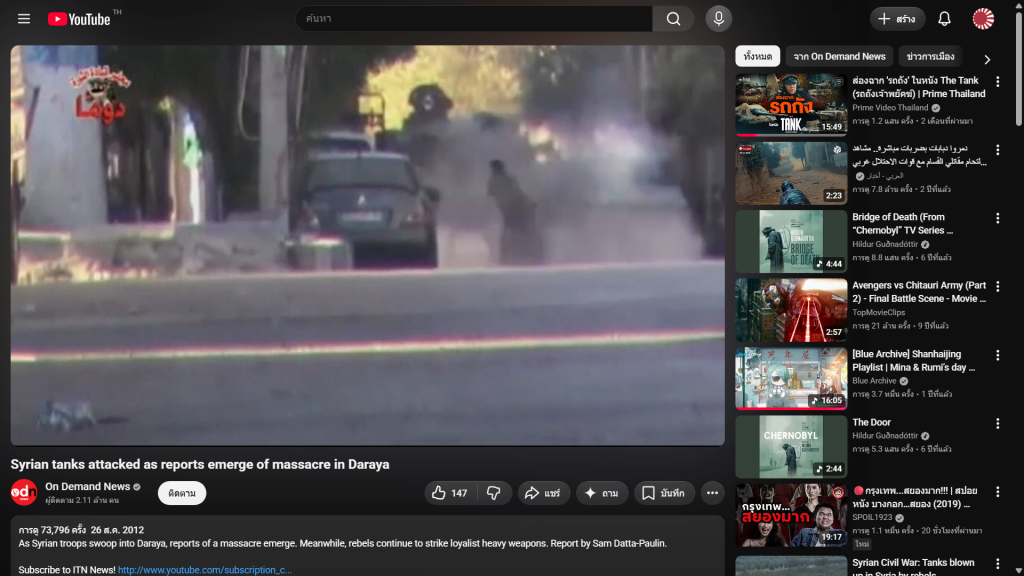
In addition, the same video was found on the On Demand News’s YouTube channel. The channel released this footage on August 26, 2012, with a report stating as below.
The tank in the video does not belong to Israeli army
Thai PBS Verify further looked into the source clip. The team later identified the tank involved in the explosion as a Syrian tank. After searching for relevant keywords, it was found that Syria indeed deployed T-72 tanks. Specifically, the model in service within the Syrian military was the T-72M1, manufactured as an export variant of the T-72A and widely used by countries under communism and across the Middle East.
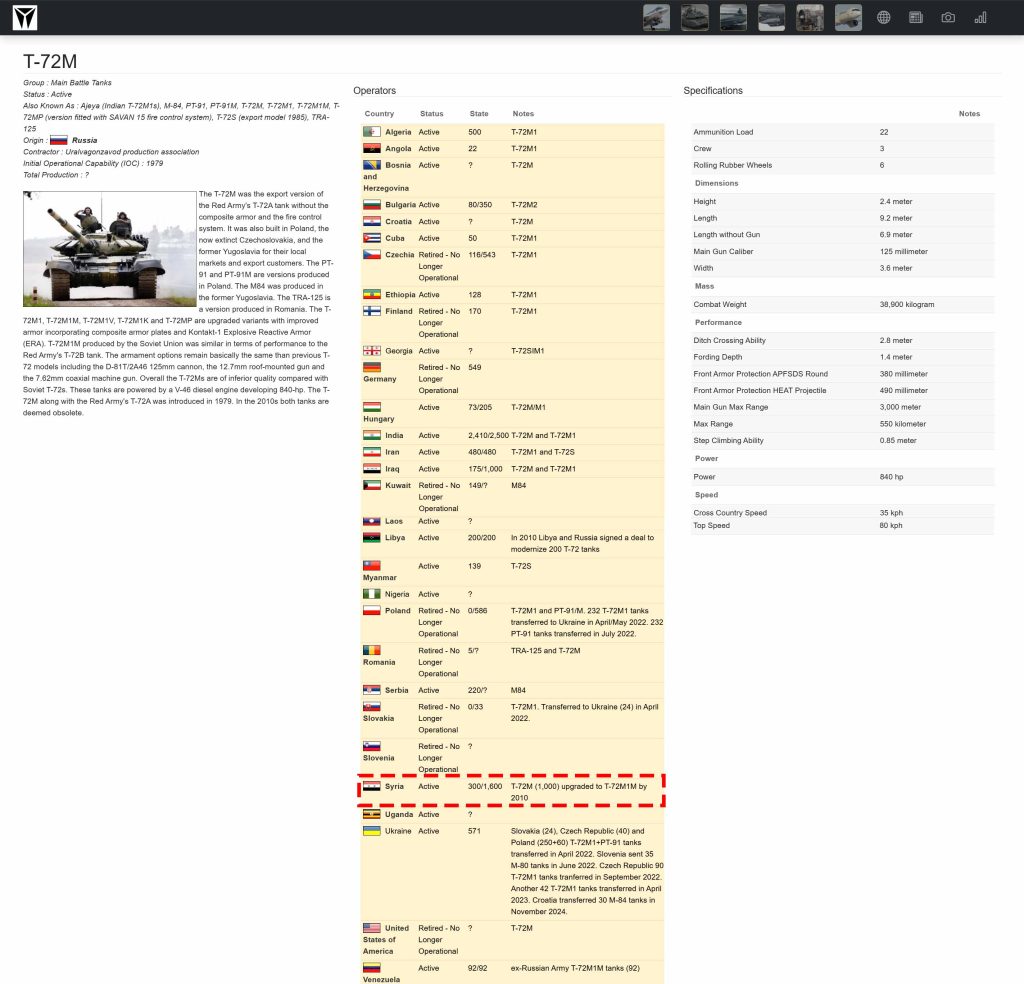
Data confirms the deployment of Syrian tanks, showing that T-72 models were in service and upgraded to the M1 variant in 2010.
Although the United States was included in the list of T-72M users, reports confirmed that the U.S. utilizes this tank model solely to serve as opposing forces during military exercises. Furthermore, it was verified that, apart from Iran, no other party involved in the current conflict actively deployed the T-72M.
What is the truth?
It is confirmed that the video in question was not an incident occurring in Lebanon, nor did the tank belong to Israeli forces. The events in the clip were actually from the Syrian Civil War, first published around August 2012. The footage depicts Syrian rebels using a rocket to attack a tank belonging to President Bashar al-Assad’s government in the city of Douma.
Verification Process
- Google Lens: It was found that the video claiming Lebanon attacked an Israeli tank was, in fact, an incident of an attack on a tank by rebel groups in Syria back in 2012.
- Data comparison: Thai PBS Verify visited military websites until information was found, confirming that the tank in the footage was a T-72M1 model, actively in service in Syria, but not in Israel. This could be contrary to the claims being made.
Impacts of disinformation
- Distorting the current conflict situation: Using old footage from a different battlefield (Syria in 2012) and masquerading it as a current event in Lebanon misleads the audience regarding the actual combat situation and the true military balance of power.
- Inciting enthusiasm or panic with false narratives: The use of emotionally charged language, such as “Roasting them hard,” paired with violent imagery, aims to provoke emotional engagement to trigger widespread sharing (virality) without regard for the facts.
- Eroding trust in information: Intentional and repeated uses of false context on social media cause public confusion and “fact-checking fatigue,” which may lead people to ignore critical, truthful information in the future.
- Engagement farming: Social media accounts disseminating such content often seek likes and shares by exploiting trending topics of interest to build an online presence or gain personal benefit from public misunderstanding.
What to do with this misinformation?
- Check the video’s quality and source: Old clips that are rebranded as new often have low resolution or outdated aspect ratios. If you encounter blurry or poor-quality footage in today’s era, you should initially suspect that it may be an old clip.
- Observe visual details: Consider the characteristics of military equipment, the terrain or the architecture in the video to see if they match the claimed location. (For example, the tank in the clip might be an older model not currently utilized in the Lebanese theater of war.)
- Perform a reverse video search: If you see an event that appears violent or unbelievable, you should take a screengrab from the video and search for it to see if it has been published previously. This would reveal the truth that this clip originated from an incident in Syria.
- Follow news from mainstream media and fact-checking agencies: Before believing or sharing war-related information, check the data against standard news outlets with verified personnel on the ground or verify it through dedicated fact-checking pages.
- Do not forward unverified information: Refraining from liking, commenting and sharing suspicious posts is the most effective way to break the cycle of fake news, preventing algorithms from spreading misinformation to others.
Editor: Nuttapoln Toomma
Translation edited by: Peerachai Pasutan