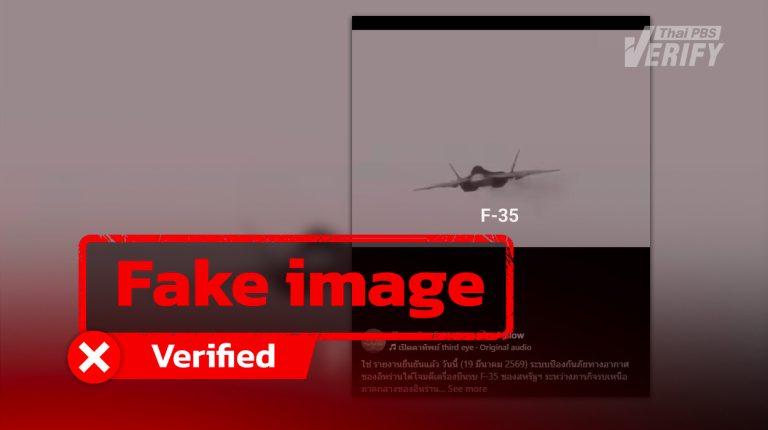
Gulf War footage distorted to show American pilot captured during 2026 Iran war
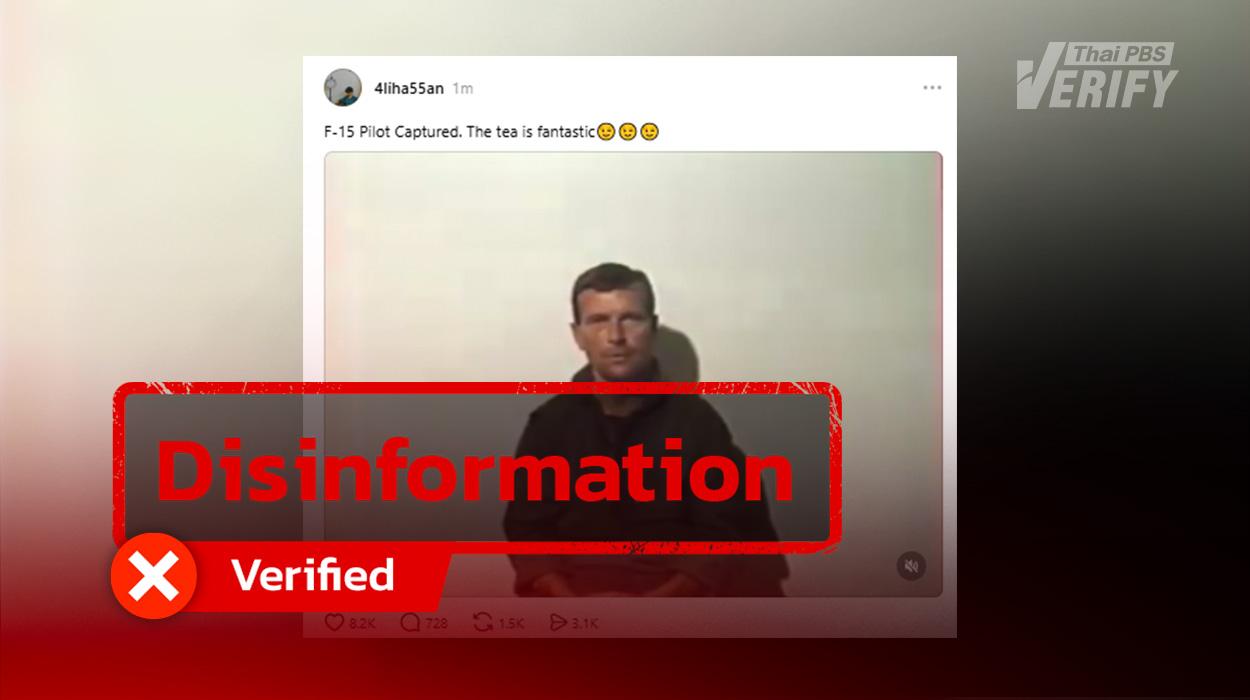
Thai PBS Verify found the piece of disinformation on: Threads
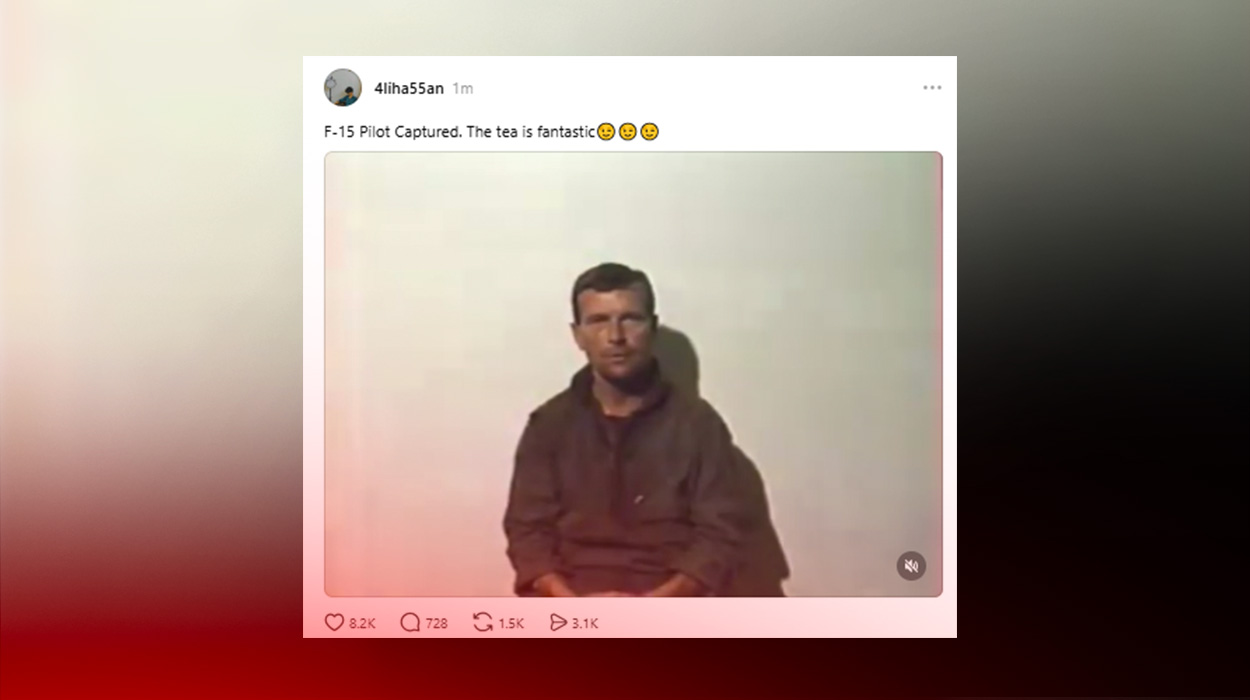
A video post by Threads user, 4liha55an, was published on April 4, 2026.
Thai PBS Verify found a video on Threads posted by user ‘4liha55an’ on April 4, 2026. The clip shows a detained man confessing that he is a U.S. soldier. The caption reads: “F-15 Pilot Captured. The tea is fantastic😉😉😉”
The post gained traction, with more than 414,000 views, 8,200 likes, 1,500 reposts, 3,100 shares and 728 comments. It was circulated on social media while the U.S. was trying to rescue a pilot shot down in Iran. Most users believed the clip to be real, although some argued that it was an old video.
The interrogation clip is real, but decontextualized
Thai PBS Verify examined the video with Hive Moderation and found that the likelihood of it being AI-generated was 0%, indicating that it was not an AI-created video at all.
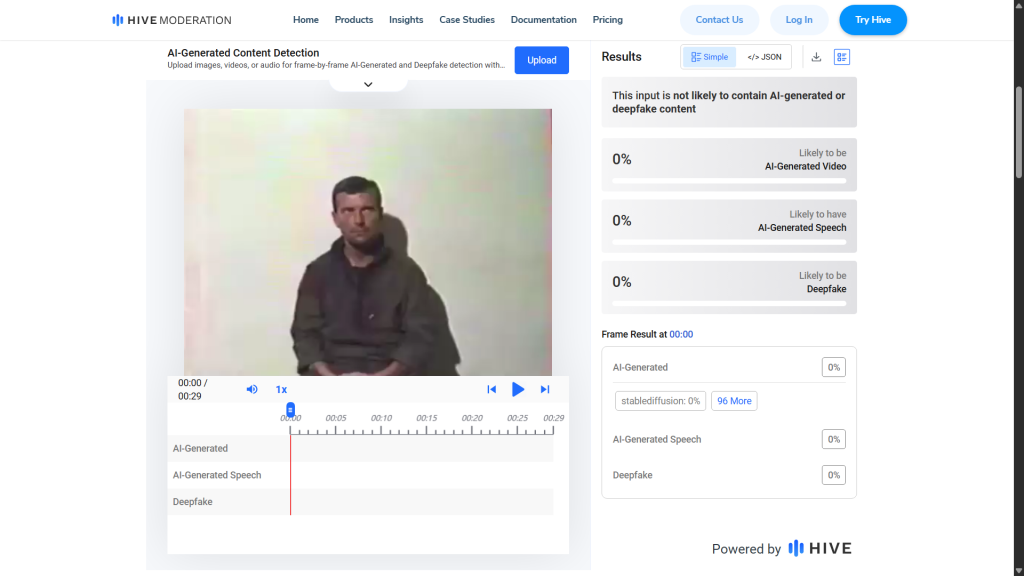
Results from Hive Moderation found no abnormalities.
However, after a review to the conversation between the man claimed to be an American pilot and the interrogator, the video content can be transcribed as follows:
“Name: Colonel David William Eberly
Nationality: United States
Plane and Squadron: F-15 from 4th Tactical Fighter Wing
Base: Al Kharj in central Saudi Arabia
Target: To strike Scud Missile and attached Chemical plant
“I don’t know how my plane was shot down”
“I believe my neck injury occurred either during the ejection from the aircraft or upon hitting the ground…””
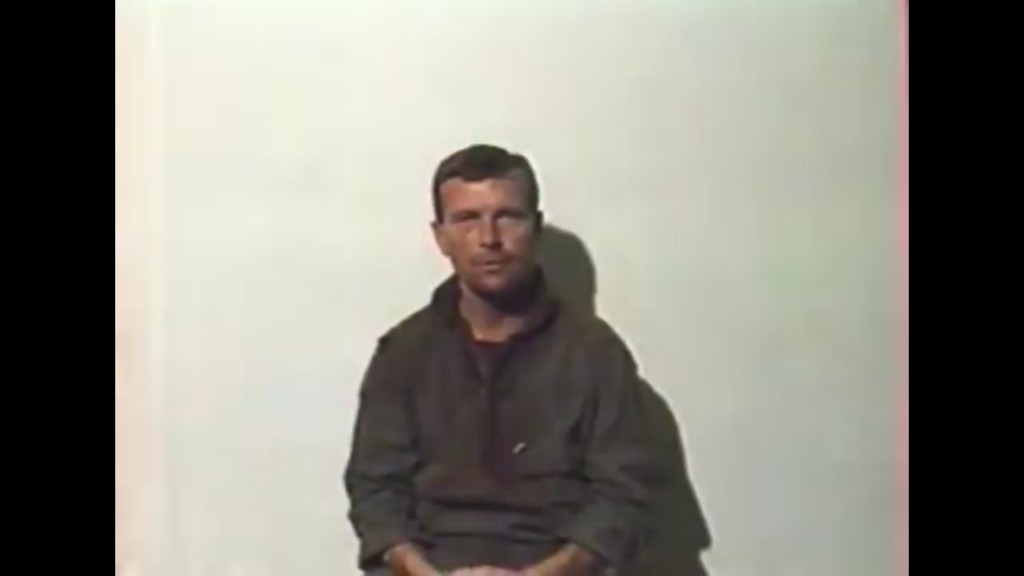
A screenshot of the Col. David William Eberly interrogation video.
Thai PBS Verify conducted further keyword searches on Google, using the pilot’s name “Col. David William Eberly.” The team found the Veteran Tributes website, which archives records of U.S. military veterans. The findings can be summarized as follows:
“Col Eberly was the Director of Operations of the 4th Fighter Wing during Desert Shield and Desert Storm, and was forced to eject over Iraq on the 4th night of the war. He evaded the Iraqi military for 3 days before being captured and taken as a Prisoner of War on January 25, 1991. Col Eberly was the highest ranking officer of the 5th Allied POW Wing and was released on March 5, 1991.
“After the war, [h]e served […] until his retirement from the Air Force on October 31, 1997. He accumulated over 3,400 flying hours in the T-38 Talon, F-4E and G Phantom II, and F-15E Strike Eagle. He published a book entitled “Faith Beyond Belief” in 2002 which details his experience in the Gulf War.”
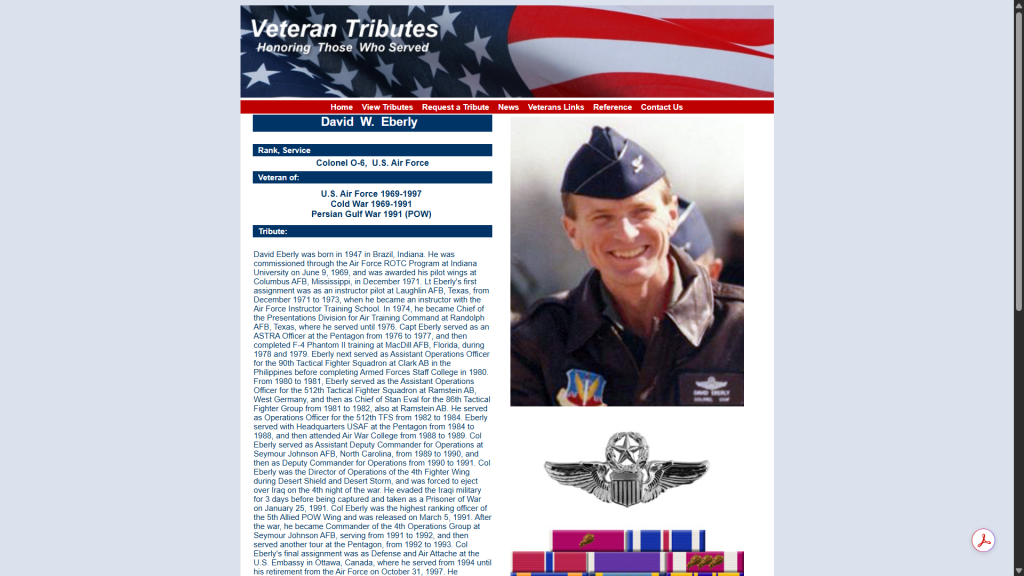
Based on this information from Veteran Tributes, Col. David W. Eberly was actually captured as a prisoner of war during the Gulf War in 1991. Therefore, he has no connection to any recent Iran-related conflict.
How was the real, recent U.S. rescue operation in Iran?
Thai PBS Verify further looked into information regarding the U.S. rescue operation involving a fighter pilot shot down in Iran. A Reuters news report dated April 7, 2026 was found and could be summarized as follows:
A hostage rescue mission took place when U.S. commandos infiltrated Iran under the cover of darkness to rescue an American weapons specialist stranded on a mountain peak over 7,000 feet high in Isfahan province, after an F-15E fighter jet was shot down.
Although the initial phase of the operation went smoothly, the situation became critical when two MC-130 transport aircraft experienced technical malfunctions and were unable to take off, leaving nearly 100 special forces personnel at risk of being trapped behind enemy lines.
At that moment, the commander decided to take the risk of sending additional aircraft to extract the personnel in waves amid several hours of tension that could have led to major losses. However, the plan was successful, and the United States was able to withdraw all forces. It also decided to immediately destroy the malfunctioning aircraft and four other helicopters to prevent sensitive equipment from falling into Iranian hands.
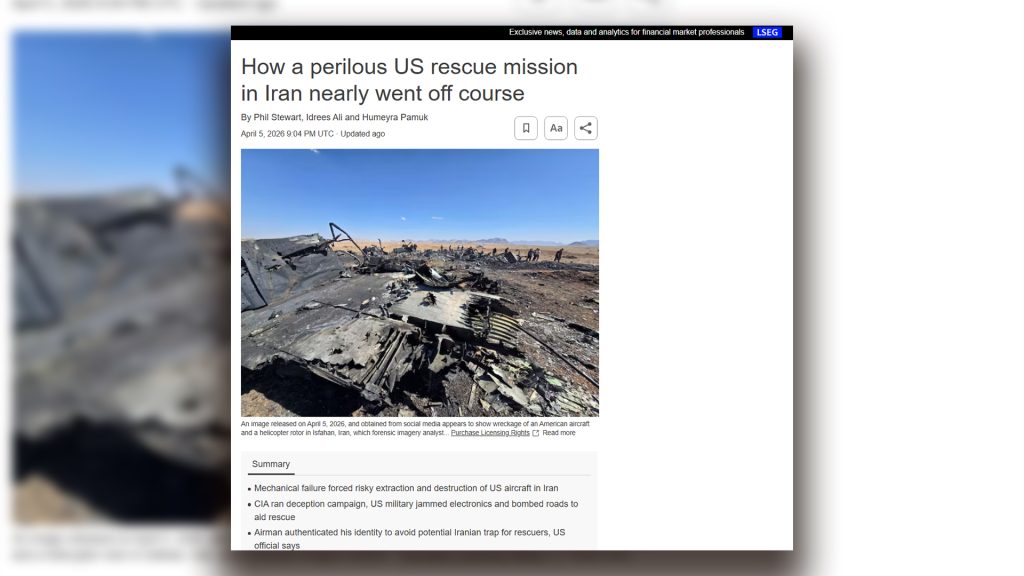
A Reuters report on the mission was published on April 7, 2026.
As for the details of the rescued personnel, it was found that the rescued individual was a colonel who suffered a sprained ankle and was hiding along a cliff. Deception techniques and misinformation tactics from the CIA were used to confuse Iranian authorities about his location. In addition, the U.S. military cut off electronic signals and dropped bombs to destroy surrounding access routes in order to block entry to the area, until he was successfully extracted and brought back to safety. President Donald Trump praised it as one of the most courageous search-and-rescue operations in U.S. history.
Although the mission was successful, it reflected the intensity of a conflict that had lasted more than five weeks, which had already claimed the lives of 13 U.S. soldiers and injured more than 300 others. Analysts noted that while the United States attempted to portray the Iranian military as weak, Iran demonstrated its capability to respond by targeting fighter jets and damaging Black Hawk helicopters. The incident helped prevent the crisis from escalating into a full-scale war, while Mr. Trump was considering the direction of the conflict.
What is the truth?
The video showing a man identified as Colonel David William Eberly is not a current event in Iran. It is actually an incident from 35 years ago during the Gulf War in 1991.
Colonel Eberly was a pilot of an F-15E aircraft that was shot down by Iraqi forces on January 19, 1991. He was captured as a prisoner of war and later released in March of the same year. He retired from military service in 1997. In other words, he is no longer in active military service and has no involvement in any conflicts in 2026.
Verification Process
■ Verification with AI tools: The team analyzed the video with Hive Moderation and found a 0% likelihood of it being AI-generated. This confirmed that this was a real video from an actual past event, not newly created content.
■ Content transcription and identity search: The video mentioned the name “Colonel David William Eberly.” Then, the team searched the Veteran Tributes database and found clear records identifying him as a prisoner of war during Operation Desert Storm in 1991.
■ Verification of current context: According to a Reuters report (April 7, 2026), although a U.S. F-15E aircraft was indeed shot down in Isfahan province, Iran, the pilot—who holds the rank of colonel—was safely rescued by U.S. commandos and was not captured, contrary to claims circulating on social media.
Impacts of disinformation
■ Creating misunderstanding about the current conflict situation: Presenting a clip from over 30 years ago as a current event can mislead the public into believing that there are ongoing losses of U.S. military personnel.
■ Distorting information for propaganda purposes: The circulation of images showing captured pilots often aims to portray the opposing side as defeated, in order to incite morale or hatred among supporters of a particular side.
■ Undermining the credibility of news and information: Frequent use of false context can lead to “news fatigue” among the public, making it increasingly difficult for people to distinguish between fact and disinformation.
What to do with this misinformation?
■ Observe video quality and clothing: A video from 1991 would have low resolution (SD), and the military uniforms and equipment in the clip would appear outdated compared to today. If you see unclear footage in the 4K era, you should first suspect that it is an old clip.
■ Verify the names of individuals mentioned in the news: If a pilot’s name is provided, search for it on Google to check basic background information. In this case, you will find confirmation from a veterans’ website that it is an event from the past.
■ Be cautious of accounts using sensational captions: Be wary of posts that use emotionally charged or provocative language without citing verifiable sources.
■ Use tools to search past information: When encountering significant military events, check with reputable mainstream media outlets or fact-checking pages to confirm accuracy before believing or sharing.
■ Stop the cycle of misinformation: “When unsure, don’t share.” If the information seems unreasonable, avoid supporting it by liking or commenting, as this will only encourage algorithms to spread the false information more widely.
Editor: Nuttapoln Toomma
Translation edited by: Peerachai Pasutan