
Thai PBS Verify unveils annual statistics on the spread of misinformation
Ms. Kanokporn Prasitphon, Director of the Digital Media Department at Thai PBS, shared insights into the operations of Thai PBS Verify. Since its creation in October 2024, the unit has fact-checked over 421 reports. Data across five key categories reveals that Social issues were the most scrutinized, accounting for 33% of the cases, followed by Politics and Around the World categories at 28% and 22%, respectively.
Ms. Kanokporn noted that misinformation typically surges in response to major ongoing events. Examples include the Thailand-Cambodia border disputes, floods in Southern Thailand and the ongoing conflicts in the Middle East. “AI-slops” are increasingly utilized to generate fake content, fuel misinformation trends and distort facts by blending unrelated incidents. Furthermore, there is a rising trend of using gaming technology to create deceptive content on social media.
Furthermore, Ms. Kanokporn highlighted the key insights and lessons learned by Thai PBS Verify throughout 2025, which include:
- Advancing AI capabilities: Established verification tools are increasingly struggling to keep pace with the rapid evolution of new AI technologies.
- Fake news travels significantly faster and reaches a wider audience than factual corrections, driven by the sheer volume of shares in a very short window of time.
- Media vulnerability: Malicious actors may exploit reputable media outlets as a springboard to amplify and legitimize fake news.
- Crisis as a catalyst: While misinformation is a daily occurrence across all topics, its volume and intensity surge dramatically during times of crisis.
- “Avoiding errors”: As frontline verifiers of truth, fact-checking teams must exercise extreme caution to ensure they do not inadvertently spread the very misinformation they aim to combat.
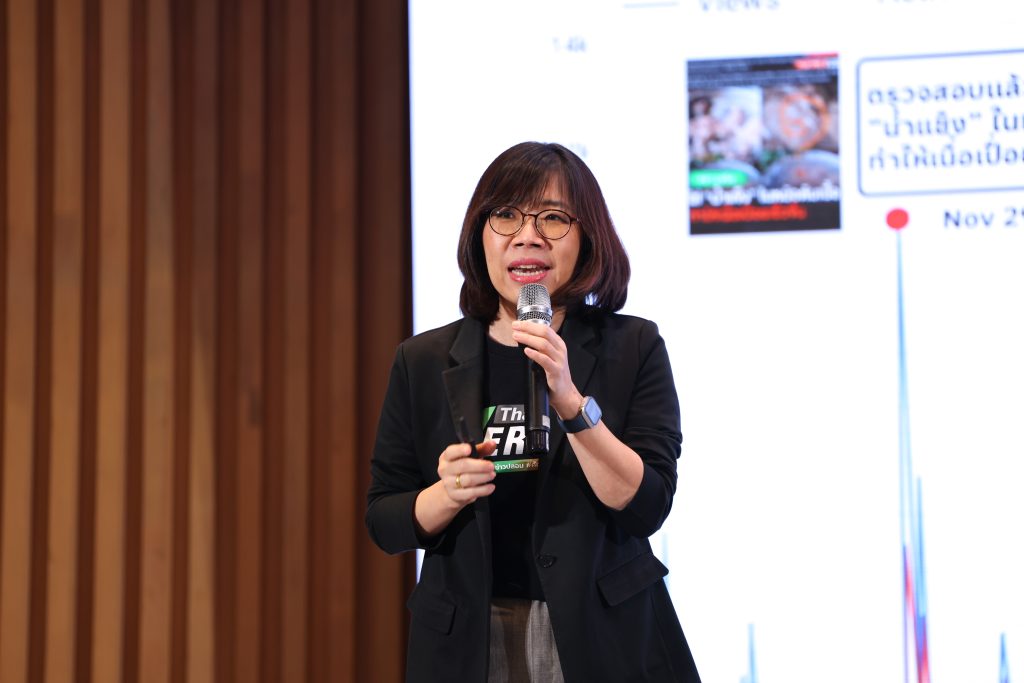
Ms. Kanokporn Prasitphon, Director of the Digital Media Department at Thai PBS
Reflections from ‘Sure And Share:’ three groups of fake news we currently face
- Truth without context: This refers to information that is factually accurate but presented in a way that leads to a false conclusion. By selectively omitting key details—whether intentionally or otherwise—the shared content distorts the truth and misleads the reader.
- Trust in AI: This has become a major contemporary issue, as information is now aggregated from a wide range of sources. AI-driven data collection can be categorized into two main types:
- Unintentional misguidance: This often occurs when users rely on AI-generated summaries or “top search results.” When multiple platforms display similar, yet inaccurate, information, it creates a false sense of consensus that leads readers to accept misinformation as fact.
- Intentional negligence: Many creators continue to use unverified AI outputs for the sake of speed. This ‘easy-path’ approach often ignores the inherent limitations of AI, leading to the spread of misinformation that can have tangible consequences in the real world.
- Media manipulation or source hacking: This involves tricking news outlets into amplifying false information. Once the media is deceived, the misinformation gains a ‘seal of approval,’ allowing it to spread rapidly and gain unmerited credibility before anyone notices the deception.
We must learn to distinguish fact from fiction by maintaining a healthy level of skepticism. A concept you will hear more frequently is ‘Zero Trust.’

Peerapon Anutarasoat, Manager of the Sure and Share Center, MCOT.
Online media outlets are increasingly embracing ‘fact-checking’
The Society of Online News Producers (SONP) recently reported a successful year in promoting media standards. SONP Vice President Jeerapong Prasertpolkrung revealed that 54 member outlets have completed fact-checking training. Most importantly, these newsrooms have successfully implemented internal verification systems to vet every daily report, marking a major milestone for the association.
Since January, SONP has spearheaded the ‘Stop Fake Spread Fact’ initiative. The project aims to verify 120 news reports over a nine-month period. To date, the campaign has already produced 40 fact-checked reports and garnered 1.5 million views—rapidly approaching its final engagement target of 1.8 million.
SONP currently leverages the diverse strengths of its member outlets to verify news across multiple sectors. This past year featured the ‘AI Newsroom’ workshop, offering end-to-end AI training for digital reporters. The association also celebrated excellence through its annual Fact-Checking Awards and expanded its impact by training students to act as ambassadors for media literacy in universities.

Mr. Jeerapong Prasertpolkrung, Vice President for Professional Standards at the Society of Online News Producers (SONP)
Technical tools and professional expertise serve as an essential shield against AI deception
Mr. Nattakorn Ploddee, Southeast Asia Digital Verification Editor at Agence France-Presse (AFP), shared insights into the past year’s fact-checking landscape, describing it as exceptionally challenging. He noted that U.S. politics continues to exert a global influence, which is reflected in a decrease in AFP’s fact-checking output. This decline follows budget cuts for Facebook’s verification programs, a shift that has intensified since President Donald Trump took office.
Thailand experienced a flood of false information over the last year, particularly surrounding major events such as earthquakes and the dual military tensions at the Thai-Cambodian border. AFP noted that the widespread circulation of doctored media played a pivotal role in amplifying these narratives. This observation was formally reported by AFP as a key catalyst behind the intensified spread of misinformation in the region.
Furthermore, AFP published 6,800 fact-check reports globally over the past year. Notably, approximately 11% of these—around 600 to 700 cases—involved AI-generated content. This represents a significant volume that continues to trend upward, driven by the increasing accessibility of AI tools for the general public.
“While AI has advanced by leaps and bounds over the past year, our experience at AFP demonstrates that AI-generated content remains manageable. By utilizing specialized tools alongside rigorous evidence-based verification, we can effectively identify misinformation. These two core principles remain our primary defense today, and I am confident they will continue to be effective even as technology becomes more sophisticated.”
Mr. Nattakorn further noted that fact-checking has grown increasingly complex, as truth and falsehood are often intertwined. Verification is rarely a matter of black and white; rather, it frequently involves navigating gray areas where facts are blended with misinformation. A prominent trend, both globally and in Thailand, is the rise of the ‘information control industry’—coordinated networks or alliances that systematically attempt to manipulate or control narratives. To safeguard the credibility of fact-checking, he emphasized that transparency, a steadfast commitment to evidence, and adherence to rigorous verification principles are essential.
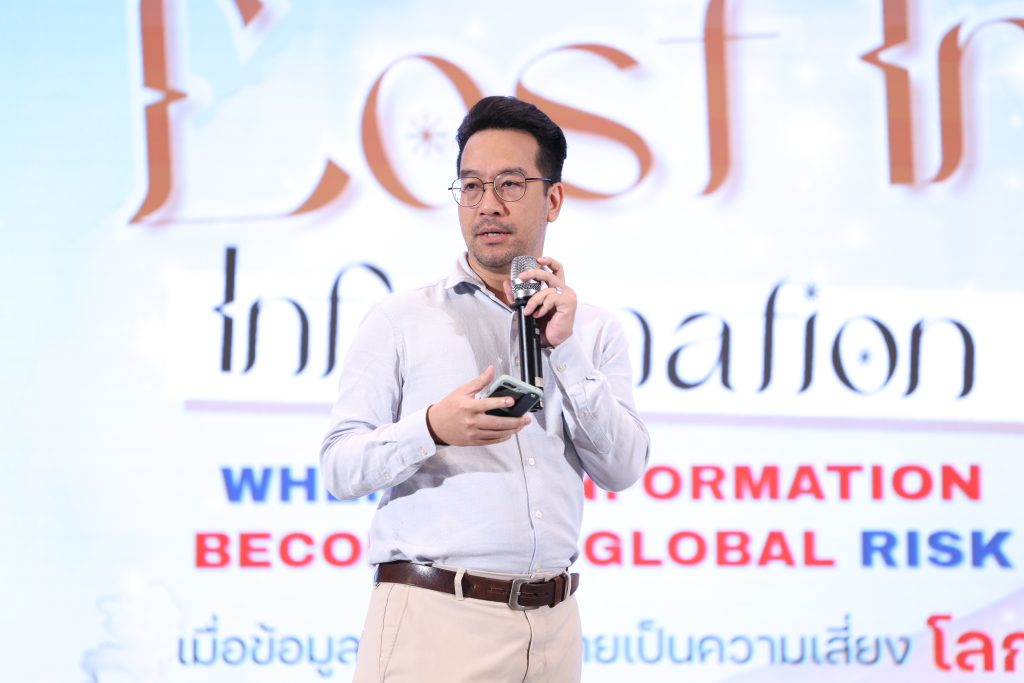
Mr. Nattakorn Ploddee, Southeast Asia Digital Verification Editor at Agence France-Presse (AFP)
Taiwanese expert reveals AI Responses are tailored to the user’s location
Mr. Ethan Tu, engineer at Taiwan AI Lab, also shared insights from his research on various AI models, including ChatGPT and local Taiwanese developments. His findings reveal that these models often produce inconsistent answers. Notably, when queries are submitted in different languages, the AI tends to exhibit a linguistic bias, tailoring its responses to align with the cultural or regional perspectives associated with that specific language.
“Queries posed in Traditional Chinese (Taiwanese usage) versus Simplified Chinese (Mainland China usage) yield noticeably different results, as each AI model is trained on data curated by its respective native speakers. This discrepancy can inadvertently facilitate the spread of foreign-led disinformation, as AI outputs are shaped by the specific linguistic and cultural biases of the data they were fed.”
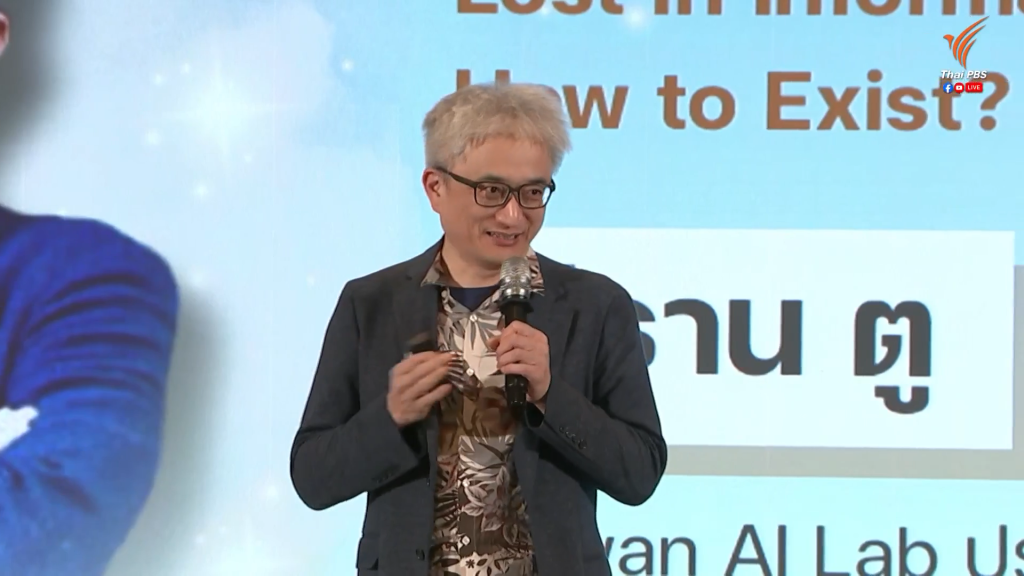
Mr. Ethan Tu, an engineer at Taiwan AI Lab
How does Japan detect deepfakes while promoting media literacy across generations?
Mr. Noa Horiguchi, CEO and co-founder of Classroom Adventure, shared insights on ‘Building Credibility in the AI Era.’ He discussed the rising threat of online scammers in Japan and the prevalence of AI-generated misinformation on social media. Mr. Horiguchi noted that in today’s influencer-driven landscape, many creators are utilizing AI to generate content; however, while some of this material is accurate, much of it contains errors that have led to widespread public misunderstanding.
Furthermore, he highlighted the risks of AI-generated fake websites. When prompted, certain AI models may fabricate links or create non-existent websites to complete the context of their responses. There is a significant concern that these AI-generated assets could subsequently be exploited for fraudulent or malicious purposes.
“As AI-driven deepfakes become more sophisticated and accessible in both Japan and Thailand, the threat of deepfake scams has intensified. These fraudulent tactics have gained significant credibility, making it increasingly difficult to distinguish between a genuine individual and a scammer impersonating them.”
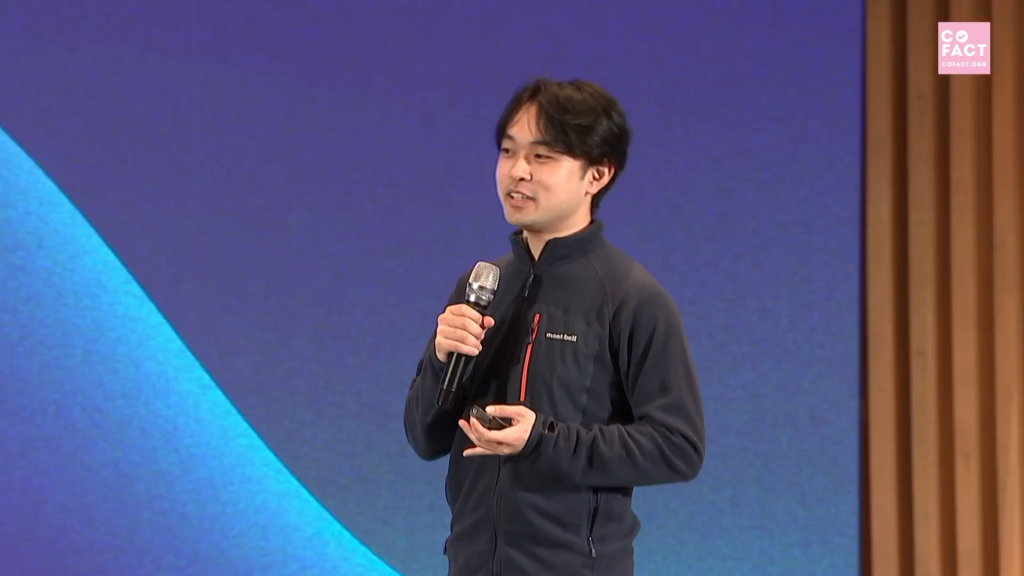
Mr. Noa Horiguchi, CEO and Co-founder of Classroom Adventure.
Cofact highlights why misinformation persists
According to Ms. Kulthida Samapuddhi of Cofact Thailand, the organization has completed 283 verifications over the past year, reaching a milestone of 100,000 views. She noted that Cofact prioritizes not only false reports but also ‘gray area’ information that remains vague or unconfirmed, highlighting that clarifying these uncertainties is a core part of their work.
In addition, Cofact outlined three worrying trends that emerged from their year-long analysis of news reports:
- Misinformation continues to persist despite verification. Out of the numerous cases identified, only 46 were removed following a fact-check. In contrast, 171 cases remain active, with their engagement and share counts continuing to climb steadily.
- Mainstream media continues to play a role in spreading misinformation. Despite the original content being thoroughly verified and debunked, other media outlets continue to share fake images and reports to further incite hatred and division.
- A significant portion of the public still fails to see the value of fact-checking. Many individuals remain indifferent to news verification, choosing instead to spread misinformation simply for their own personal gratification or emotional satisfaction.
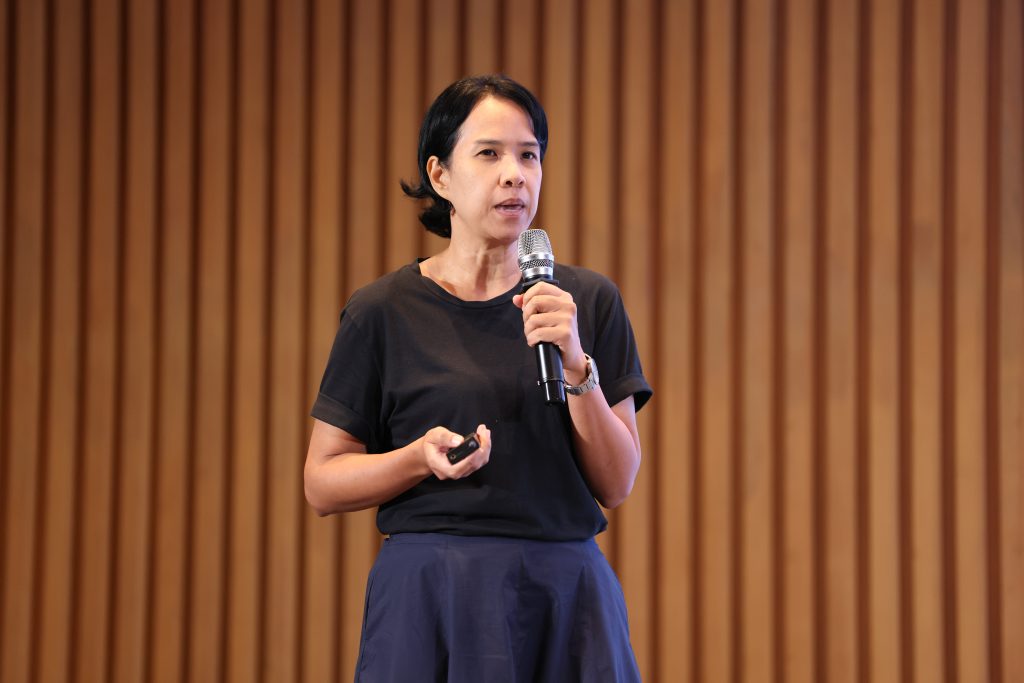
Ms. Kulthida Samapuddhi, editorial team member of Cofact Thailand
The ‘World Fact-Checking Day 2026’ event also included several activity zones designed for fun and engagement, with many prizes up for grabs, such as:
5 questions to prove your fact-checking skillsThai PBS Verify
Thai PBS Verify brought a mini-game to attendees for a chance to win special rewards, such as limited-edition T-shirts. This interactive 5-question quiz covers the basics of fact-checking on social media and offers a practical guide to navigating online misinformation.
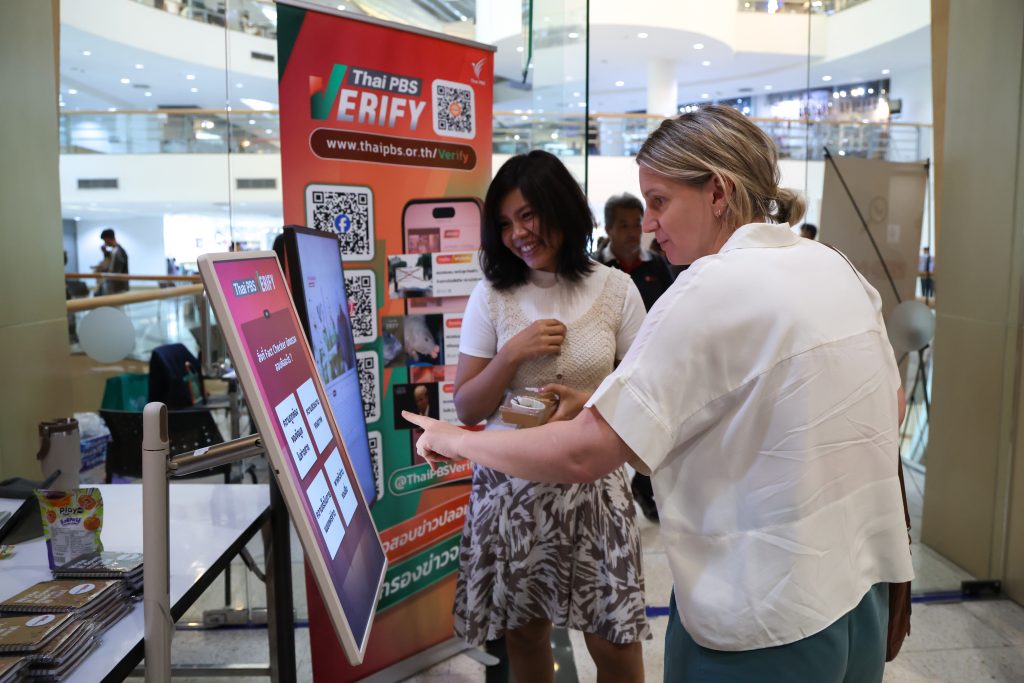
The Thai PBS Verify game kiosk.
“CHECK DOO’: a fact-checking resource hub by Mahasarakham University
Presented by students from Mahasarakham University, this booth features the launch of ‘Check Doo (let’s check)’—a centralized platform that aggregates news and verified fact-checking reports from various credible sources into a single, accessible location.
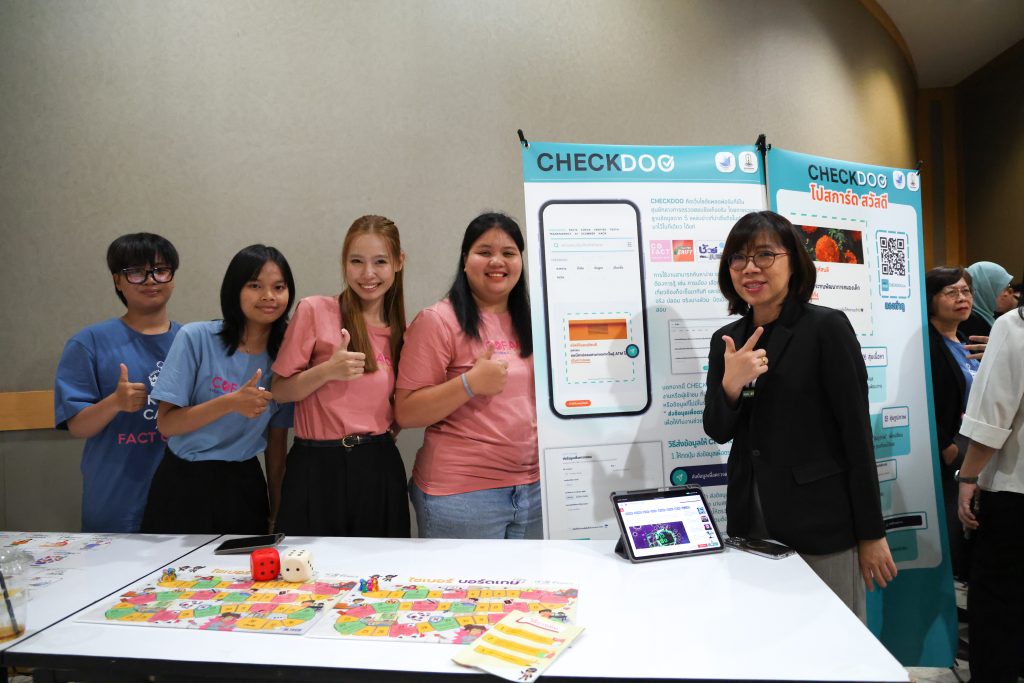
Students from Mahasarakham University and ‘CheckDoo,’ a centralized web platform dedicated to aggregating fact-checking data and combating misinformation.