Strengthening Fact-Checking Efforts Against Disinformation Ahead of Thailand’s 2026 Election

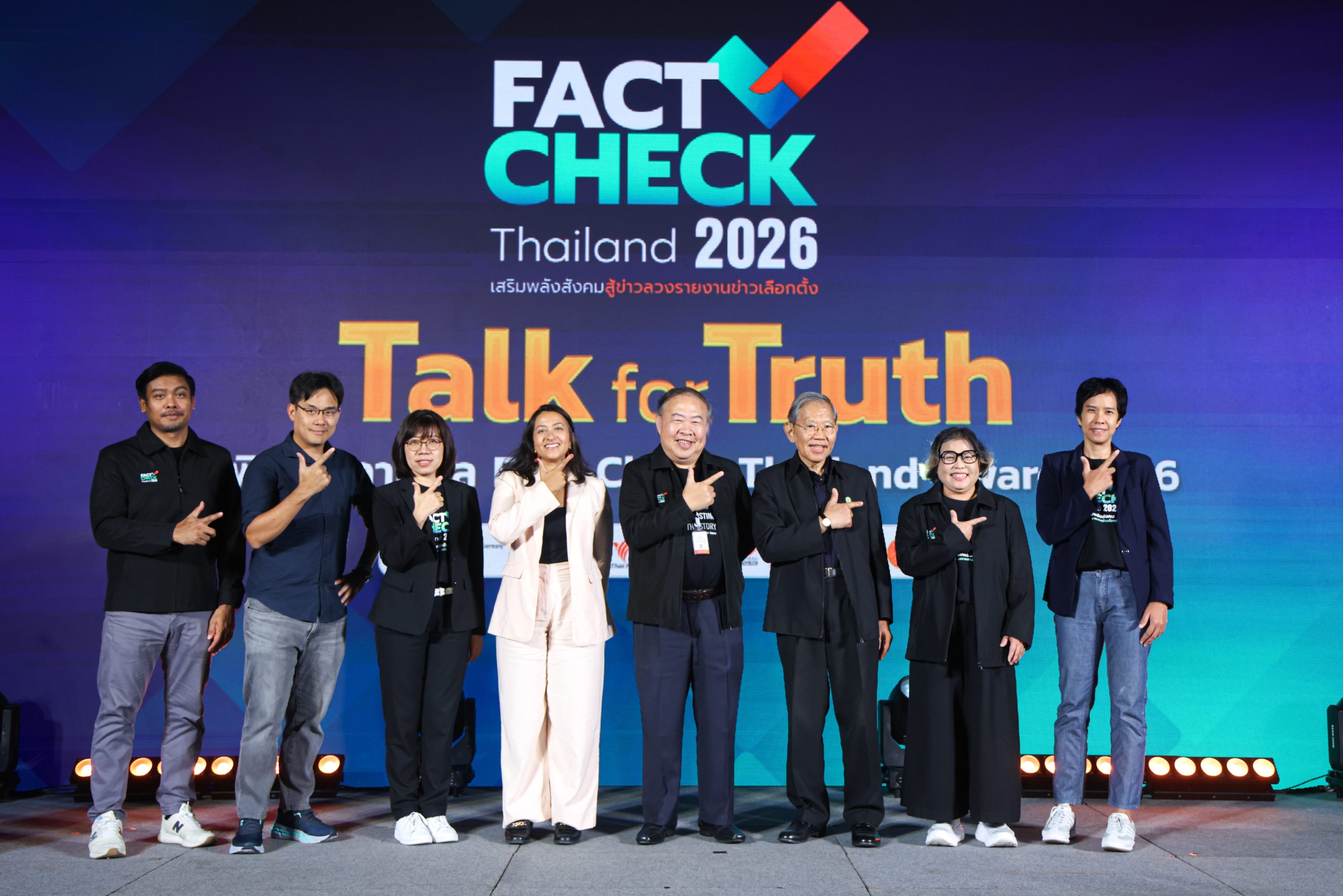
The “Talk for Truth” forum and the Fact-Check Thailand Award 2026 ceremony brought together media professionals, academics, civil society, and international partners, highlighting the intensifying challenge of disinformation ahead of Thailand’s general election on 8 February 2026. The event emphasized that fact-checking is not solely the responsibility of the media, but a civic skill essential to safeguarding democracy in the digital age.
Participants in the forum agreed that the spread of false information, disinformation, and the use of AI to create fake images and videos pose a serious threat to public decision-making during elections. Mr. Adisak Limprungrungphatthana stated that Thai PBS has prepared to address this challenge by building a “fact-checking force” through the Thai PBS Verify initiative. Ms. Sweta Madhuri Kannan emphasized that disinformation gradually erodes trust in democratic systems and that countering it requires cooperation across multiple sectors. Assoc. Prof. Dr. Wilaiwan Jongwilai-kasem highlighted the growing social demand for “truth skills,” reflected in the Policy–Fact–Photo Checking curriculum designed to enhance media and information literacy. Professor Emeritus Vicha Mahakhun warned that fake news undermines institutions and distorts political decision-making, while Mr. Yingshep Atchanont pointed out that holding a general election and a referendum simultaneously amid ongoing conflict further heightens the risks of disinformation. Mr. Prasong Lert-rattanavisuth raised critical questions about the role of mainstream media and professional self-regulation, while Ms. Saree Aongsomwang called on citizens to scrutinize political policies and to “reclaim accountability” from politicians. These perspectives align with the warning of Professor Nicole Krämer, who noted that once false information becomes embedded in people’s minds, it is difficult to correct and may ultimately lead to a state in which the public trusts no information at all—posing the greatest danger to democracy.
Thai PBS Launches a “Fact-Checking Force” to Counter Fake News in the Final Stretch Before the 2026 Election
Mr. Adisak Limprungrungphatthana, Deputy Director of the Thai Public Broadcasting Service (Thai PBS), delivered the opening remarks at the “Talk for Truth” forum and the Fact-Check Thailand Award 2026 ceremony, stating that the event provides an important opportunity for young people and project participants to engage in semi-volunteer work to jointly verify information during the election period. This initiative reflects a shared concern across all sectors that fake news and disinformation—particularly content generated using artificial intelligence (AI) and tools on social media platforms—are likely to spread far more extensively than in the election held two years ago.
Mr. Adisak explained that Thai PBS has a clear policy to develop both tools and human resources for news verification. Through the continuous implementation of the Thai PBS Verify project, which has already conducted multiple training programs, this effort has become increasingly critical as the election on 8 February 2026 approaches, with only about two months remaining. Thai PBS has therefore prepared on multiple fronts to address disinformation that could influence public decision-making.
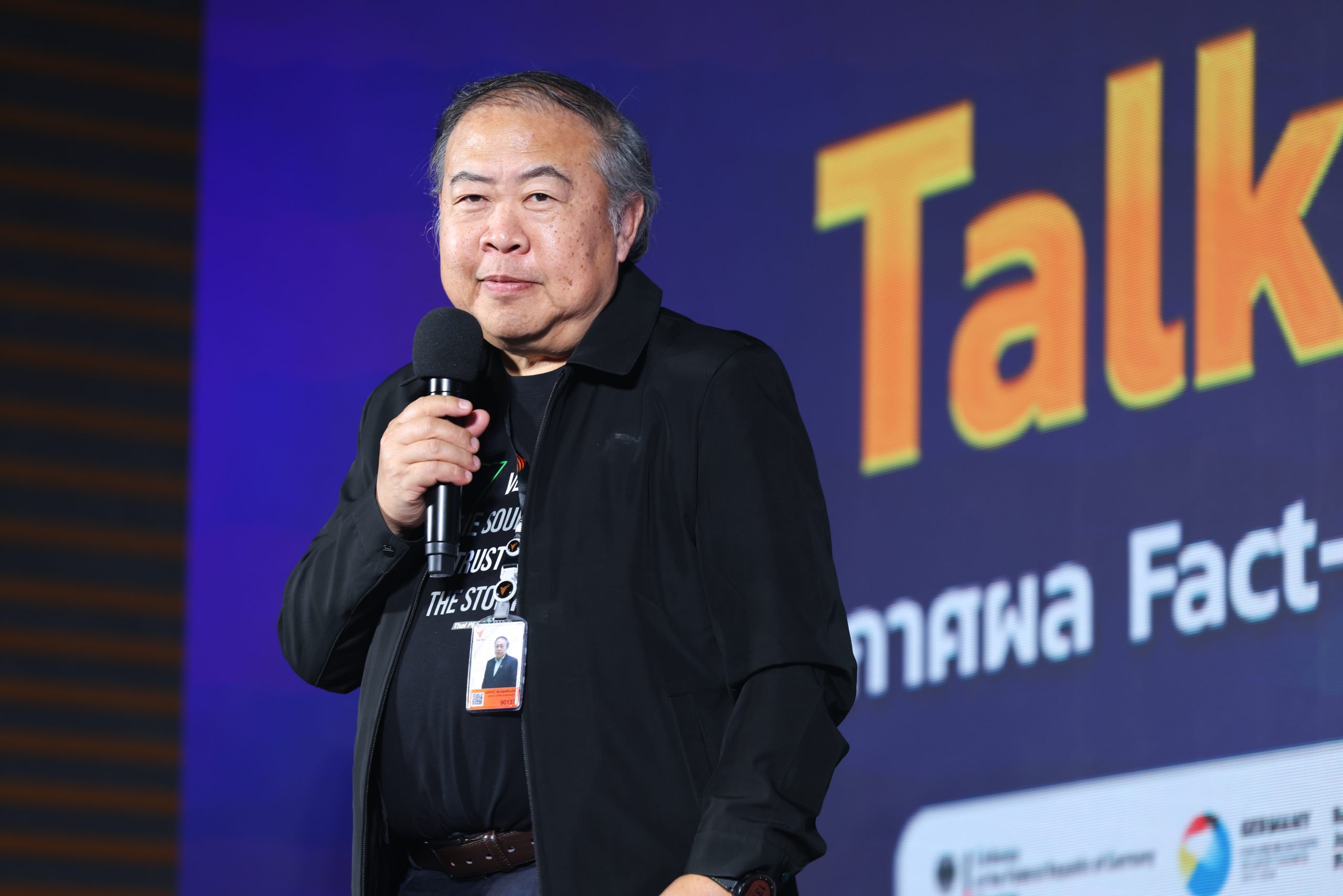
Mr. Adisak Limprungrungphatthana, Deputy Director of the Thai Public Broadcasting Service (Thai PBS)
“This project is comparable to building a ‘fact-checking force’ during the more than 50 days leading up to election day. We expect participants to pass on the knowledge and skills they gain to their families, friends, and educational institutions, helping society remain vigilant and media-literate, and enabling people to use fact-checking tools effectively. Thai PBS reaffirms its readiness to fulfill its role as a public service broadcaster—listening to voices from all sectors and working together to steer the country through this critical period toward a transparent and high-quality election on 8 February 2026,” the Deputy Director of Thai PBS said.
German Embassy Warns That Disinformation Erodes Democracy, Calls for Multi-Sector Cooperation to Address Thailand’s Election Challenges
Ms. Sweta Madhuri Kannan, First Secretary for Press and Cultural Affairs at the German Embassy in Bangkok, stated that the “Talk for Truth” forum and the Fact-Check Thailand Award 2026 ceremony mark an important milestone in cross-sector collaboration as Thailand prepares for its general election in February 2026, amid a context of political uncertainty. She emphasized that cooperation among the media, academia, and civil society plays a vital role in safeguarding democratic processes.
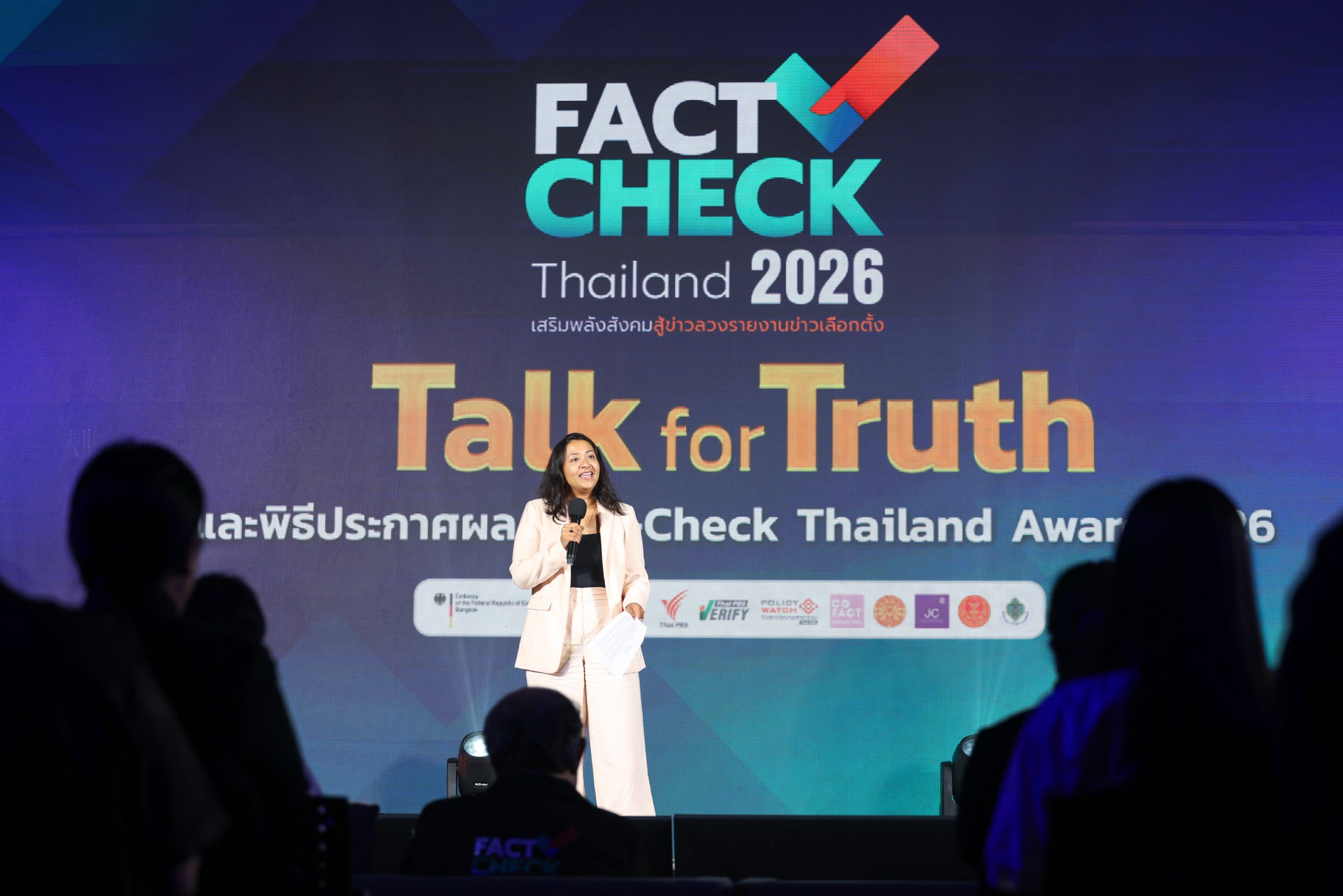
Ms. Sweta Madhuri Kannan, First Secretary for Press and Cultural Affairs at the German Embassy in Bangkok
Ms. Kannan noted that as the election approaches, impartial and fact-based reporting becomes critically important. Many project participants, she said, have learned through concrete case studies how to respond to false and misleading information, how to provide proper context, and how to conduct fact-checking—skills that are central to high-quality public communication. She remarked, “Disinformation does not attack democracy directly; it gradually and quietly erodes public trust.”
She further explained that Thailand, like other democratic countries, is facing the challenge of disinformation that undermines fact-based reporting and dangerously stirs public emotions. A key difficulty, she pointed out, is that much of this information is framed as “personal opinion,” making it harder to verify and contest. Addressing this challenge cannot be accomplished by any single actor; it requires cooperation among independent media, fact-checking organizations, political parties, and trusted institutions within society. When political supporters receive verified information, they can become transmitters of accuracy rather than amplifiers of emotion or misinformation. Ms. Kannan added that the collaboration developed over recent months has laid an important foundation for strengthening democratic resilience, she said.
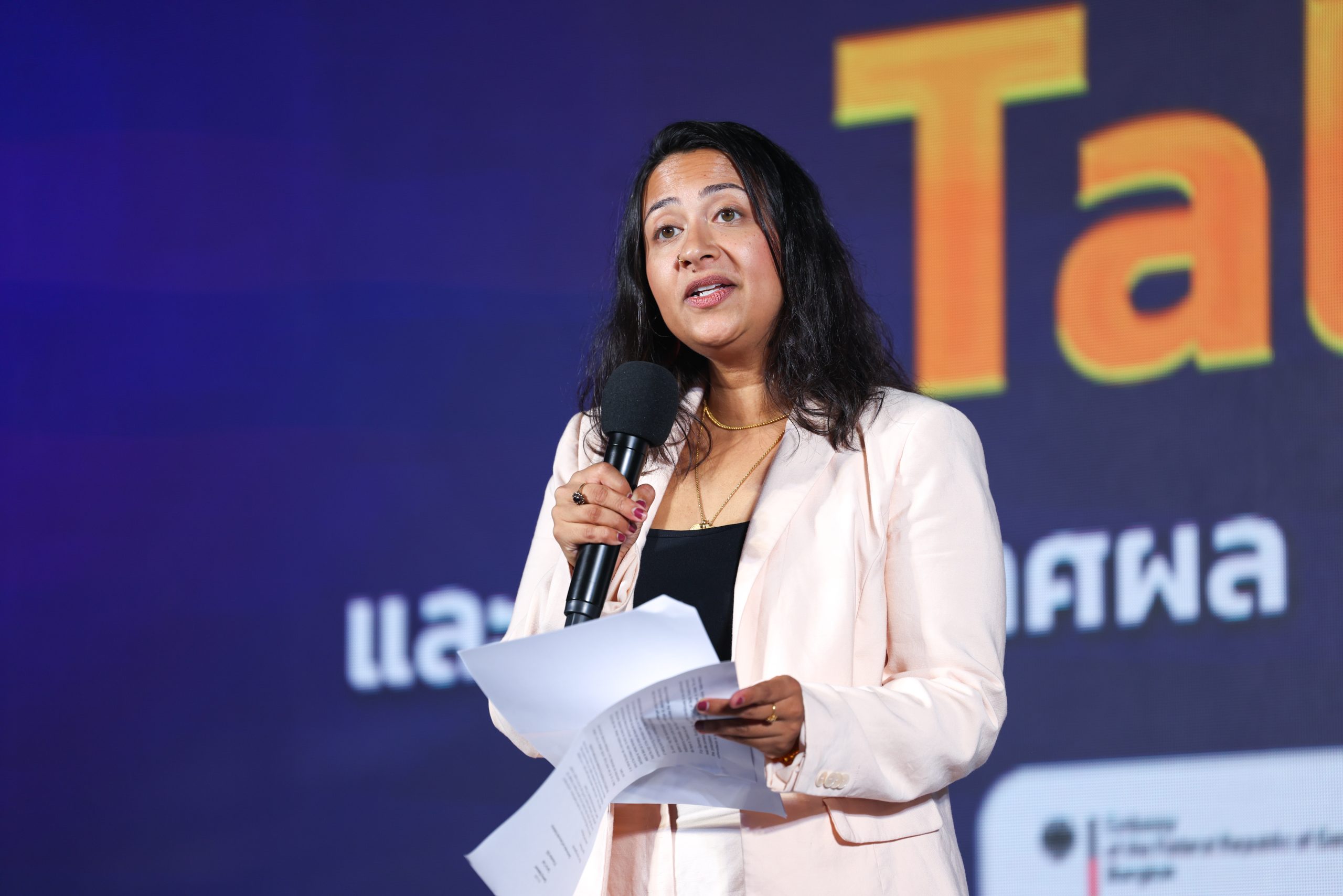
Ms. Sweta Madhuri Kannan, First Secretary for Press and Cultural Affairs at the German Embassy in Bangkok
Fact-Check Thailand 2026 Highlights Thai Society’s Demand for “Truth Skills” to Confront Election-Era Disinformation
Assoc. Prof. Dr. Wilaiwan Jongwilai-kasem, Faculty of Journalism and Mass Communication, Thammasat University, and Head of the Fact-Check Thailand 2026 project, reported on the outcomes of the initiative, noting that while the project initially aimed to train mainly central and regional journalists, the number of applicants turned out to be nearly double expectations. This surge reflects a growing “social demand” for fact-checking skills, particularly during election campaigns when society faces fake news, disinformation, and images or videos created or manipulated using artificial intelligence (AI).
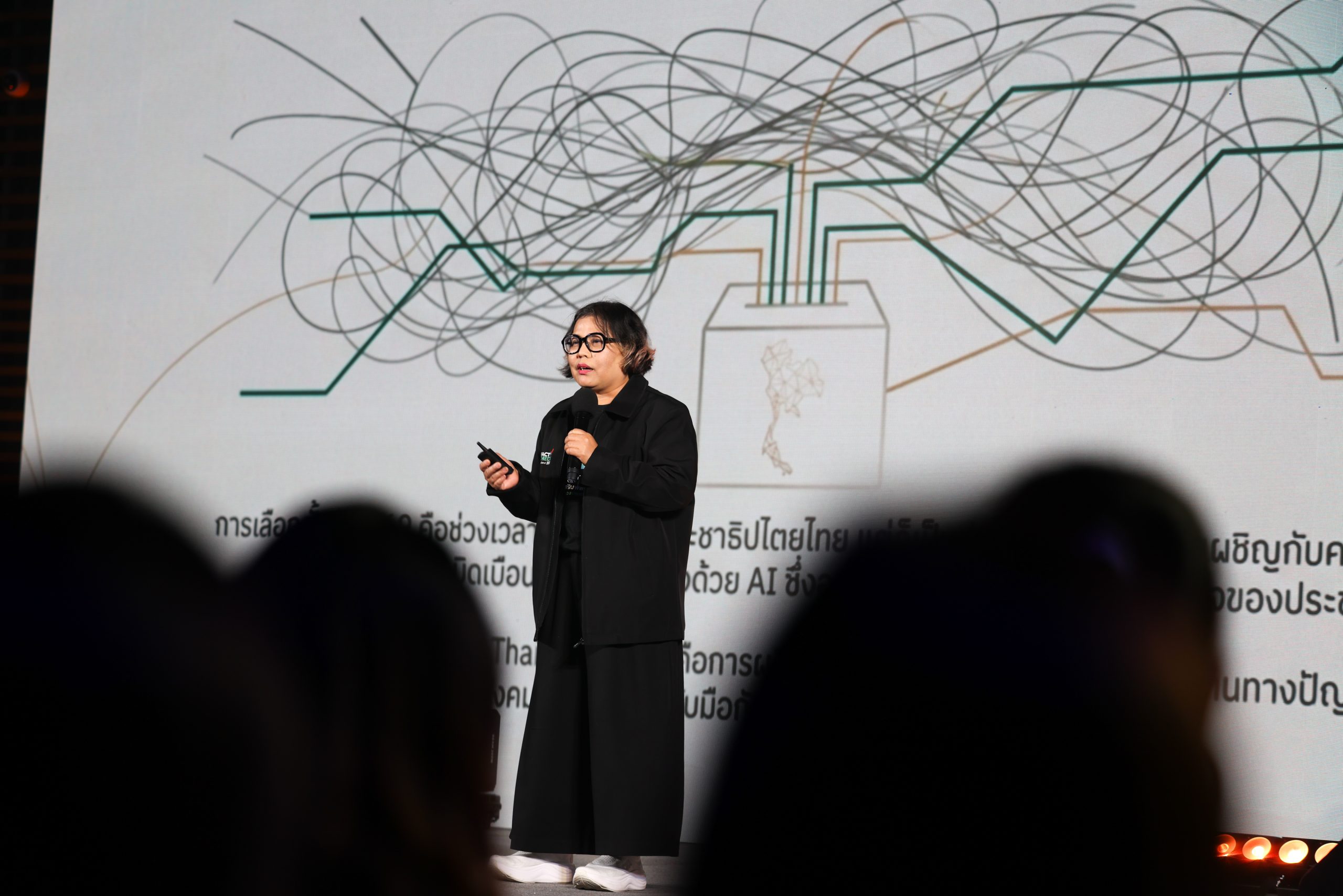
Assoc. Prof. Dr. Wilaiwan Jongwilai-kasem, Faculty of Journalism and Mass Communication, Thammasat University, and Head of the Fact-Check Thailand 2026 project
Dr. Wilaiwan explained that the diversity of applicants and participants across age groups, professional backgrounds, and social roles is not merely demographic information, but rather a sign of a systemic transition in Thai society toward a stronger need for “truth skills.” The strong interest from people of different generations and backgrounds, including university-level instructors, provides important evidence that fact-checking is evolving into a foundational skill of digital democracy in Thailand.
She added that the training curriculum was designed around three core pillars Policy Checking, Fact Checking, and Photo Checking which together form the backbone of fact-checking in an election context. Participants were trained to examine campaign policies in a structural manner, verify claims according to the international standards of the International Fact-Checking Network (IFCN), and verify images and videos, including AI-generated or manipulated visuals, to prevent the distortion of public perception during election campaigns.
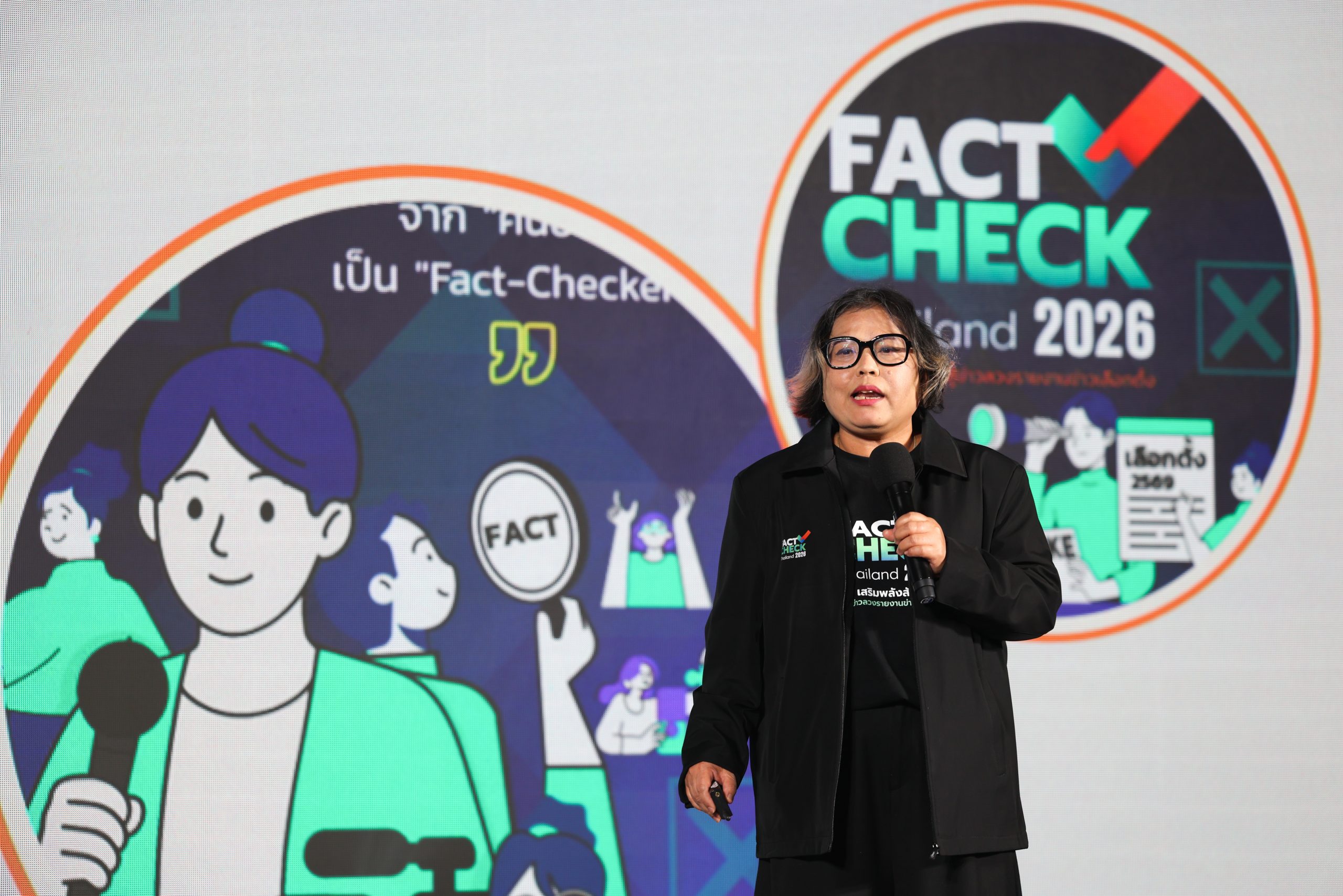
Prof. Dr. Wilaiwan Jongwilai-kasem, Faculty of Journalism and Mass Communication, Thammasat University, and Head of the Fact-Check Thailand 2026 project
“Based on pre- and post-training evaluations from 41 respondents, participants demonstrated clear improvements in their skills, with Policy Checking increasing by 47.6 percent, Fact Checking by 40.1 percent, and Photo Checking by 34.3 percent. After completing the training, participants produced a total of 54 fact-checking pieces submitted to the Fact-Check Thailand Award 2026. This confirms that the project goes beyond knowledge transfer to fostering a sustainable fact-checking network and ecosystem in Thailand, strengthening societal transparency ahead of the 2026 election,” Dr. Wilaiwan said.
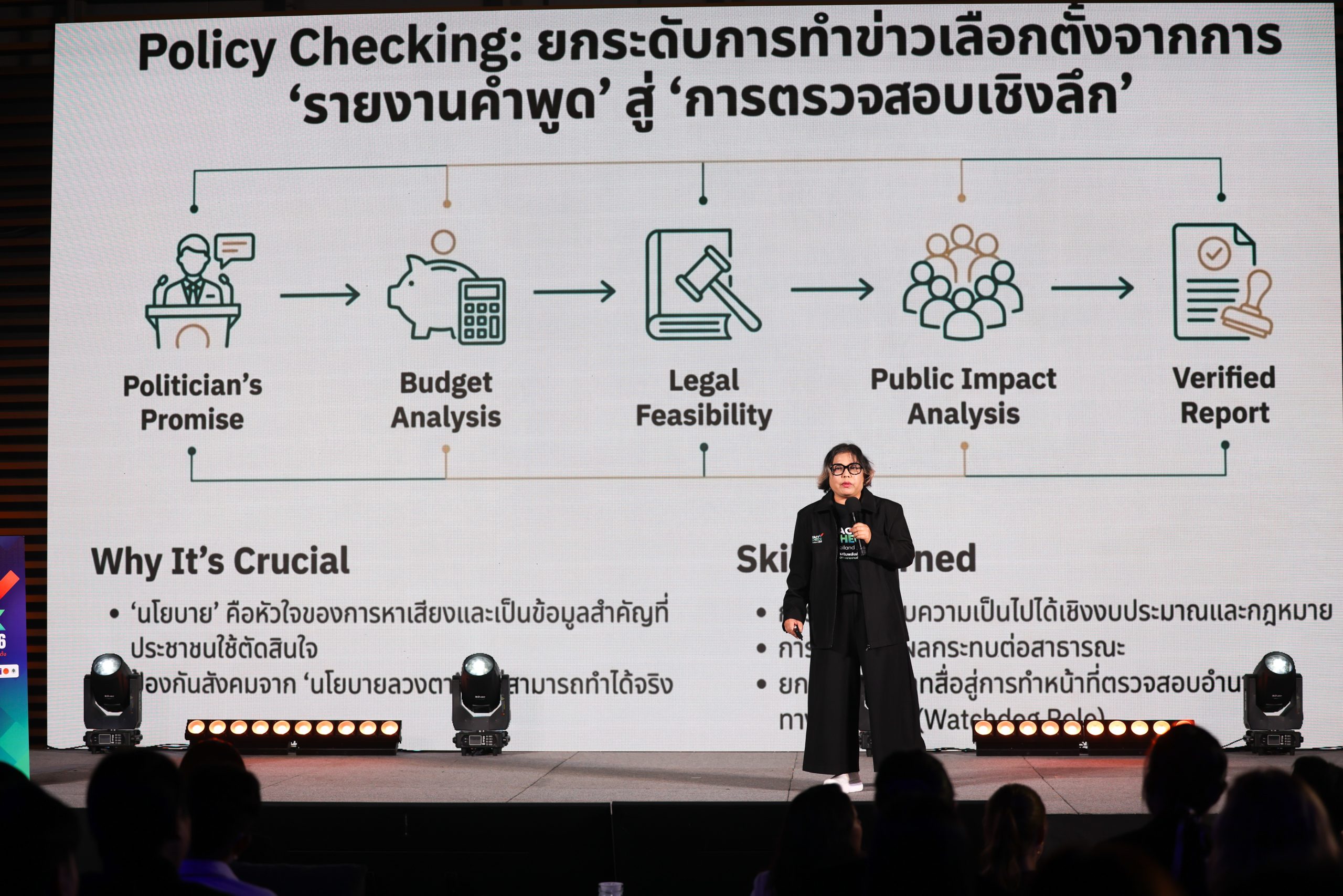
Prof. Dr. Wilaiwan Jongwilai-kasem, Faculty of Journalism and Mass Communication, Thammasat University, and Head of the Fact-Check Thailand 2026 project
She concluded “Fact-Check Thailand 2026 does not aim merely to produce professional fact-checkers. It seeks to cultivate ‘truth skills’ across all ages and roles, enabling Thai society to make political decisions based on verifiable information and to protect democracy from the dangers of disinformation in the digital era.”
Professor Emeritus Vicha Warns That Fake News Undermines the Digital Society, Encourages Youth to Take Part in Information Verification
Professor Emeritus Vicha Mahakhun, Chair of the Committee for the Integrity and Transparency Assessment (ITA) of Public Sector Agencies and representative of the National Anti-Corruption Commission (NACC), stated that young people are increasingly playing an important role in verifying information, amid a global rise in fake news and disinformation in the digital era—particularly on social media platforms, which enable information to be manipulated, fabricated, or used to attack individuals and institutions rapidly.
“Fake news and disinformation not only create confusion in society, but also undermine trust in institutions and affect economic and political decision-making, which may lead to social division or even violence,” he said, adding that “fake news and disinformation have multiple impacts, including creating social confusion, eroding institutional trust, and influencing economic and political decisions.”
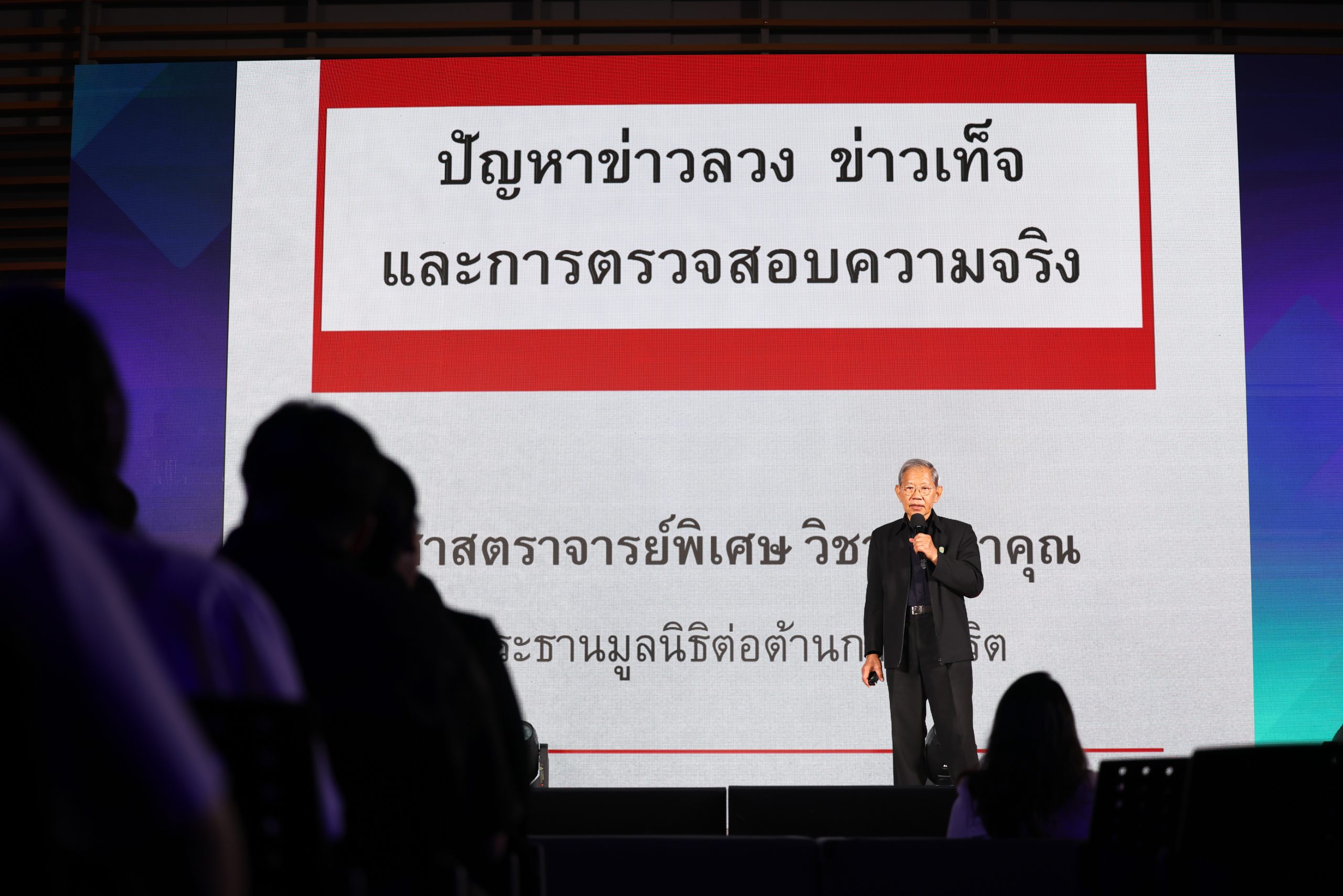
Professor Emeritus Vicha Mahakhun, Chair of the Committee for the Integrity and Transparency Assessment (ITA) of Public Sector Agencies and representative of the National Anti-Corruption Commission (NACC)
Regarding approaches to verifying information, Professor Emeritus Vicha recommended starting with checking the source of the news, the author’s expertise, the date of publication, comparing information across multiple news outlets, reviewing supporting evidence, and using reliable fact-checking websites or organizations both domestically and internationally, such as Cofact Thailand (cofact.org) and Snopes (snopes.com), alongside the audience’s own critical judgment.
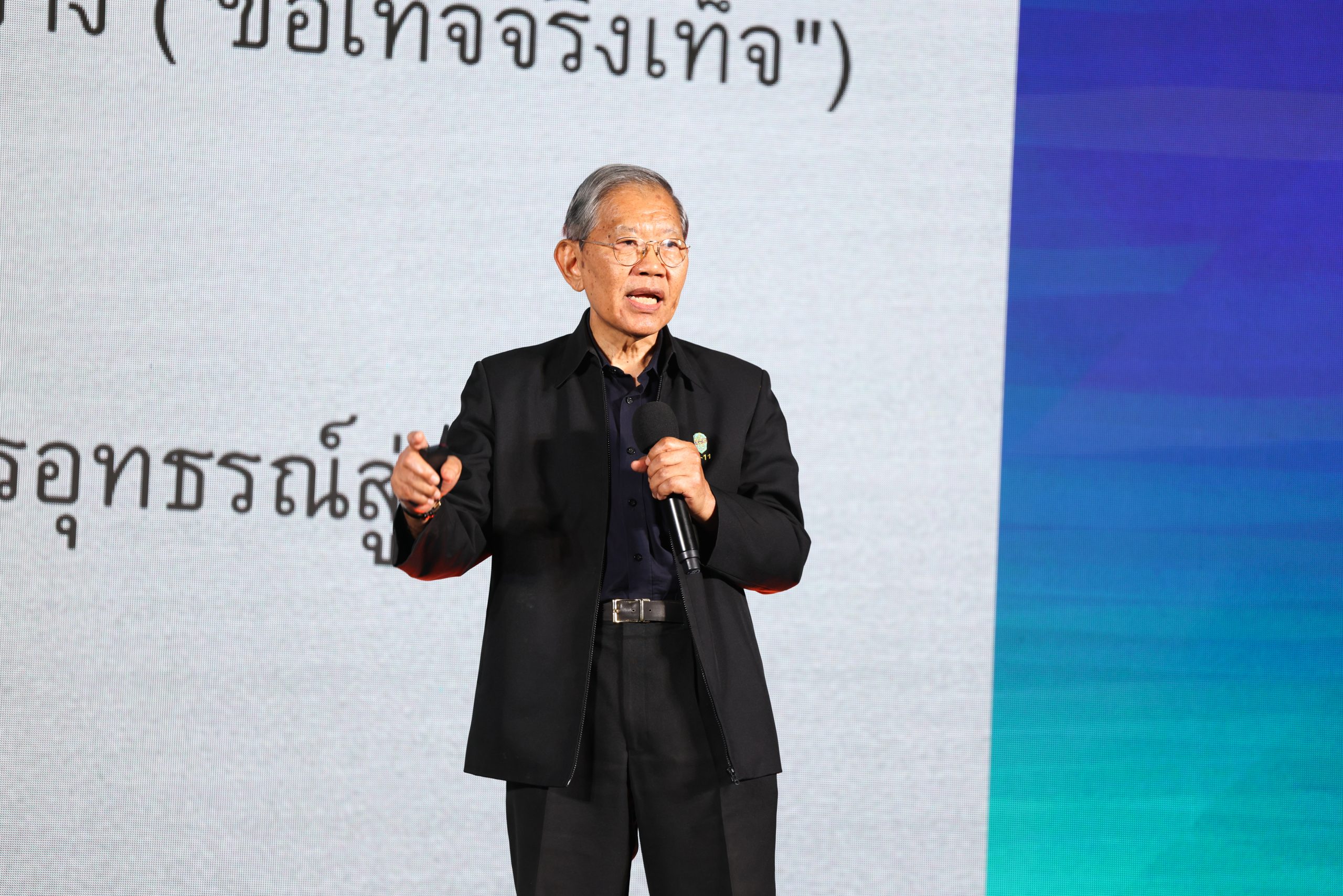
Professor Emeritus Vicha Mahakhun, Chair of the Committee for the Integrity and Transparency Assessment (ITA) of Public Sector Agencies and representative of the National Anti-Corruption Commission (NACC)
At the policy level, Professor Emeritus Vicha also referred to Singapore’s law on preventing the spread of false information, the Protection from Online Falsehoods and Manipulation Act (POFMA), which grants the state authority to order corrections, suspend, or block the dissemination of false information, along with legal penalties for non-compliance. However, he noted that such legislation remains controversial due to concerns about its impact on freedom of expression posing an ongoing challenge for democratic societies to strike an appropriate balance.
iLaw Warns That the 8 Feb 2026 Election–Referendum Arena Faces the Highest Risk of False Information in Decades
Mr. Yingshep Atchanont, Project Manager of Internet for People’s Law (iLaw), said Thailand is approaching the general election on 8 February 2026, with a 95% likelihood that it will be held simultaneously with the country’s first-ever constitutional referendum. With only around 50 days remaining before voting day, he noted that the timeframe is extremely short for the country to prepare for the challenge of false information in the political arena and in national-level decision-making.
“Thailand is facing a context of military conflict, which is the period when false information is used the most. It is also a situation in which the public can hardly verify the accuracy of information unlike ordinary political news, where there are still channels to search for facts. Thai society has never had experience or lessons in dealing with this type of information, yet we are now forced to confront major decisions both the election and the referendum under such an atmosphere,” the iLaw project manager said.
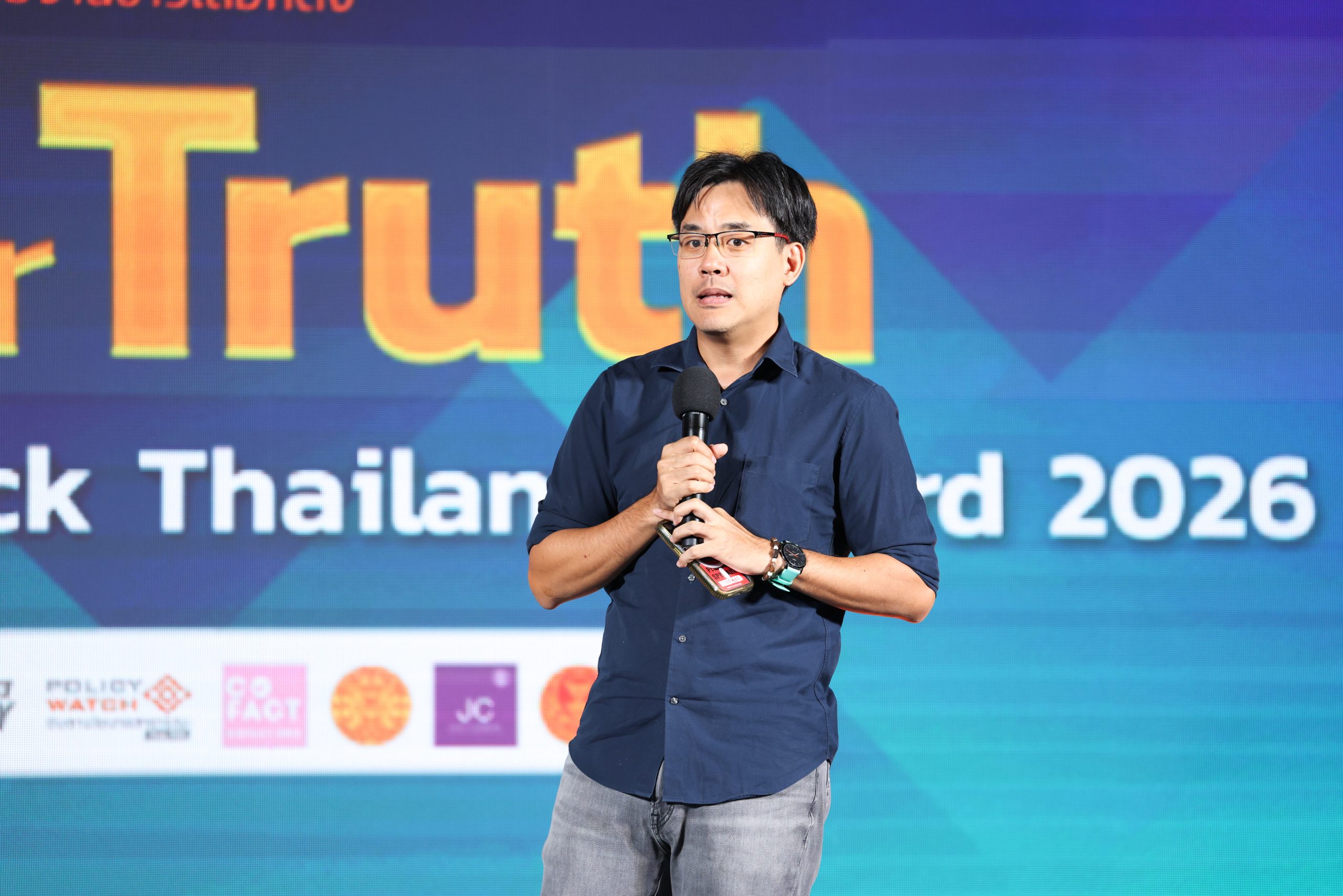
Mr. Yingshep Atchanont, Project Manager of Internet for People’s Law (iLaw)
Mr. Yingshep cited an example of a military document made public in 2021, which the Administrative Court ruled to be authentic and stated that information operations targeting citizens with differing political views were unlawful. He warned that such operations continue and have expanded under the current conflict context.
He also emphasized the need to clearly distinguish between “fake news” information disguised as news but containing no real substance and inaccurate or misleading information, as well as differing political opinions, which should not be broadly labeled as fake news. Fact-checking efforts, he said, should focus on identifying genuine fake news, rather than conflating all types of information.
Regarding the referendum, Mr. Yingshep stressed its critical importance to the country’s political direction, stating “For me, the 8 February 2026 referendum is even more important than the election results but we talk about it far too little,” because the referendum outcome will determine whether the current constitution remains in force and will shape the political power structure in the long term, regardless of how the election results turn out.
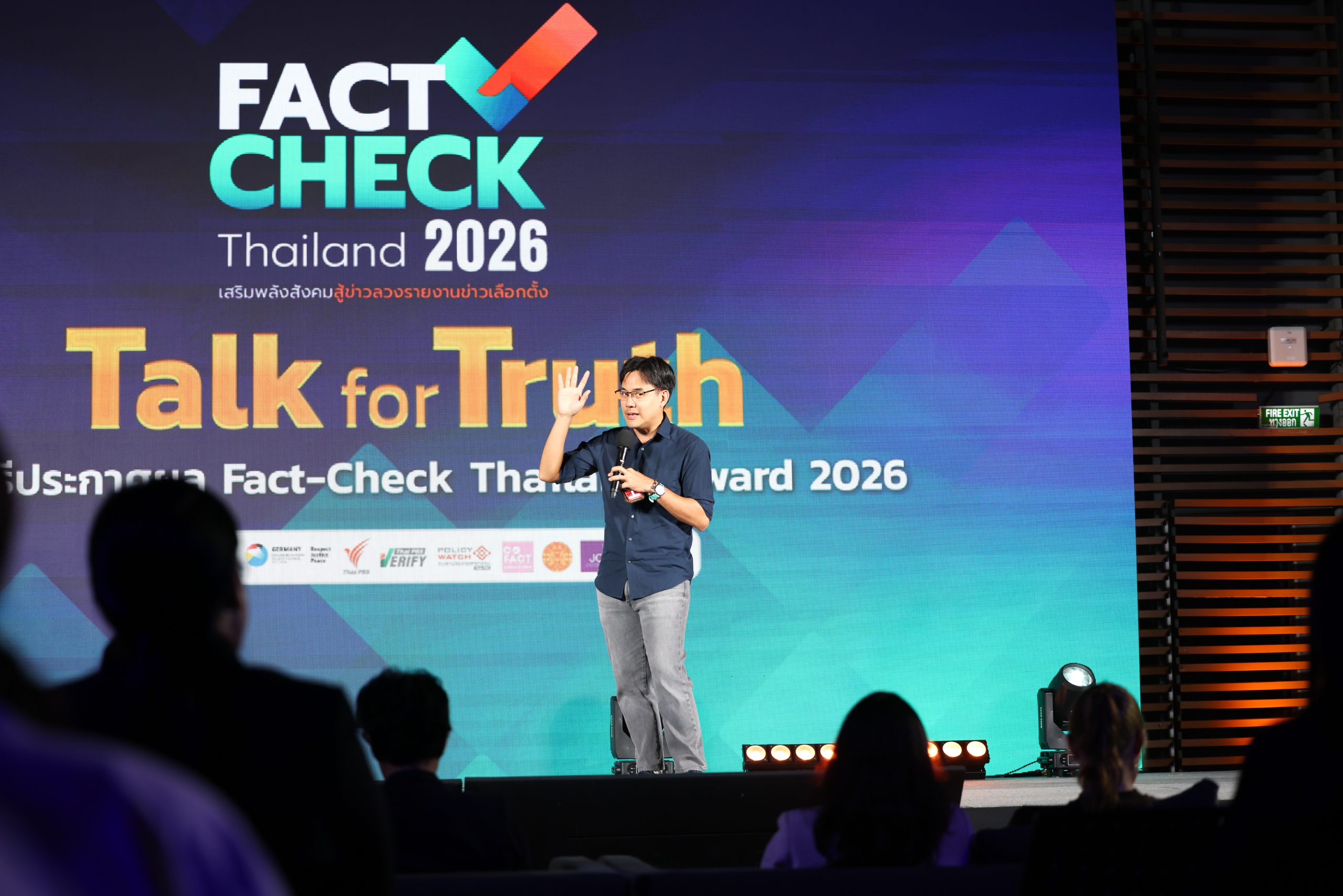
Mr. Yingshep Atchanont, Project Manager of Internet for People’s Law (iLaw)
In closing, he warned that in the period leading up to the referendum, society may face not only fake news in the conventional sense, but also the creation of narratives and sets of questions that distort logic to steer public thinking. Such forms of information are difficult to detect and require detailed explanation and deep verification work to protect the integrity of public decision making.
Isra Institute Director Questions Mainstream Media, Says Combating Fake News Requires Building Public Resilience and Stronger Self-Regulation
Mr. Prasong Lert-rattanavisuth, Director of the Isra Institute, said that Thai society often expects mainstream media to act as the sole fact-checking authority against fake news. In practice, however, this expectation is insufficient, as mainstream media outlets themselves have at times disseminated inaccurate or misleading information—particularly under intense economic competition that pressures media organizations to rapidly increase viewership and online reach.
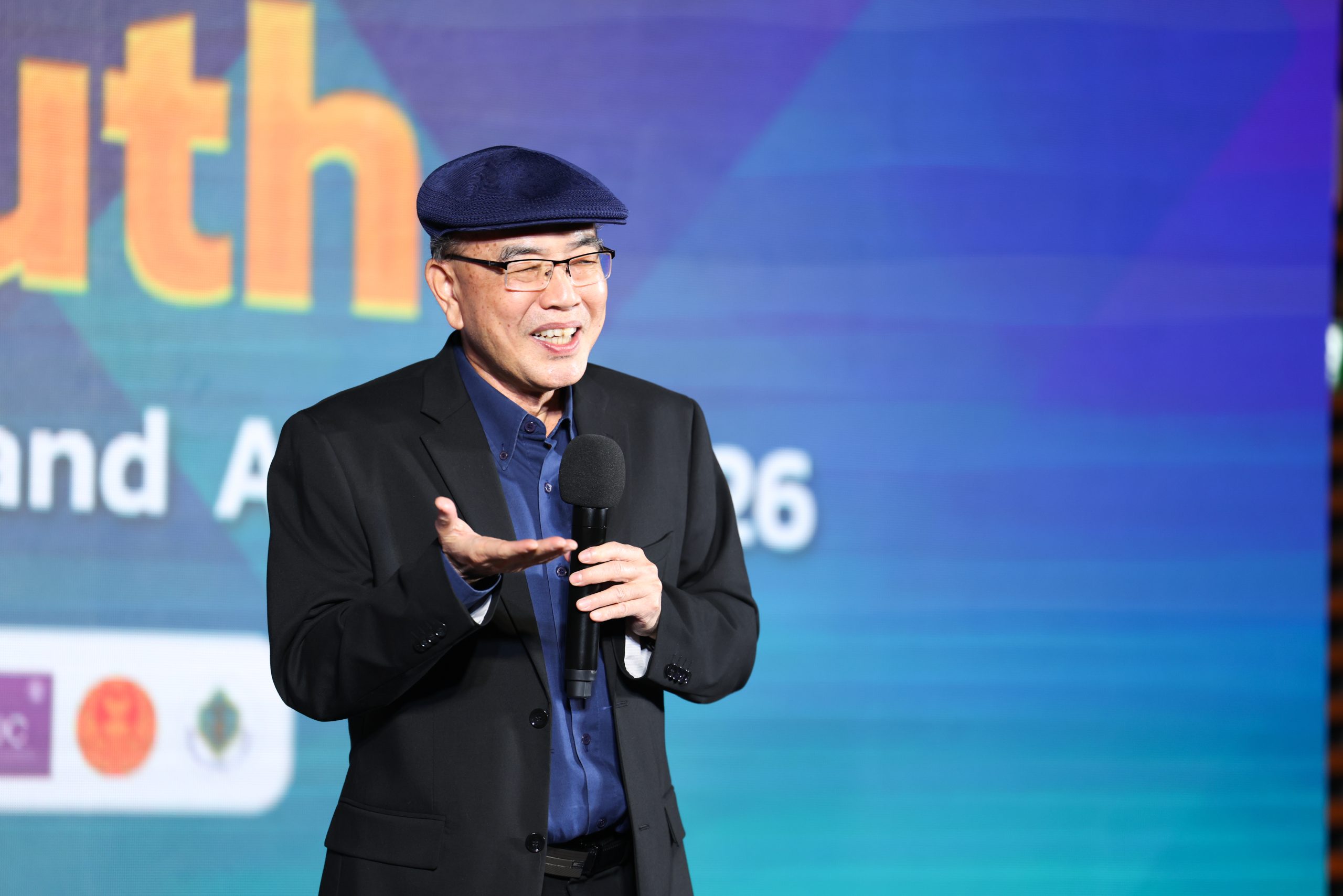
นายประสงค์ เลิศรัตนวิสุทธิ์ ผู้อำนวยการสถาบันอิศรา
“สถานการณ์ดังกล่าวสะท้อนปัญหาเชิงโครงสร้างของระบบสื่อในปัจจุบัน ที่มีทีมงานเร่งนำประเด็นซึ่งกำลังได้รับความสนใจในโซเชียลมีเดียมานำเสนออย่างรวดเร็ว โดยขาดการตรวจสอบข้อเท็จจริงอย่างรอบคอบ ส่งผลให้ข่าวเท็จหรือข่าวที่ไม่ถูกต้องแพร่กระจายอย่างรวดเร็ว และซ้ำเติมวิกฤตความน่าเชื่อถือของสื่อ” ผู้อำนวยการสถาบันอิศรา กล่าว
ผู้อำนวยการสถาบันอิศรายังชี้ว่า การแพร่กระจายข่าวเท็จในยุคดิจิทัลเกิดจากสองปัจจัยสำคัญ คือ ผู้สร้างหรือเผยแพร่ข่าว และผู้รับสารที่มักอ่านเพียงพาดหัวข่าว หรือรับข้อมูลจากการแชร์ในโซเชียลมีเดียและไลน์กลุ่มโดยไม่อ่านเนื้อหาอย่างรอบด้าน ก่อนแสดงความคิดเห็นหรือส่งต่อทันที ซึ่งแตกต่างจากยุคแรกของเว็บไซต์ข่าวที่ผู้อ่านยังมีพฤติกรรมอ่านเนื้อหาอย่างละเอียดมากกว่าเดิม
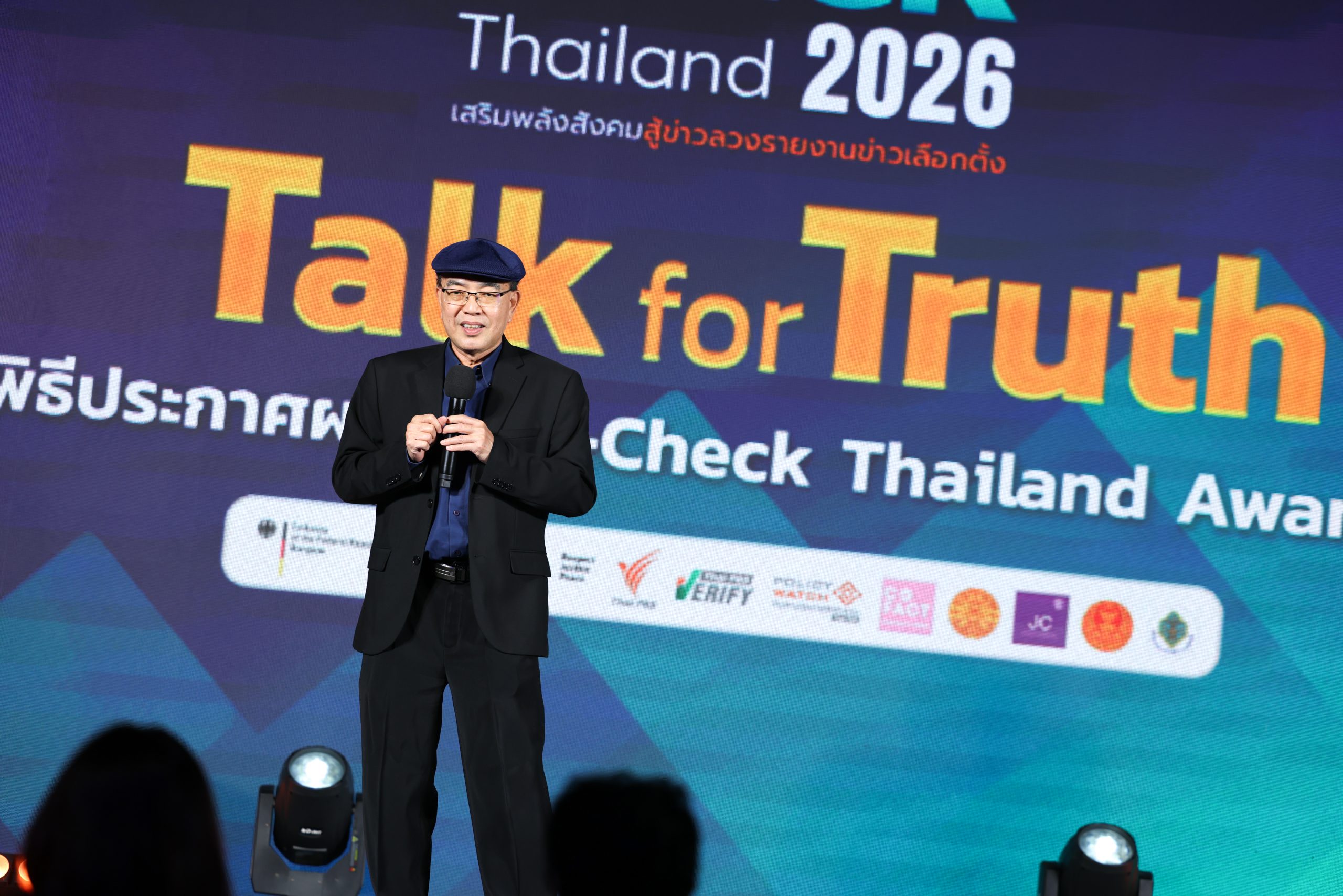
Mr. Prasong Lert-rattanavisuth, Director of the Isra Institute
“Addressing fake news should not focus solely on pursuing those who create false content. It must also prioritize building information resilience among the public reducing superficial news consumption and increasing patience in reading, verifying, and critically analyzing information before sharing it. Although Thailand has numerous media organizations and professional associations, there remains a lack of rigor and courage in calling out ethical violations. If professional self-regulation is not taken seriously enough, it may lead to the use of legal measures to control the media, which carries the risk of being used to suppress political dissent in the future,” Mr. Prasong said
Consumer Council Urges the Public to “Check Politicians’ Standards,” Choose Policies Grounded in Evidence, Not Special Interests
Ms. Saree Aongsomwang, Secretary-General of the Office of the Consumer Council, shared her views in a discussion session titled “Checking Politicians’ Standards: Refundable When Not as Advertised.” She stated that the upcoming election represents a critical turning point for Thailand whether the country will remain trapped as a developing nation or move toward becoming a developed country in the long term. She emphasized that citizens should seize this opportunity to select politicians who are not linked to deception, scam investments, or grey-capital networks.
“Announcing policies is not difficult for political parties. What truly matters is that those policies must be grounded in data, evidence, and clear knowledge to support consumers and improve people’s quality of life not decisions that serve the interests of specific groups,” she said, stressing that “good policies must be verifiable and serve the public interest, not narrow vested interests.”

Ms. Saree Aongsomwang, Secretary-General of the Office of the Consumer Council
The Secretary-General cited the example of the double-deck elevated expressway project, in which the private sector invested approximately 35 billion baht. In practice, however, the public bears the burden through extended toll concessions of more than 22 additional years and increased revenue-sharing with private operators amounting to roughly 7.5 billion baht per year. She noted that this level of funding could instead be used far more effectively to develop public transportation, such as purchasing up to 1,500 electric buses (EVs) per year or subsidizing public transport fares at a flat rate of 40 baht per day or 20 baht per line, with a budget of only around 8 billion baht.
“Politicians and political parties play a crucial role in shaping the direction of society. They must demonstrate clear political will to use public funds for the public good,” Ms. Saree said. “The key question for society is how to create mechanisms that ensure politicians meet clear standards and can be held accountable or have their responsibility ‘reclaimed’ when their policies fail to deliver on the promises made to the people.”
German Psychologist Warns: “Disinformation Becomes Deeply Embedded in People’s Minds,” Threatening Democratic Trust
Professor Nicole Krämer (Prof. Dr. Nicole Krämer), Professor of Social Psychology, Media, and Communication at the University of Duisburg-Essen, Germany, shared her research on disinformation, describing it as a global challenge with significant impacts on society and democratic systems. She emphasized that this phenomenon occurs in all countries and is not limited to any single political context.
Professor Krämer cited well-known cases of disinformation, such as the “Pizzagate” conspiracy theory in the United States, which falsely accused Hillary Clinton of involvement in a child abuse ring. She also referred to cases in Germany during the COVID-19 pandemic, where messages circulated on WhatsApp claiming that children’s headache medication was dangerous despite clear denials from doctors and the universities that were falsely cited as sources.
She explained that her research focuses specifically on disinformation, defined as information that is deliberately manipulated or false, in contrast to misinformation, which refers to incorrect information shared without intent to deceive. Surveys in Europe show that many citizens perceive disinformation as a direct threat to democracy.
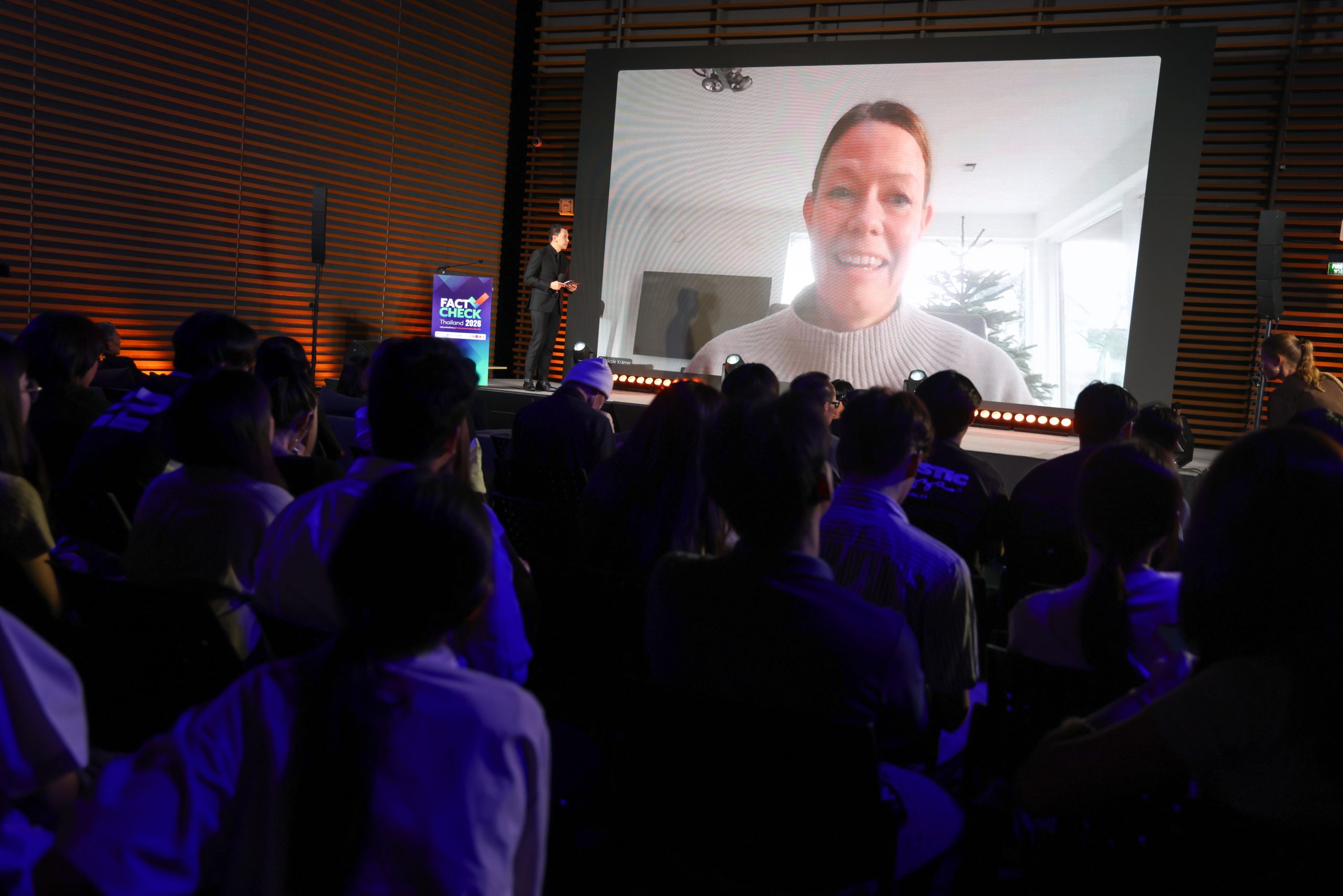
Professor Nicole Krämer (Prof. Dr. Nicole Krämer), Professor of Social Psychology, Media, and Communication at the University of Duisburg-Essen, Germany
The German scholar also referenced studies finding that false information spreads faster and more widely on social media than accurate information especially content that is negative, novel, or presented as short, sensational headlines. Many users, she noted, share such content without reading it in full. She explained the psychological mechanisms behind this phenomenon, known as the False Information Effect or Continued Influence Effect, whereby repeated exposure to the same information even if false increases its perceived credibility.
“Once information has been processed and embedded in our existing knowledge structures, correcting it later becomes extremely difficult. Even when fact-checking is provided, false information that people have already encountered may continue to influence their perceptions especially when it aligns with their existing attitudes or worldviews. The greatest danger of disinformation in a political context is the risk that people may come to trust no information at all, not even accurate information,” Professor Krämer said.
However, Professor Krämer concluded on a hopeful note, stressing that there is still a way forward. She noted that if citizens who seek accurate information are equipped with the necessary skills, knowledge, and understanding, the impact of disinformation can be mitigated. She also praised the role of civil society and fact-checking organizations, describing them as crucial mechanisms for protecting democratic processes from the threats posed by disinformation in the digital age.